A headline saying an operator “has been licensed” in some country tells you almost nothing about whether that site is legally serving players there today, and nothing whatsoever about whether it can serve you in India. Online casino licensing explained properly begins with a distinction most marketing copy quietly skips: a licence being granted and a licence going live are two separate events, and they can be separated by months or years. Wildz Group’s Finland milestone is a clean example of exactly that gap. This is an explainer about how licensing works, not a recommendation of Wildz or any other operator.
What Wildz Group actually received in Finland
According to G3 Newswire, Finland’s National Police Board issued a formal letter on 15 October 2026 granting Wildz Group permission to offer gambling services to Finnish players for five years beginning 1 July 2027, making it the first iGaming operator reported to receive an official licence go-ahead for Finland. The group’s portfolio includes the Wildz, Caxino, Wheelz, Spinz, Chipz, Tuplaus and Blingi brands, and CEO Sam Brown described the decision as a reward for the team’s work on the application.
Read those two dates again. The approval letter is dated October 2026. The authorisation to operate starts in July 2027. “First to receive a licence” means first through the application queue, not first to open the doors. Anyone who saw the announcement and assumed those brands were, at that moment, regulated Finnish operators had misread the news by roughly eight months.
Granted on paper, live in practice: what the difference buys you
A granted licence means a regulator has assessed an operator’s application and approved it. A live licence means the operator is authorised, right now, to accept real-money play from that market under that regulator’s supervision. Only the second state gives a player enforceable protections, because only then is the operator actually answerable to the regulator for how it treats your deposit.
Between those two states sit several others, and the practical difference matters when something goes wrong with a withdrawal.
| Licence status | What it means | Protection for you as a player |
|---|---|---|
| Applied / pending | Application filed, no decision made | None. No regulator is overseeing the operator in that market |
| Granted, not yet in force | Approved, with a future start date | None yet under that licence. The start date governs |
| Active / live | Authorised to accept players now | Full regime: conditions, audits, complaints route |
| Suspended or revoked | Authorisation withdrawn or frozen | None going forward. Balances may be caught up in the process |
What a regulator actually checks, and why fair play licensing is not a slogan
A serious regulator makes an operator prove things rather than assert them, and the usual conditions cluster around four areas: game randomness, money handling, transparency of returns, and what happens when a player disputes an outcome. Each one exists because, left alone, an operator has a commercial incentive to get it wrong.
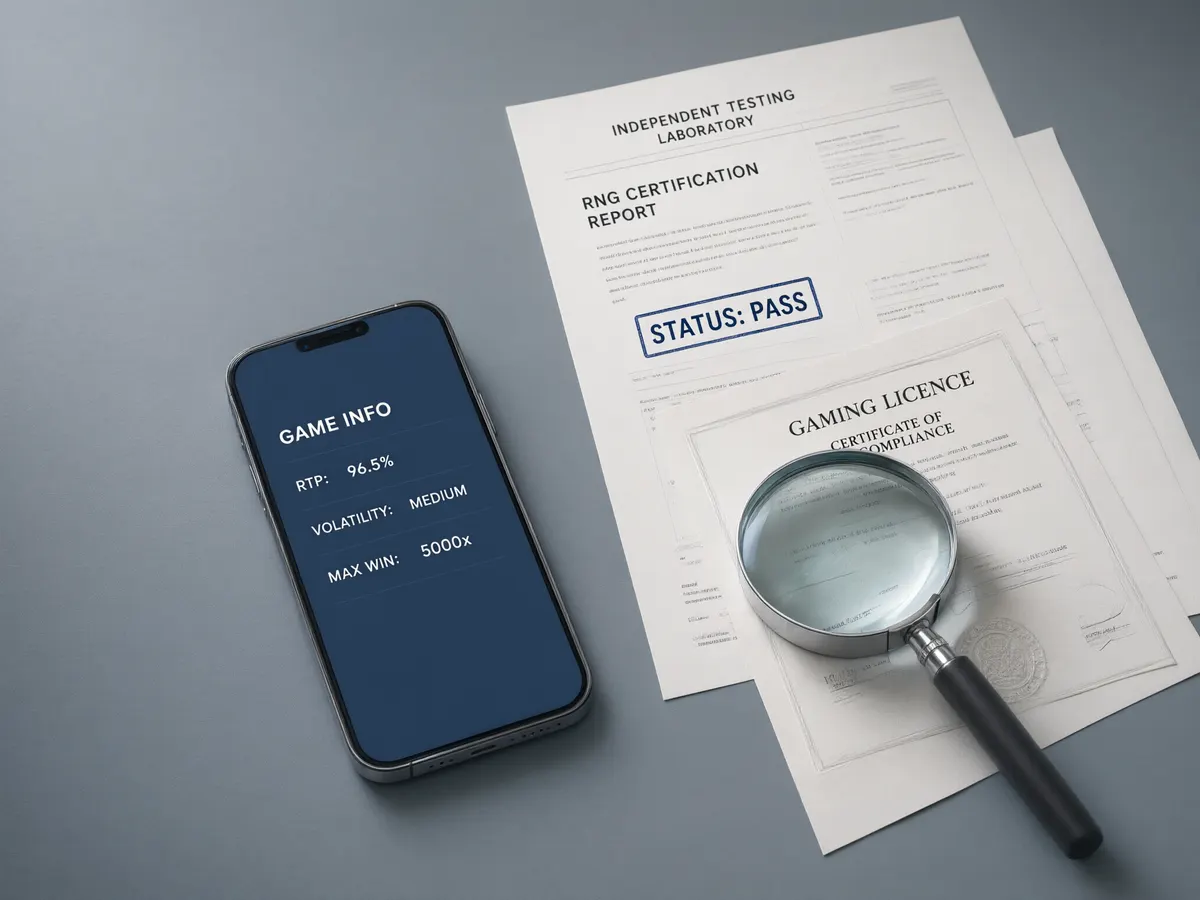
- Independently tested RNGs, so the random number generator that decides each spin or card is verified by an external testing house rather than the operator’s own word.
- Segregation of player funds from operating capital, so your balance is not being used to pay the company’s bills.
- Verification of advertised return to player figures, so a slot promoted at 96% RTP actually pays that over the long run. RTP is a long-run average across millions of rounds, never a session guarantee, and the house edge is simply the remainder.
- A formal dispute-resolution path, usually an internal complaints procedure with escalation to the regulator or a named independent body.
- KYC and responsible gambling tooling: identity verification, deposit and loss limits, self-exclusion, reality checks.
None of this exists in the absence of a regulator. An unlicensed site can publish an RTP table, a fairness page and a complaints email, and no one will ever check any of it. That is the whole difference between a licensed and an unlicensed casino: not the wording on the site, but whether a body with the power to fine or shut them down has read the books. Finland’s licensing authority publishes its gambling information through the National Police Board, as the source report notes.
Licensing regimes are not interchangeable
Two operators can both be “licensed” and be held to standards that barely resemble each other. Established national regulators tend to impose detailed player-protection conditions, regular audits and an enforceable complaints route. Lighter-touch offshore registries may require little beyond a fee, a company structure and periodic filings, with no meaningful mechanism for a player in a third country to be heard.
So the useful question is never “is this site licensed?” It is “licensed by whom, for which market, and is that licence live?” An operator holding a licence in one jurisdiction while accepting players from twenty others is relying on you not asking the second half of that question.
How to run a casino legitimacy check before you deposit
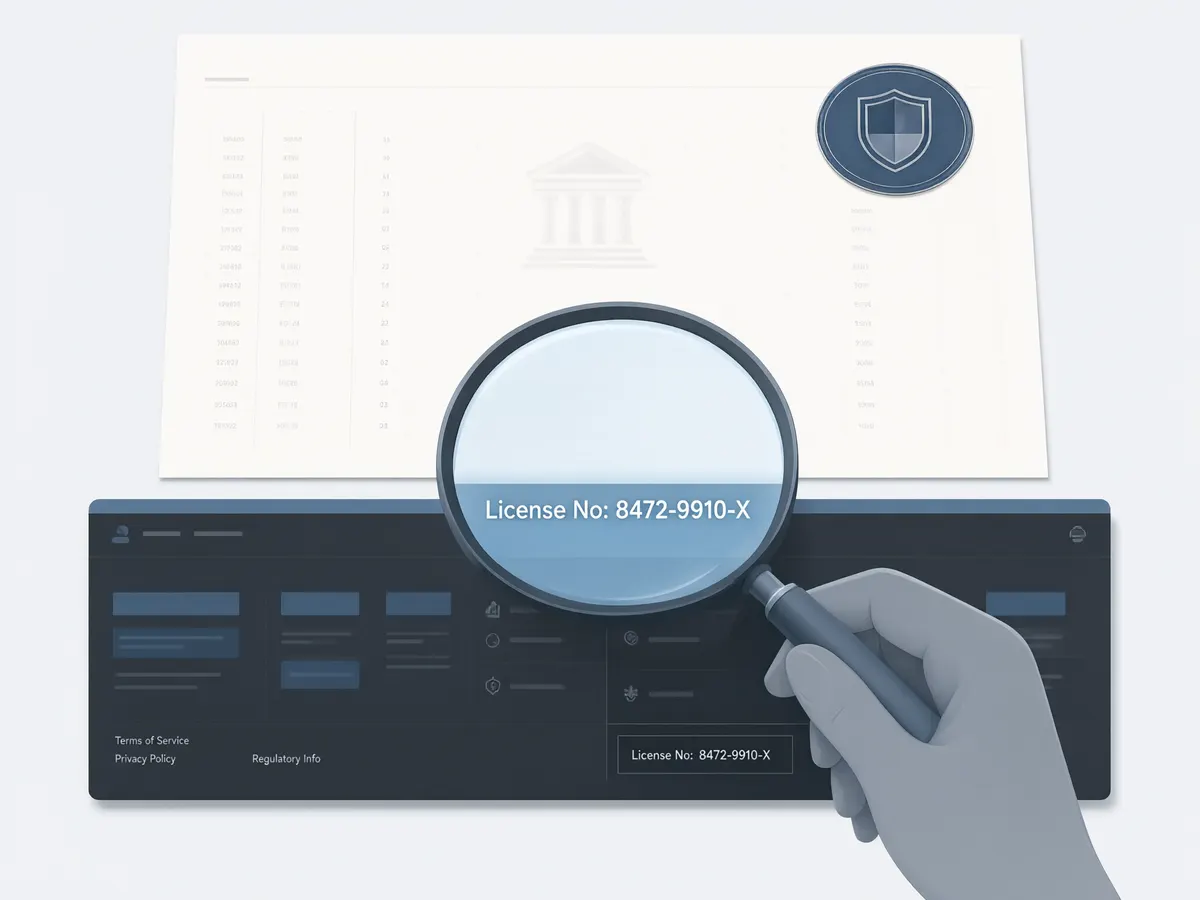
Checking an operator’s licensing status takes about four minutes. Find the licence number in the site footer, look it up on the regulator’s own public register, confirm the company name matches exactly, confirm the status reads active rather than pending or revoked, and check which markets that licence actually covers. Do this before any money moves.
Where to find a licence number on an operator’s site
- Scroll to the footer on the homepage. Legitimate operators put the licensing statement there: the regulator’s name, the licence or registration number, and usually the licensed legal entity rather than the brand name.
- If the footer only shows a logo, click it. Regulator seals are normally hyperlinked to a verification page. A seal that is a flat image with no link is worth nothing.
- Cross-check the terms and conditions and the “about” page. The licensed entity named there should be the same company named in the footer.
How to verify a licence number with the regulator
- Go to the regulator’s own website directly. Type the address yourself; do not rely solely on the link the casino provides.
- Search the public register or licensee list for the number, then for the company name separately. Both should return the same entity.
- Read the status field. You are looking for active or equivalent. Treat “pending”, “surrendered”, “suspended” or a future commencement date as a no for today.
- Check the scope: which brands and domains the licence covers, and which market it authorises. A licence covering one country’s players does not extend to yours.
- Separately, look for independent testing certification on the games themselves, from a recognised testing laboratory. This is additional evidence, not a substitute for the licence check.
Red flags worth walking away from
Most misrepresentation is lazy rather than sophisticated, which makes it easy to spot once you know the pattern.
- No licence number displayed anywhere, only vague wording such as “fully regulated” or “internationally licensed”.
- A licence number that returns nothing on the regulator’s register, or returns a different company name.
- A licence described as pending or “in process” while the site cheerfully accepts real-money deposits.
- Regulator logos that are unlinked images, or logos of bodies the operator is not actually listed under.
- No complaints or dispute process beyond a generic support email, and no named escalation body.
- Terms and conditions that reference a different brand or currency, a sign they were copied from another operator and never read.
- Withdrawal conditions buried in bonus terms that contradict the headline offer, such as undisclosed max cashout caps or wagering multipliers.
Does a Finnish licence mean anything for a player in India?
No. A Finland licence authorises an operator to serve Finnish players under Finnish supervision, and nothing more. It does not make the operator legal in India, does not place Indian players under that regulator’s protection, and gives you no practical route to escalate a dispute from here. Finland’s National Police Board has no mandate over how an operator treats a depositor in Mumbai or Kochi.
India’s position is its own question entirely. Gambling legality is largely a state subject, so the rules differ depending on where you are, and that legal status has to be assessed separately from any foreign licence an operator advertises. Treat the two as unrelated facts, because that is what they are.
What skipping the check actually costs
Licensing is the single clearest legitimacy signal available to a player, and it is also the one most easily faked in marketing copy. The asymmetry is brutal: verifying a licence number costs you four minutes, while failing to verify it can cost you an entire balance with no one to complain to. The register is public for a reason. Use it, and judge the operator by what the regulator lists, not by what the footer claims.
One honest caveat remains open even after a clean check: a live licence tells you an operator is supervised, not that the games are in your favour. Every casino game carries a built-in house edge and loses money for players over time. Set deposit and loss limits before you start, treat any spend as entertainment cost, and use self-exclusion tools if play stops being fun.