MICE is not an amenity bolted onto the casino — it is the licence
MICE stands for Meetings, Incentives, Conferences and Exhibitions, and in Japan’s integrated resort framework it is a condition of being allowed to operate a casino at all, not a design flourish added to fill space. Integrated resort MICE requirements exist because the casino is legally the minor component of the complex: build the convention and exhibition facilities to the standard the national government sets, or there is no licence to gamble behind them.
If you read IR coverage casually, you would be forgiven for thinking the ballrooms are marketing. They are the opposite. The gaming floor is the smallest regulated slice of the building, and everything else — halls, hotel rooms, exhibition space — is what the operator is actually obliged to deliver. That inversion is the whole reason Hokkaido’s latest move matters.
Why Japan ties MICE facilities to IR licensing
Japan’s Integrated Resort Implementation Act (the 2018 law that followed the 2016 enabling legislation) permits casino gaming only inside a certified IR district, and only as part of a single facility that also contains specified non-gaming components: MICE facilities, a hotel of a prescribed standard, facilities promoting Japanese tourism and culture, and travel-support functions. A casino on its own is not a lawful proposition in Japan. It never was.
The non-gaming facility rationale
The policy argument is economic and political at once. Economically, the government wanted business travel, trade fairs and corporate events — spend that arrives in weekday blocks, fills hotel rooms outside holiday peaks, and does not depend on gaming revenue. Politically, the non-gaming mandate was the price of passing a casino law in a country with substantial public opposition. Resident entry fees and visit-frequency caps on Japanese nationals came from the same calculation: the casino had to be framed as the engine of a tourism facility, not its purpose.
That framing is also why easing MICE rules is a sensitive request rather than a technical one. Shrink the convention obligation and you reduce the thing that justified the casino.
How gaming floor space is capped against everything else
The Act restricts the casino floor to a small fixed proportion of the IR’s total floor area — the figure cited consistently across the industry is 3%. Verify the current wording in the Act and its implementing ordinances before you rely on it in any submission, because the measured area definitions matter as much as the percentage.
The mechanical consequence is worth sitting with. A ratio cap means the gaming floor cannot grow unless the non-gaming floor grows first. Want a bigger casino? Build a bigger convention centre. That is the lever regulators hold, and it is why the MICE specification effectively sets the minimum size of the entire project.
Here is where the evidence runs out, and I am not going to paper over it. The precise MICE thresholds — minimum exhibition area, plenary seating capacity, number and size of breakout rooms — sit in the government’s Basic Policy for IRs and the associated implementing rules, not in headline summaries. Those documents have been revised more than once. Any writer handing you a confident square-metre number without naming the document and its revision date is guessing. Go to the Basic Policy and the Casino Regulatory Commission’s published materials for the live figures.
What actually counts as MICE space inside an IR
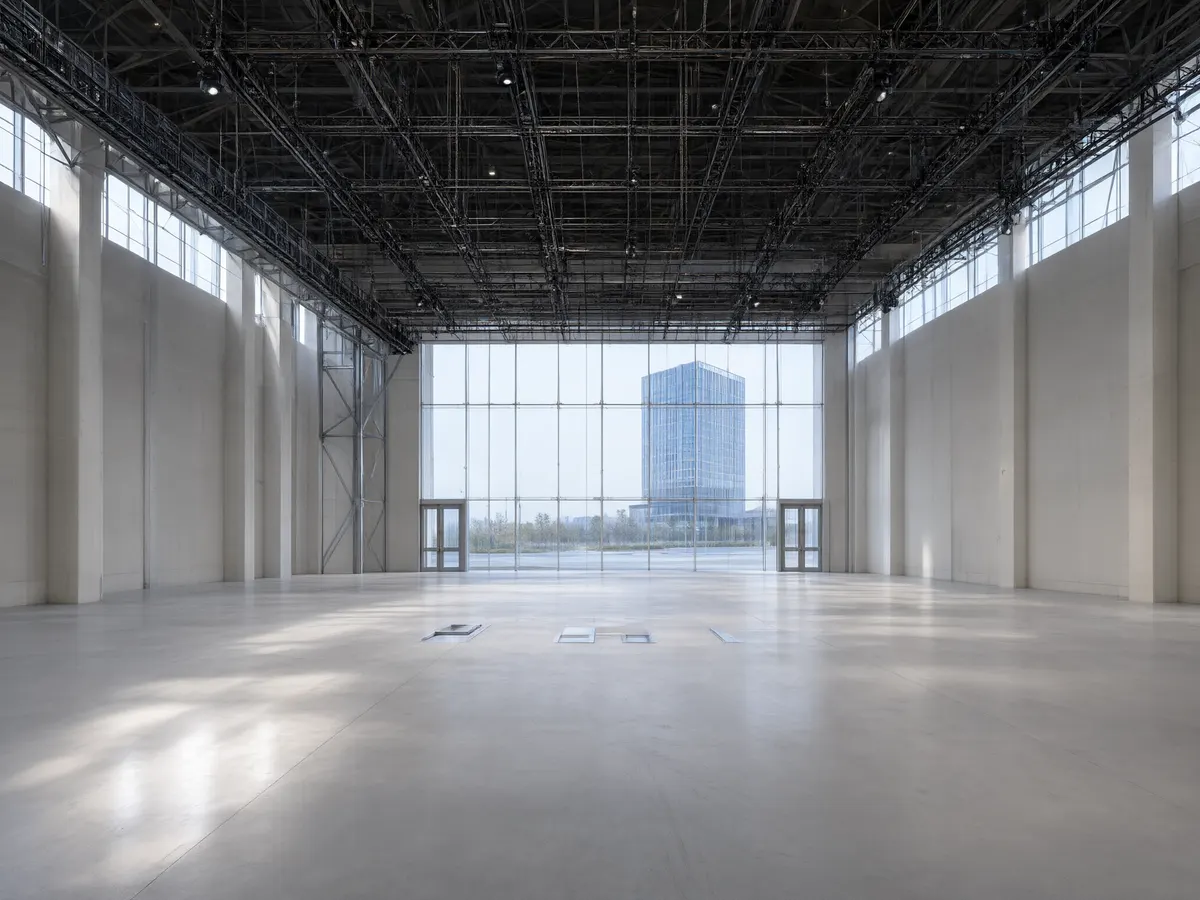
MICE facilities in an integrated resort mean purpose-built convention infrastructure, not repurposed hotel function rooms. In practice the obligation covers a large column-free exhibition hall, a plenary or conference hall capable of seating a full congress, a tier of divisible meeting and breakout rooms, and the back-of-house that makes all of it usable.
That last item is the part developers budget badly. Exhibition space is not just floor area — it is floor loading capable of taking vehicles and machinery, ceiling heights and rigging grids for stage builds, truck docks, marshalling yards, freight lifts, heavy power and data drops. A hall that cannot take a forklift is a ballroom with ambitions.
| Obligation element | What it forces into the design | Where the cost lands |
|---|---|---|
| Exhibition hall | Long-span, column-free structure with high floor loading | Structural steel, deep foundations, large site footprint |
| Plenary / conference hall | Tiered or flat-floor hall with acoustic and AV provision | Fit-out, technical systems, specialist consultants |
| Breakout meeting rooms | Divisible rooms, operable walls, duplicated servicing | Net-to-gross efficiency losses across the whole block |
| Hotel capacity sized to events | Room count driven by peak congress demand, not average occupancy | Keys built for a few weeks a year |
| Back-of-house and logistics | Docks, marshalling, freight lifts, heavy power | Non-revenue area that still gets built and serviced |
What Hokkaido is asking for, and why
Hokkaido has confirmed it will ask the national government to relax the MICE requirements attached to IR licensing, according to a report by GGRAsia. The prefecture’s position is one of feasibility: the MICE standard was written for the scale of demand a top-tier metropolitan gateway can generate, and a regional market cannot plausibly underwrite the same volume of convention space.
The logic is not unreasonable. Hokkaido’s tourism draw is real but seasonal and leisure-weighted. A convention hall sized for a Tokyo- or Osaka-scale congress calendar, dropped into a regional market, is a very expensive room that is dark most of the year. Hokkaido stepped back from the first IR application round, and any renewed Hokkaido IR project would have to clear the same national bar that was set with larger markets in mind.
What the public reporting does not yet give you is the specific ask: which thresholds, by how much, and whether the prefecture wants a lower absolute standard or a flexible, market-scaled one. Those are different requests with very different consequences, and until the submission is published, nobody writing about this knows which it is.
How easing the rules would change project economics
Lower the MICE floor and you lower the capital required to bid, which changes who can bid. A smaller mandated non-gaming programme means a smaller site, less structure, a shorter construction programme and fewer years of financing cost before the first visitor walks in. It also means a smaller permissible gaming floor, because the ratio cap works in both directions.
That is the trade an operator in a regional market has to price. A relaxed MICE obligation makes the project buildable; it also shrinks the revenue engine that pays for it. For a developer, the question is whether the saved capital expenditure exceeds the forgone gaming capacity — and the answer depends entirely on where the eased thresholds land, which is exactly the number nobody has.
What this does to Osaka, Nagasaki and the next application round
Any relaxation granted to a regional applicant raises an immediate fairness question for those who bid under the original standard. Osaka’s IR, the MGM Resorts and Orix project on Yumeshima, was certified against the existing requirements and is being built against them. Nagasaki’s Sasebo bid did not secure national certification. If the bar moves now, both outcomes get re-examined in public.
Watch these, in order:
- The text of Hokkaido’s formal request, and whether it names specific thresholds.
- Any consultation or revision to the Basic Policy for IRs — that is where MICE criteria actually change.
- Whether the national government signals a further application window, and on what terms.
- How other prefectures and operators respond once a precedent for market-scaled requirements is on the table.
The wider point for Asian IR licensing is that Japan built its model on a fixed national standard applied uniformly. Singapore wrote bespoke terms into two specific agreements; Japan wrote one rulebook and invited prefectures to meet it. Hokkaido is testing whether that rulebook can bend for market size without losing the justification it was built on. If it can, expect other jurisdictions drafting IR frameworks to build tiering in from the start rather than retrofit it.
None of that is settled. The one thing you can take as fixed today is the structure: in Japan, the convention centre is the condition and the casino is the concession. Where the threshold sits is now, openly, a live question.
This article covers licensing policy, not gambling products. If you gamble, treat it as paid entertainment and use deposit, loss and session limits.