The deposit limit that wasn’t a limit
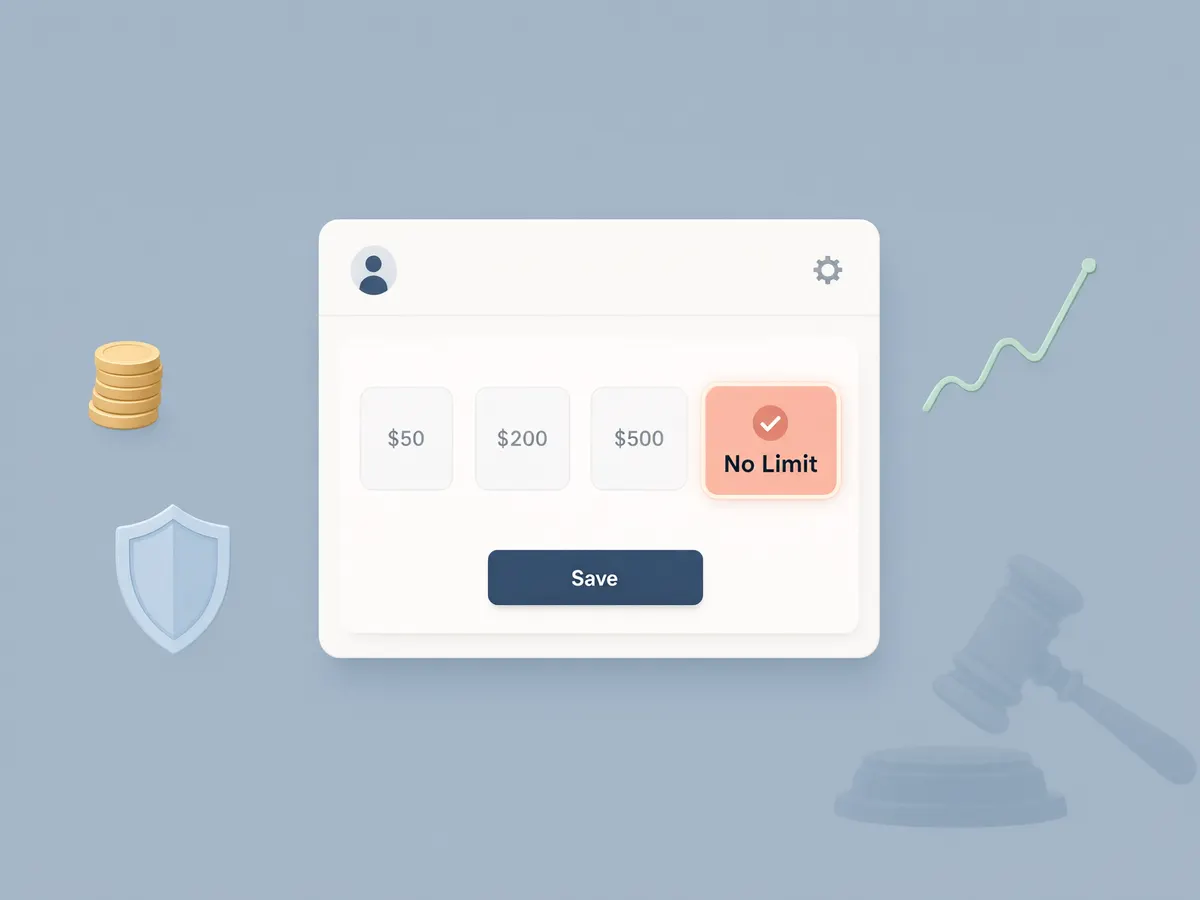
Somewhere in Bet365’s Swedish account settings there was a field for a deposit limit, and one of the choices players could pick was “no limit”. Sweden’s regulator looked at that dropdown and decided it did not satisfy a law requiring every customer to set a specific deposit cap. That single design decision sits at the centre of a case the operator has now lost.
The Bet365 fine came from Spelinspektionen, Sweden’s gambling regulator, and totals SEK 40 million (around €3.5m) plus a further SEK 4 million. Swedish courts upheld the regulator’s findings that the company committed serious and systematic breaches of duty of care rules and deposit limit requirements between 2019 and 2022, rejecting the operator’s appeal. Bet365 kept its Swedish licences, because it had already tightened its responsible gambling controls, including manual reviews of high-loss customers and closer monitoring of higher-risk players.
One enforcement case in one market is not a verdict on a company that operates in dozens. It is something more useful than that: a documented example of exactly which failures a regulator treats as serious, which is the closest thing players have to a published standard for judging anyone.
What regulators mean by online casino customer protection
Online casino customer protection is the set of duties an operator owes a customer who might be harmed by its product: letting them cap their spending, monitoring their play for signs of trouble, acting when those signs appear, and verifying who they are before money moves in volume. Regulators call the bundle a duty of care. They do not treat it as customer service.
Duty of care, in regulator language
The Swedish case turned on two of those duties. The deposit limit requirement is mechanical: the law wanted a number, and an option that let a player decline to name one meant, in the regulator’s reading, that no limit had been set at all. The duty of care finding is broader, covering whether the operator watched for and responded to customers whose play pattern signalled harm.
What the published summary does not give us is a per-customer breakdown — how many accounts were affected, or what individual losses looked like. Treat that as unknown rather than filling it in. The finding that matters is the word “systematic”: the regulator was describing how the business was built, not a handful of accounts that slipped through.
Responsible gambling compliance: tools on the page versus action behind them
Two models of responsible gambling compliance exist in practice, and they are not equally protective. The first makes tools available and waits for the player to use them. The second monitors play and intervenes without being asked. Sweden’s case is a demonstration that the first model, on its own, is not enough to satisfy a regulator — and the remedy Bet365 adopted, manual review of high-loss customers, belongs squarely to the second.
The difference is easiest to see side by side.
| Duty | Tools-only approach | Interventionist approach |
|---|---|---|
| Deposit limits | Optional field, sometimes with an opt-out | A specific figure required before play, with cooling-off on increases |
| Risk monitoring | Automated flags, rarely acted on | Manual review of high-loss and high-frequency accounts |
| Self-exclusion | Available if you find it and ask | One click, applied immediately across brands, marketing stopped |
| KYC verification | Triggered at first large withdrawal | Completed early, before deposits build up |
| Marketing | Same offers to everyone | Promotions suppressed for flagged accounts |
My view, and the Swedish ruling supports it: a site that offers every tool but never uses its own data has done the cheap half of the job. Tools are a floor. The expensive part is reading the account history and acting on it, which costs the operator revenue from its heaviest-spending customers. That is precisely why it tends not to happen unless a regulator insists.
There is a genuine cost to getting this comparison wrong as a player. If you judge an operator by the presence of a responsible gambling page, you will rate a tools-only site as safe. The gap only becomes visible on the day you actually need the protection — when a limit you set is easy to raise on the spot, when a self-exclusion request takes three emails, when promotional messages keep arriving after a run of heavy losses.
Five red flags on player protection standards
These five signals are checkable in about ten minutes, on any site, in any market. None of them require insider knowledge.
- Deposit or loss limit tools that are missing, buried, or include an opt-out such as “no limit” — the exact defect Sweden penalised.
- Self-exclusion that cannot be completed in the account itself, or that applies to one brand while sister sites keep accepting you.
- Marketing that continues after risk signals, including bonus offers sent straight after large losses or an attempt to pause the account.
- Licensing details that are absent, vague, or unverifiable — a logo with no licence number, no named regulator, no registered company.
- KYC verification demanded only at the first significant withdrawal, which means the operator accepted deposits for months without knowing who it was dealing with.
That last one gets misread constantly. Players treat withdrawal-stage document requests as the operator stalling. Often it is, but the deeper problem is the timing: identity and affordability checks exist to catch harm on the way in, not to gate money on the way out.
Checking an operator’s record before you deposit
A compliance check is four steps, and gambling operator penalties are public in most regulated markets, so past behaviour is searchable.
- Find the licence number in the site footer and look it up on the regulator’s own register. If the number does not resolve, or the licensed entity is not the company you are depositing with, stop there.
- Read the responsible gambling page for specifics. Named limit types, stated response times and a working self-exclusion route are substance; a paragraph about “playing for fun” is decoration.
- Test the tools before you fund the account properly. Set a low deposit limit and try to raise it. An immediate increase with no cooling-off period tells you how seriously the control is meant.
- Search the regulator’s enforcement or sanctions decisions for the operator’s name. A fine is not automatically disqualifying, but repeat findings on the same duty, or a refusal to change after one, is a pattern.
Our safer play guide covers the limit and self-exclusion tools in more detail, and our casino licence check explainer walks through reading a regulator’s register.
Does a Swedish fine make Bet365 unsafe everywhere?
No, and anyone telling you otherwise is overreading it. Licensing and enforcement are market-specific: the Swedish decision concerns Swedish licences, Swedish deposit limit law and conduct between 2019 and 2022. A regulator in another country has its own rulebook, its own complaints data and no authority over what happened in Sweden. Bet365 kept its Swedish licences precisely because it changed the systems the regulator objected to.
What travels is not the verdict, it is the information. You now know that this operator ran a deposit limit design that let customers decline to set one, that a court called the failures systematic, and that the fix came after enforcement rather than before it. That belongs in your assessment of any operator, including the one you currently use — and the same question applies to every brand that has never been fined, because an absence of penalties can mean good conduct or an inattentive regulator.
So run the checklist on whoever you play with. Set a deposit limit that reflects what you can afford to lose, and use the self-exclusion and cool-off tools if play stops feeling like a cost you chose. What remains genuinely unsettled is whether controls introduced under regulatory pressure hold once the pressure lifts. That is not something a licence page will ever tell you; you find it out from how the operator behaves when a limit request is inconvenient for its revenue.