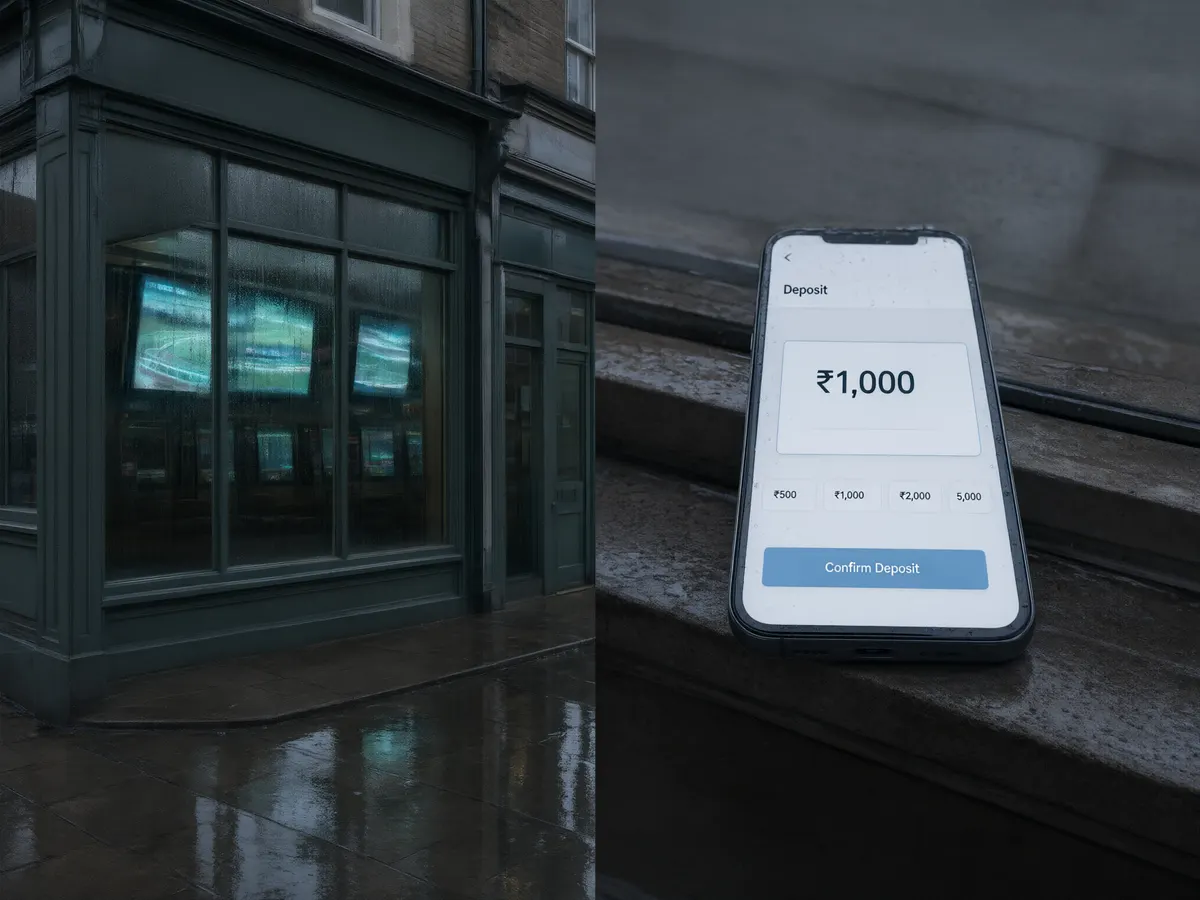
36,000 is the number in the headline. 16,000 is the number in the modelling. Understanding the gap between those two figures tells you more about gambling taxation policy than any press release will, because the structure of a tax, not its headline rate, is what decides whether an industry absorbs a cost through jobs, through worse value for customers, or by quietly leaking offshore. The row over Britain’s betting shops and India’s GST and TDS regime on online gaming are the same argument in two different registers.
Where the 36,000 figure actually comes from
The 36,000 figure is the total number of jobs Britain’s betting shops support, not the number the industry claims a tax rise would destroy. The Betting and Gaming Council published it ahead of the Budget, alongside a workforce profile: more than 80 per cent of those jobs sit outside London, 19 per cent of employees are under 25 against 11 per cent across the wider economy, 51 per cent are under 35, and women make up half the workforce.
The at-risk number is separate and smaller. EY modelling cited by the BGC puts the cost of raising Machine Games Duty to 40 per cent at up to 16,000 jobs, with almost 1,500 betting shops and as many as 34 casinos at risk, and the Treasury up to £124 million worse off. Both figures come from an industry-commissioned source, which does not make them wrong but does mean they should be read as an estimate to verify rather than a settled fact. The government has not confirmed the MGD change.
The £124 million line is the interesting one. An industry arguing that a tax rise will lose the Treasury money is arguing about the shape of the curve, not the principle. That is a testable claim, and it is the claim that matters.
Four ways to tax a bet, and who actually pays each
Governments tax gambling in four broad ways, and the choice of base changes the burden by an order of magnitude while the headline percentage stays the same.
Gross gaming revenue versus turnover
A GGR tax applies to what the operator keeps: stakes taken minus winnings paid out. A turnover tax applies to the amount staked, regardless of what comes back to players. Take a slot running at 96 per cent RTP. Of every ₹100 wagered, ₹96 is returned over the long run and ₹4 is the operator’s gross margin. A 28 per cent GGR tax takes ₹1.12 of that ₹4. A 28 per cent tax on the stake takes ₹28, which is seven times the entire margin the game generates. Same number, completely different industry.
That is why operators fight over the base and politicians campaign on the rate. The UK’s main duties are margin-based: general betting duty on bookmakers’ net stake receipts, remote gaming duty on remote operators’ profits, and Machine Games Duty on net machine takings. Exact current percentages shift at Budgets, so check HMRC’s published schedule rather than any secondary summary, including this one.
Point of consumption: taxing the player’s location, not the licence
A point-of-consumption tax is charged on bets placed by residents of a jurisdiction, whoever holds the licence and wherever the servers sit. The UK moved to this model precisely because a point-of-supply system let operators relocate to low-tax jurisdictions and keep serving British customers. POC taxation closes that door for licensed operators. It does nothing at all about operators who simply never apply for a licence, which is the hole every later section of this piece keeps returning to.
Stake duty is the fourth model: a flat levy per bet or per machine, which ignores profitability entirely and therefore falls hardest on low-margin, high-volume products.
How a tax rise travels from the Treasury to the counter
The chain is short and fairly mechanical. A higher duty on an already thin margin leaves an operator four levers: cut costs, cut capacity, worsen the product, or absorb it and accept lower returns.
Retail betting is a high fixed-cost business, which is why the first lever is staff hours and the second is shop closures. A high street shop carries rent, rates, licensing, compliance staffing and minimum staffing levels for safety. When machine takings fall below what covers those costs, the shop closes, and the EY scenario of almost 1,500 closures is exactly that arithmetic run across an estate.
Online, capacity is cheap and the adjustment happens in the product instead. Operators trim odds, widen margins on markets, cut promotional spend and reduce bonus generosity. Nobody announces this. A punter sees it as prices on a coupon drifting from 1.90 to 1.85, or a welcome offer dropping from 100 per cent to 50 per cent with heavier wagering attached. That is the tax arriving, paid by the customer, with no line item.
Push the rate far enough and a fifth lever appears, chosen by players rather than operators: the unlicensed market. Offshore sites pay no local duty, run no local compliance and can therefore offer better prices. The wider the value gap, the more demand walks through it, and tax receipts fall from a shrinking licensed base while the activity continues untaxed and unsupervised.
India taxes the stake, not the margin
India’s regime applies 28 per cent GST to the full face value of money paid into online money gaming platforms, rather than to the platform’s commission, as publicly reported following the GST Council’s decision implemented from October 2023. Before that, the sector was widely taxed at 18 per cent on platform fee or gross gaming revenue. The shift moved the base from the operator’s margin to the player’s deposit, which is the single most consequential change in the comparison with the UK.
What that does to the arithmetic
Follow ₹10,000 of deposits through the system. GST is computed on the face value paid in, so roughly ₹2,800 of tax liability attaches to that money before a single hand is dealt or a single rupee is wagered. The platform’s own revenue from that deposit, on a typical rake or margin, is a fraction of the tax charged on it. An operator can pass the GST to the player, swallow it, or exit. Reported market effects since the change have been consolidation, with smaller platforms shutting or being absorbed, and some player migration to offshore sites that collect nothing.
TDS on gambling winnings under Section 194BA
The second layer lands on the way out. Section 194BA, as publicly reported, requires 30 per cent TDS on net winnings from online games, deducted by the platform, with no minimum threshold of the kind that previously applied to winnings under the older provisions. Net winnings are computed on the player’s position across withdrawals and the financial year, not per hand, so a player who wins and loses in equal measure is not taxed on gross wins. Treat both the GST and TDS positions here as a description of what has been reported, and verify the current rate, base and notification against the GST Council and CBDT before relying on it. Nothing in this article is tax advice.
Two systems, two different leak points
The comparison is not high tax versus low tax. It is margin-based taxation with a jobs pressure valve against stake-based taxation with a player-cost and offshore pressure valve.
| Feature | UK betting shops | Indian online gaming |
|---|---|---|
| Tax base | Operator margin (net stake receipts, net machine takings) | Full face value of deposits or entry amounts |
| Headline change in dispute | Machine Games Duty rise modelled at 40% | 28% GST, shifted from 18% on platform fee |
| Second layer on players | No tax on individual winnings | 30% TDS on net winnings (Section 194BA) |
| Who remits | Operator | Operator, for both GST and TDS deduction |
| Primary pressure valve | Staff hours, shop and casino closures | Player cost, operator exit and consolidation |
| Leakage risk | Limited for retail, real for online | Offshore sites outside the tax net |
Retail gambling cannot offshore itself. A shop in a market town either stays open or it does not, which is why the UK argument is conducted in jobs and why those jobs are concentrated outside London and skewed young. Online gambling offshores itself with a change of domain. That is why the Indian argument is conducted in enforcement and blocking, and why a tax designed to formalise a market can end up shrinking the formal part of it.
What a proportionate gambling taxation policy has to get right
Three things fall out of the comparison, and only the first is widely accepted.
The base outranks the rate. A 40 per cent duty on margin and a 28 per cent levy on stakes are not comparable, and any debate that compares the two percentages directly is noise. If you want to know how hard a regime bites, ask what share of gross gaming revenue the tax represents, not what the statute says.
Revenue targets and leakage work against each other. The EY claim that a higher MGD leaves the Treasury £124 million poorer is the retail version of the same mechanism that sends Indian players to offshore platforms. Both are assertions about behavioural response, and both are the part of the model nobody can measure precisely in advance. That uncertainty is genuine, not rhetorical.
And higher operator costs eventually reach the player, in thinner odds, weaker promotions or a smaller choice of licensed operators. Gambling products already carry a built-in house edge, so the house wins over time regardless of the tax rate; tax changes only move how much is left for customers along the way. Set deposit and loss limits, treat any stake as money you can afford to lose, and use self-exclusion or cool-off tools if play stops being entertainment. If gambling is causing harm, free support is available from national helplines and services such as GamCare in the UK.
What nobody has yet published, in either country, is a reliable figure for how much demand actually moves offshore at a given tax level. Until someone does, every claim in this debate about jobs saved or revenue raised rests on a number that has not been measured, which is worth remembering the next time a headline arrives with 36,000 in it.