Four checks before you spin a new studio’s games
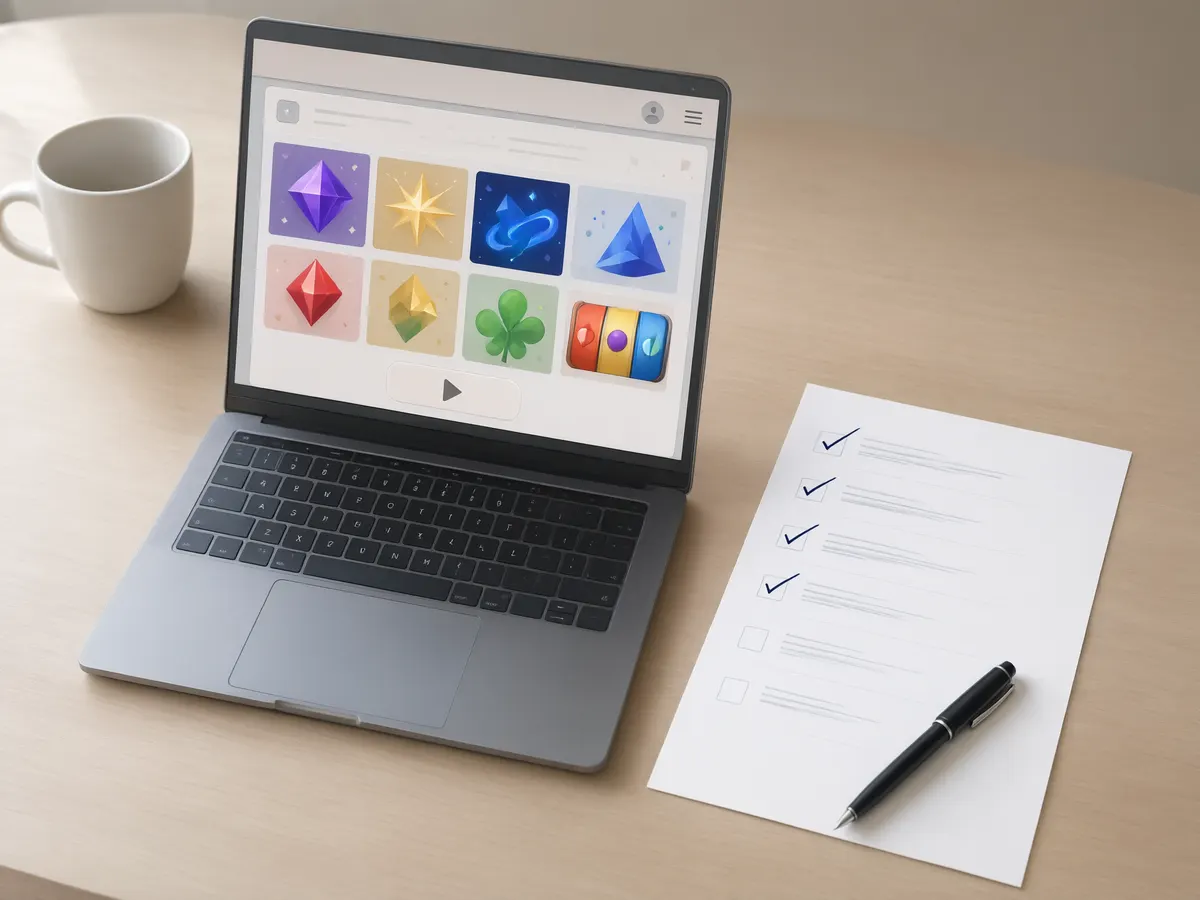
Seen a provider name in a casino lobby that you have never heard of, and wondered whether it is worth a spin? Run four checks before you deposit anything against it: confirm the studio holds or supplies under a recognised gambling licence, confirm it publishes RTP and volatility for each title, confirm the games appear on licensed operators you already recognise, and confirm there is a track record you can actually read. The reason this is topical: DELULU Gaming is exhibiting four new titles at SiGMA World in Rome from 2 to 5 November 2026, which is exactly the moment a studio’s name starts appearing in front of players who have never encountered it.
That checklist is reusable. It works for DELULU and it works for the next unfamiliar logo that shows up on a game tile six months from now.
Why unfamiliar studios surface at events like SiGMA World
A trade show is a sales floor, not a quality filter. SiGMA World at Fiera Roma is where suppliers meet operators and aggregators, and a studio with new content books a stand to get integration deals signed. DELULU’s listing covers stand H6-6055, a 200 square metre art themed booth, a live collaborative artwork with the artist MRDRIP on 3 and 4 November, the third and fourth days of the event, and four games: Sweet Takes, MLK Pump!, Glam Cam and Stranger Farms. Glam Cam and Stranger Farms are scheduled for November release.
All of that is marketing spend and a release calendar. Booth size tells you about a budget. It tells you nothing about certification, payout transparency, or how the studio handles a disputed round. Treat the event as the reason you heard the name, then do the verification separately.
Start with the licence, not the trailer
Game studios are business to business suppliers, so the licence you are looking for is usually a supplier or critical gaming supply licence held in a regulated jurisdiction, plus the licence of the operator you are actually playing at. The second one matters more to you directly, because that is who holds your money.
Where licensing information is normally published
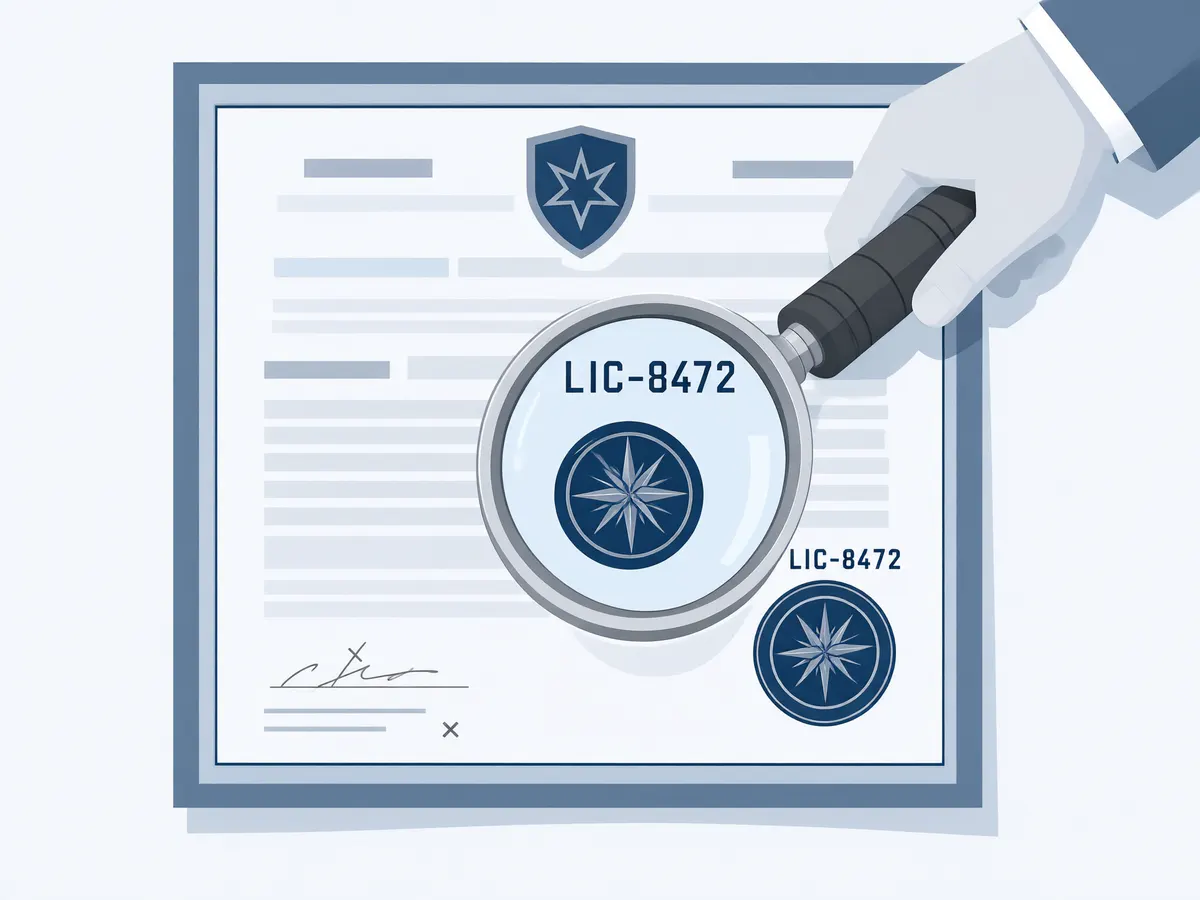
Three places, in this order. The operator’s site footer, which should name its regulator and licence number. The studio’s own site, which normally lists the jurisdictions it is certified or licensed in. And the regulator’s public register, which is the only one of the three that is not self-reported. The Malta Gaming Authority and the UK Gambling Commission both publish searchable registers; Gibraltar, the Isle of Man and Curaçao’s regulator maintain their own lists. If a footer claim does not match the register, the register wins.
No licence details anywhere ends the conversation
A studio that names no jurisdiction and no testing partner, on a site that has been live long enough to sell games, has made a choice. You do not need to work out why. Players in India have an extra layer to handle here: there is no single national framework for real money online gambling, legality is determined state by state, and some states restrict or prohibit it outright. Check what applies where you live before you deposit, not after.
RTP and fairness disclosure: what a studio should actually publish
RTP, or return to player, is the share of total wagers a game returns across millions of simulated rounds. A 96% RTP means roughly ₹96 returned per ₹100 staked as a long run average across all players, not per session and not as any guarantee for you. The remaining 4% is the house edge, and it is permanent.
What a transparent RTP sheet contains
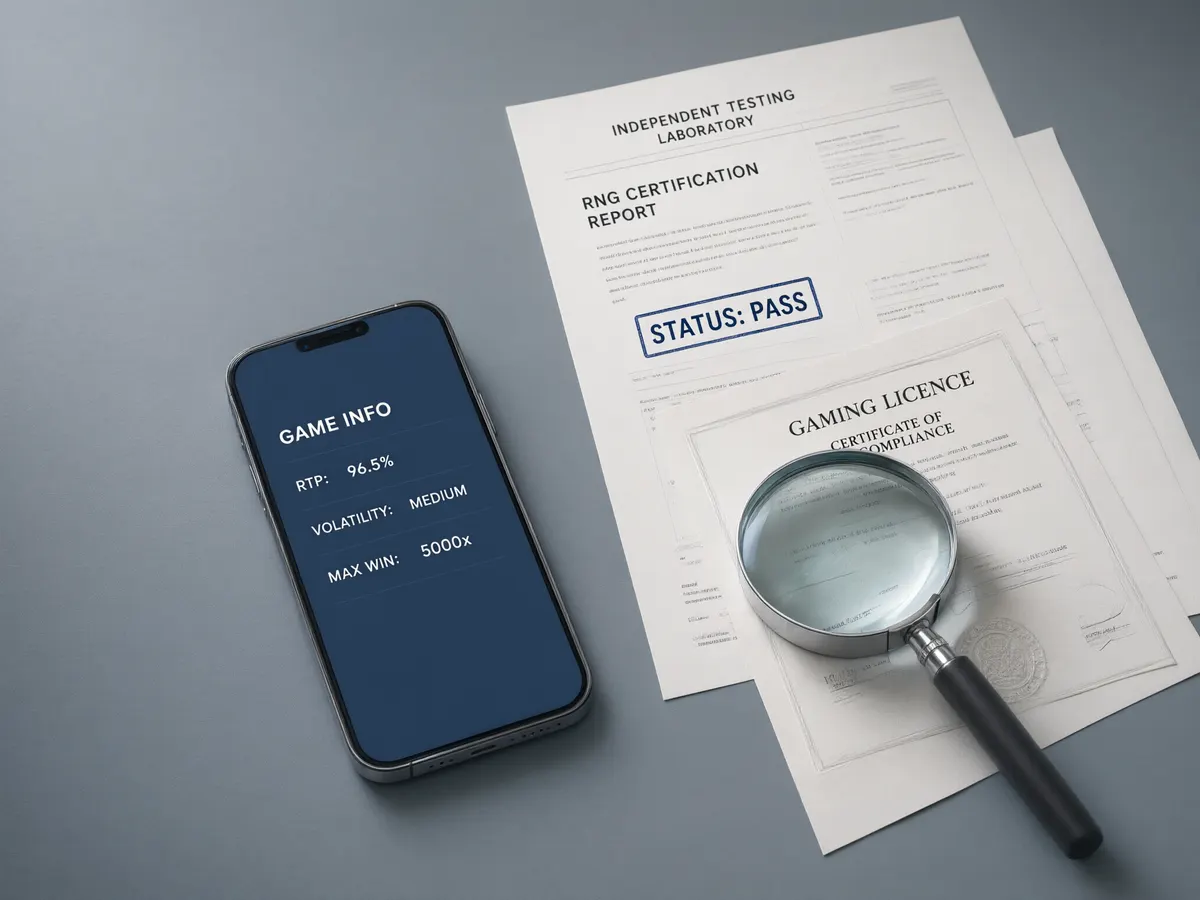
Per title: the RTP figure, the volatility rating, the maximum win multiplier, and ideally hit frequency. Alongside it, an RNG certificate from an independent testing laboratory such as GLI, iTech Labs, BMM Testlabs or eCOGRA, or a provably fair verification method if the game uses one.
Here is the qualifier most players miss. Many suppliers ship a single game with several configurable RTP settings, and the operator chooses which one to run. A studio page advertising 96.5% can sit on top of a 94% build in the lobby you are playing in. So read the in-game information panel on the specific site, every time, rather than trusting the marketing figure. The number on the paytable is the number you are playing.
Why “RTP coming soon” is a caution sign
RTP is calculated during development, not discovered after launch. A studio that can tell you a release month can tell you an RTP. When the figure is missing from a game that is already playable, the information exists and is not being shown, which is a different thing from a title that has not shipped yet.
Check where the games are genuinely playable
Distribution is the trust signal that is hardest to fake, because a licensed operator will not integrate a supplier that cannot pass its own compliance review. If a studio’s titles appear in the lobby of casinos you already know, somebody with a compliance department has looked at the certification paperwork before you did.
Aggregator and operator partnerships, and their limits
Most small studios reach the market through aggregators, which bundle many suppliers into one integration. That is normal and healthy. What it also means is that a headline operator count measures contracts, not quality, and does not tell you which markets, which brands, or whether every one of those integrations is live.
One thing to refuse outright: never sideload an APK or sign up to an unlicensed site just to try an unfamiliar studio’s games. If a provider’s content is only reachable that way, the provider is not the problem you would be dealing with.
Reading the reputation signals
Work through four of them. The founders and parent company, and what they shipped before this. Presence at recognised industry events such as SiGMA or ICE, which at least confirms a real commercial operation. Independent press coverage, which you should distinguish from republished press releases; trade outlets routinely carry supplier announcements verbatim and label them as such. And player reviews on casino forums and tracker sites, once there are enough rounds played to mean anything.
A studio showing its first few titles has a short record by definition. That is not a mark against it. It does mean the evidence you would normally rely on is thin, and thin evidence calls for small stakes.
Running the checklist on DELULU Gaming today
Here is what the trade reporting around the Rome event supports, and what it does not. The studio states that its seven games are available through 500 operators with unique player numbers approaching 300,000. Those are company figures from an event announcement, not audited numbers, and the arithmetic is worth doing: roughly 600 unique players per operator relationship, which describes wide but shallow distribution rather than a mass player base. Neither figure is implausible for a young studio. Neither is independently verified either.
| Checklist item | Status from reported information |
|---|---|
| Licence or supplier certification | Not stated in the trade-show coverage; verify via operator footer and regulator register |
| Published RTP and volatility | Not published in that coverage; check each game’s in-lobby info panel |
| Independent RNG testing | No testing laboratory named in the coverage |
| Operator availability | Studio claims seven games across 500 operators; self-reported |
| Player base | Studio claims close to 300,000 unique players; self-reported |
| Track record | Active on the event circuit in 2026; four new titles announced, two due in November |
Read that as incomplete rather than negative. Most of the blanks are blanks because a trade show write-up is not where licensing and payout data get published. They become checkable the moment the games appear in a lobby, and that is when to run the list again.
Your pre-play checklist
- Verify the operator’s licence number against the regulator’s public register.
- Find the studio’s stated jurisdiction and certification on its own site.
- Read the RTP, volatility and max win in the game’s information panel, not the marketing page.
- Confirm an independent testing lab or provably fair method is named.
- Check the titles appear on operators you already recognise, with no APK or unlicensed site required.
- Look for founder history, independent coverage and player reviews before raising stake size.
Legality, limits and what is still open
No studio, licence or RTP figure makes a slot profitable to play. Certification tells you the outcomes are random and the advertised return is honest; the house edge sits inside that honest return and does not go away. Confirm what your state permits before depositing, set deposit and loss limits at the account level rather than in your head, and use the cool-off and self-exclusion tools the operator is obliged to provide.
For DELULU specifically, the open questions are the ones the checklist asks and the Rome announcement does not answer. When Glam Cam and Stranger Farms land in a lobby you use, the paytable and the licence footer will tell you more in thirty seconds than any booth in Rome. Until then, the only figure in this story you can fully verify is the one you choose to deposit.