The trust signal buried in a press release
Eight years of exclusively iGaming legal work, inside a career of more than ten years in law. That is the background G3 Newswire reported for Neil Chetcuti when LCKY Group named him General Counsel, with over six years at Gaming Innovation Group, where he was Legal Counsel from 2018 and then Senior Legal Counsel from 2020 to 2024, and a spell as Head of Legal at Sportingtech behind him. Most players scrolled past that story. They shouldn’t have, because a named, senior legal leader is one of the more reliable online casino compliance signals available to an outsider, and it costs you nothing to look for.
It is also a signal that is widely misread in both directions. Some players treat any mention of licensing or legal staff as proof of safety. Others dismiss it as corporate noise and judge a site purely on whether their last withdrawal arrived. Both readings have something going for them. Only one of them survives contact with how these companies are actually built, and the rest of this piece is about where each one breaks.
What casino legal compliance work actually involves
A General Counsel or compliance team at a gambling company owns the licences, the anti-money-laundering programme, the terms you agree to, and the paperwork that goes to regulators. It is unglamorous, continuous work, and when it is done badly the consequences land on players as frozen accounts, delayed payouts and disputes that go nowhere.
Licensing liaison and regulator relationships
Every market an operator enters has its own licensing authority with its own application, its own reporting calendar and its own rules on advertising, bonuses and game supply. The legal function prepares those applications, answers regulator queries, and keeps the company inside licence conditions as products change. LCKY Group’s own announcement framed the role exactly this way: supporting expansion in regulated markets globally while ensuring compliance with local regulation. That phrasing is boilerplate across the industry, and it is boilerplate because it describes the actual job.
AML and KYC oversight
Know Your Customer checks and anti-money-laundering monitoring sit under compliance. This is the part players feel most directly: the identity documents requested before a first withdrawal, the source-of-funds question after an unusually large deposit, the transaction monitoring that flags patterns. Players grumble about KYC, and then grumble harder when a site with no KYC turns out to have no process for anything else either. A firm that verifies you properly at sign-up is a firm that can verify you quickly at cash-out.
Disputes, terms and policy enforcement
Someone drafts the terms and conditions, defines what counts as bonus abuse, decides whether a voided win stays voided, and responds when a player escalates to the regulator or an alternative dispute resolution body. That someone is the legal and compliance team. If no one owns that function, the answer to a disputed bonus is whoever is on live chat at 2am, improvising.
Myth: a compliance hire is just PR
Naming a compliance leader publicly is a modest form of accountability, and it correlates with the governance that produces decent player outcomes. Not because the individual is heroic, but because of what the appointment implies: a budget line for legal risk, a reporting structure, and a person whose job is at stake when a regulator asks a hard question.
Compare that with the alternative. An operator with no identifiable legal function still has terms and conditions, still holds your money, still decides your disputes. It simply has nobody internally whose interests are served by applying those rules consistently. The practical differences show up in fraud exposure, in how long a payout investigation takes, and in whether there is any escalation route above customer support.
The cynical reading is not stupid, though. Press releases are marketing. An appointment announcement proves a role was filled, not that the role has authority, resources or the independence to overrule a commercial decision. I would not deposit anywhere on the strength of a news item alone. I would, however, note its absence.
Where the standard advice stops working
Here is the part the checklists skip. A governance signal attaches to a corporate entity and its licensed markets, not to your account. LCKY Group’s announcement describes operations in regulated markets across Europe and North America. Nothing in it says anything about India, and that is precisely the point worth generalising: an operator can run a tight, regulator-audited business in Ontario or Malta while treating players from unlicensed territories as an entirely separate, lightly governed book of business.
So the standard advice, verify the licence and look for compliance leadership, holds right up until you ask the only question that matters to you: does any of that governance cover me? Often the honest answer is partially, or not at all. If your account sits under an offshore licence while the company’s serious compliance effort is pointed at jurisdictions you don’t live in, you inherit the brand’s reputational incentive to behave well, but not the regulator’s power to make it. That is a real benefit and a genuinely weaker one. Treat compliance visibility as a second filter, applied after you have established which licence your account actually falls under.
How to choose a safe casino: the checks that take ten minutes
- Verify the licence number at the source. Find the licence number in the site footer, then search for it on the regulator’s own register, not on a page the casino controls. The Malta Gaming Authority, the UK Gambling Commission and Curaçao’s regulator all publish searchable licensee lists. A badge image that links nowhere, or links back to the casino’s own page, is worth nothing.
- Check which legal entity your account belongs to. The terms name the company and the licence that governs your relationship. A group may hold several licences; only one applies to you.
- Look for named legal or compliance contacts. A compliance officer, a data protection contact, a registered address, a complaints email that is not the generic support inbox. Named humans are harder to walk away from than a contact form.
- Read the dispute clause before you need it. Good terms state a response deadline and name an external ADR provider or the regulator as the next step. Vague terms that reserve all decisions to the operator’s “sole discretion” tell you how a dispute will end.
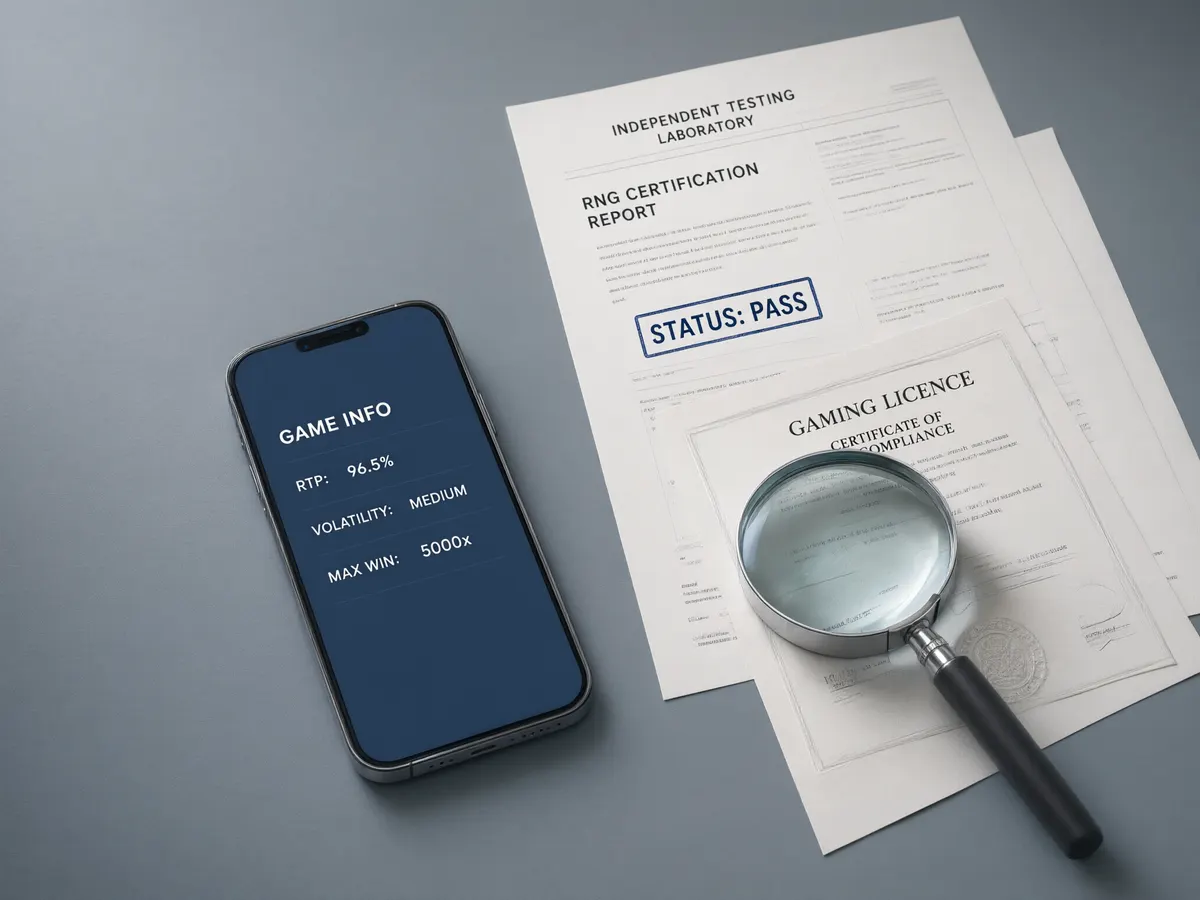
- Confirm independent game testing. Look for RNG and RTP certification from a recognised testing laboratory, and check the certificate is current rather than a decorative logo.
What “licensed online casino India” really means
India historically had no single national regulator for online casino gambling. The legal position was a patchwork: the colonial-era Public Gambling Act, 1867, state-level laws that differ sharply, courts that have treated games of skill differently from games of chance, and several states that prohibited online money gaming outright. In 2026 a national framework came into force under the Promotion and Regulation of Online Gaming Act, 2025, which prohibits online money gaming nationally. Platforms accepting Indian players operate on offshore licences from jurisdictions such as Curaçao or Malta.
Practically, that means two things. Your consumer recourse runs to a foreign regulator, which can act against the operator’s licence but has limited interest in, or reach into, your individual dispute. And the legality of your own play depends on where you sit, which is a question for a qualified lawyer in your state, not for a casino’s marketing page. Any site claiming to be “licensed in India” for online casino play is describing something that does not exist in the form implied.
Player protection standards worth demanding
A credible operator gives you tools to limit yourself and proof that its games are tested. These are checkable in minutes, usually before you register.
| Standard | What it should let you do | Where to check |
|---|---|---|
| Age verification | Block under-18 registration, enforced through KYC documents | Sign-up flow and terms |
| Deposit and loss limits | Set daily, weekly or monthly caps that take effect immediately | Account settings, responsible gambling page |
| Self-exclusion and cool-off | Lock the account for a fixed period or permanently, without argument | Responsible gambling page |
| Reality checks and session limits | Receive time and spend reminders mid-session | Account settings |
| Fair play certification | See current RNG and RTP test certificates from an independent lab | Footer, certification page |
| Data security | Encrypted connection, a real privacy policy, a named data protection contact | Privacy policy, site certificate |
If limits exist but require you to email support and wait, that is a weaker version of the same feature. The implementation matters as much as the list.
Red flags that gambling operator licensing is thin
Missing information is the signal, not bad information. Operators rarely advertise their gaps; they just leave the space blank.
- No licence number anywhere, or a seal that cannot be matched to a regulator’s register.
- No corporate entity named in the terms, no registered address, no compliance or legal contact.
- Terms that are short, vague, copied from another brand, or silent on withdrawals and disputes.
- No self-exclusion or deposit limit tools, or tools that exist only as marketing copy.
- A pattern of unresolved complaints about delayed payouts and retroactive bonus voids, especially where the operator never responds publicly.
- Bonus terms with undisclosed wagering requirements. A 30x requirement on a ₹1,000 bonus means ₹30,000 wagered before withdrawal, and an operator that hides that number is telling you something about its other disclosures.
What this buys you, and what it doesn’t
Checking licences and compliance signals changes your odds of getting paid. It does not change the odds of the game. A slot at 96% RTP carries a 4% house edge whether the operator’s General Counsel has eight years of experience or none, and that edge is the whole business model. Due diligence protects your withdrawal, not your stake.
The open question, and it stays open, is how much weight to give governance signals for a brand whose serious regulatory exposure lies in markets you don’t play from. My own answer is: enough to prefer such an operator over an anonymous one, not enough to relax. Set a deposit limit before your first deposit, treat the money as spent entertainment, and if play stops feeling optional, use the self-exclusion tools or contact a helpline such as Tele-MANAS on 14416. Anyone under 18 should not be on these sites at all.