Mohegan Sun turns 30, and the milestone says more about hotels than about gambling
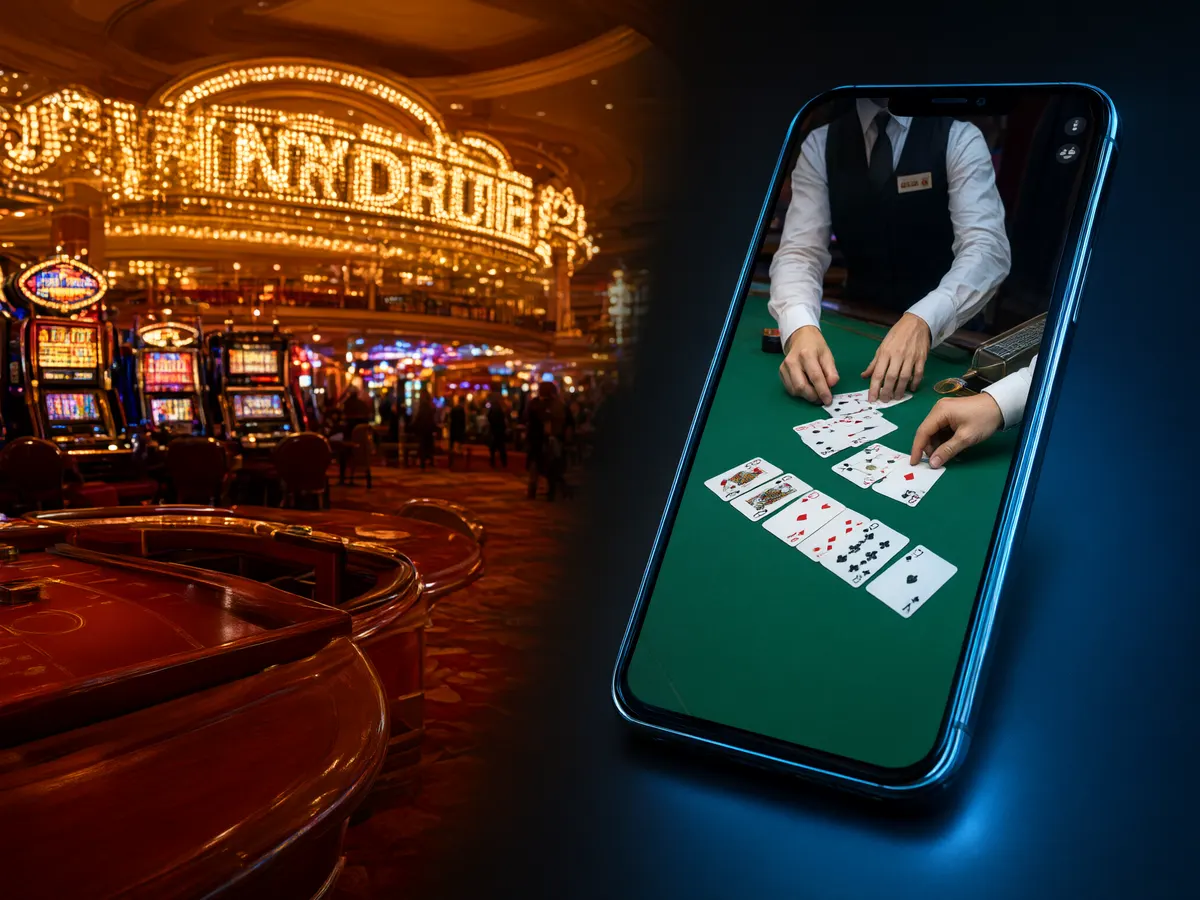
A land casino is a building you drive to; an online casino is an app you open. That distinction explains almost nothing about why people pick one over the other. The honest land casino vs online casino comparison is not convenience against atmosphere. It is a comparison between a hospitality business that happens to run a gaming floor and a gaming business that has almost nothing else to sell.
Mohegan Sun in Uncasville, Connecticut marked its 30th birthday with three nights of concerts, a red-carpet event and a birthday party, as reported by CDC Gaming. John Mayer opened the arena on Friday. Lainey Wilson played Saturday while Flo Rida did a free show in the Wolf Den, and 50 Cent performed at the party itself. DJ Cassidy’s Pass the Mic Live! closed the weekend with Busta Rhymes, Fat Joe, Ja Rule, Jadakiss and Nelly. The property is owned and operated by the Mohegan Tribe of Connecticut, a federally recognised sovereign tribal nation.
Read the line-up again. Not one item on it is a casino game. That is the point, and it is the thing most comparisons of the two formats get backwards.
The popular answer is right for the wrong reason
Ask which format gives the better experience and most people say the resort, because of the atmosphere. True, but atmosphere is a vague word doing a lot of work. What a property like Mohegan Sun actually owns is an arena, restaurants, hotel rooms, retail and a gaming floor that sits in the middle of all of it. The gambling is one revenue line inside an entertainment campus, and the campus is what keeps a 30-year-old brand relevant to people who may not gamble much at all.
An online casino has no arena. It cannot sell you dinner. Its entire offer is the games, the payments and the rewards layer wrapped around both. That is not a criticism, it is a structural fact, and it drives every difference that follows.
What the resort floor delivers that a screen cannot
Physical presence, mainly, and everything that comes with it. You sit at a blackjack table with six other people and a dealer who talks to you. You hear the floor. You watch a craps game run, which is still one of the few casino experiences that is genuinely social rather than parallel-play. Then you leave the floor and the evening continues somewhere else on the property.
There is also friction, and friction is underrated. Getting to a resort takes planning, travel and a finite amount of time. Table minimums are higher than online equivalents. When the night ends, the building closes behind you and you drive home. None of that is a feature the marketing department advertises, but it does shape how much and how long people play.
What online does that no resort can match
Availability and library depth. An online casino opens at 3am on a Tuesday from your sofa, with no travel and stakes that often start at a fraction of a table minimum. The game catalogue is not constrained by floor space, so a mid-sized site can list thousands of slots from dozens of studios alongside roulette, blackjack and baccarat variants that would never earn a physical table.
Live dealer games sit in between the two formats. A real dealer runs a real wheel or shoe in a studio, streamed to your screen, and you bet through an interface. It restores some of the human element and keeps the convenience. It does not restore the room, the meal or the concert, and anyone who tells you it does has not been in either place recently.
Comps and cashback are not the same machine
Land-based loyalty and online VIP schemes look similar on a landing page and work on completely different economics. A players club tracks carded play. On slots, the card logs your wagering. On table games, a floor supervisor rates you on average bet and time played, and the property estimates your theoretical loss from that: roughly your average bet, multiplied by decisions per hour, multiplied by hours, multiplied by the house edge of the game. Comps are then issued as a share of that theoretical figure, usually in the form of rooms, meals, show tickets or free play.
The important part is what those comps cost the casino. A hotel room that would otherwise sit empty has a marginal cost close to nothing. A steak costs the kitchen price, not the menu price. So a land resort can hand a strong player several hundred dollars of apparent value without giving away several hundred dollars. That is why the headline perks at the top tiers are generous and why they are concentrated on high spenders.
Online rewards are cash or cash-adjacent, which means an operator cannot be loose with them. Cashback arrives as a percentage of net losses, typically credited within 72 hours after the qualifying period ends rather than instantly. Points convert to bonus funds. Tiers unlock reload offers and free spins. Because the currency is money rather than empty inventory, it comes with terms: wagering requirements, game weighting that makes slots clear faster than table games, maximum bet rules while a bonus is active and maximum cashout caps. A 10% cashback credited as withdrawable cash and a 10% cashback credited as a bonus with 30× playthrough are not the same product, and the difference is buried in the terms rather than the banner.
| Dimension | Land-based players club | Online VIP / cashback |
|---|---|---|
| How you earn | Carded slot play; rated table play based on average bet and time | Automatic tracking of every wager, all games, all sessions |
| Typical reward | Free play, hotel nights, dining, show and event access | Cashback, bonus funds, free spins, faster withdrawals |
| Speed to redeem | Slower; tied to visits and property inventory | Faster; cashback usually credited within 72 hours after the qualifying period ends |
| Main catch | Value only realised if you travel and stay | Wagering requirements, game weighting, max bet and cashout limits |
| Who gains most | Frequent high-stakes visitors near the property | Regular low-to-mid stakes players anywhere in a licensed market |
So are online rewards better than comps? For most people, yes, in the narrow sense that they are easier to earn and far easier to use. For a player with a large bankroll who visits the same property repeatedly, no, and it is not close.
Why a building outlives a brand
Thirty years is unremarkable for a resort and extraordinary for an online casino brand. The reasons are not about quality.
A tribal casino resort rests on three things that are expensive to replicate. First, legal position: Class III casino gaming on tribal land in the United States operates under a federal framework administered by the National Indian Gaming Commission, with tribal-state compacts governing the terms, which means the right to operate is not something a competitor can simply buy into. Second, sunk capital: an arena, towers and a gaming floor are not assets you walk away from in a bad year, so the operator fights through downturns instead of exiting. Third, destination brand: once people associate a name with a weekend rather than a login, the name accumulates value that has nothing to do with the current slot floor.
Online, the barriers run the other way. Licences are jurisdiction by jurisdiction and conditions change. Platforms get migrated or replaced. A single operator can run many brands on shared technology, launch a new one cheaply and retire an underperformer without closing anything physical. Players notice this as churn: a site they used two years ago is now a redirect, or the same games behind a different logo. The regulatory detail varies enough between markets that any specific claim deserves checking against the relevant regulator’s own register rather than a casino’s about page.
Pick the friction you want
Neither format is better across the board, and the trade-off does not resolve. The resort wins on experience and on top-tier perks, and pays for it with distance, cost and rigidity. Online wins on access, stake flexibility and reward speed, and pays for it with impermanence and with the fact that nothing ever closes.
That last part deserves to be said plainly rather than tucked into a disclaimer. The friction in a land casino visit, the drive, the hours, the closing of the night, is a brake that online removes by design. Both formats carry the same underlying mathematics: every game has a house edge, and over enough rounds the house keeps its percentage regardless of where you sit. Set a deposit or loss limit before you start, use session reminders and cool-off tools where the operator offers them, and treat any losses as the price of the entertainment rather than a position to recover.
Mohegan Sun got its 30 years by being somewhere people wanted to go for reasons beyond gambling. The open question for the online side is whether a brand can build that kind of attachment without a building to hang it on. Thirty years from now we will know. Right now, nobody does.