
A $10 bet and a $10 contract: is there really a difference?
Put ten dollars on an NFL team at a sportsbook, then buy ten dollars of a “yes” contract on the same team at an event-contract exchange. Have you done two different things? Mechanically, yes, in ways that matter. Legally and culturally, that is exactly what is being fought over right now.
Here is prediction markets explained in one breath: a prediction market is a venue where traders buy and sell binary contracts on whether a real-world event happens, and the price of a contract floats between $0 and $1 based on what buyers and sellers are willing to pay. The single biggest mechanical difference from sports betting is who sets the number. A bookmaker posts odds and takes the other side of your wager; on a prediction market, the price comes from other participants bidding against each other, and it moves continuously until the event resolves.
That distinction has been academic for most bettors until recently. It stopped being academic when the Nevada Gaming Control Board’s chairman, Mike Dreitzer, publicly pushed back on the Commodity Futures Trading Commission’s position that event contracts deserve a separate regulatory track from sportsbooks. Speaking during an Indian Gaming Association webinar on October 14, Dreitzer argued that contracts tied to sports results function like conventional bets, and that a US$10 bet on a game and a US$10 contract on the same outcome are effectively identical transactions. Whether you agree with him or not, the question is now live.
What an event contract actually is
An event contract is a binary instrument that pays out $1 if a stated outcome occurs and $0 if it does not. You either buy “yes” shares or “no” shares, and you pay the current market price per share in cents. Buy a yes contract at 60¢ and you have risked 60¢ to win 40¢, with the full dollar arriving only if the event resolves in your favour.
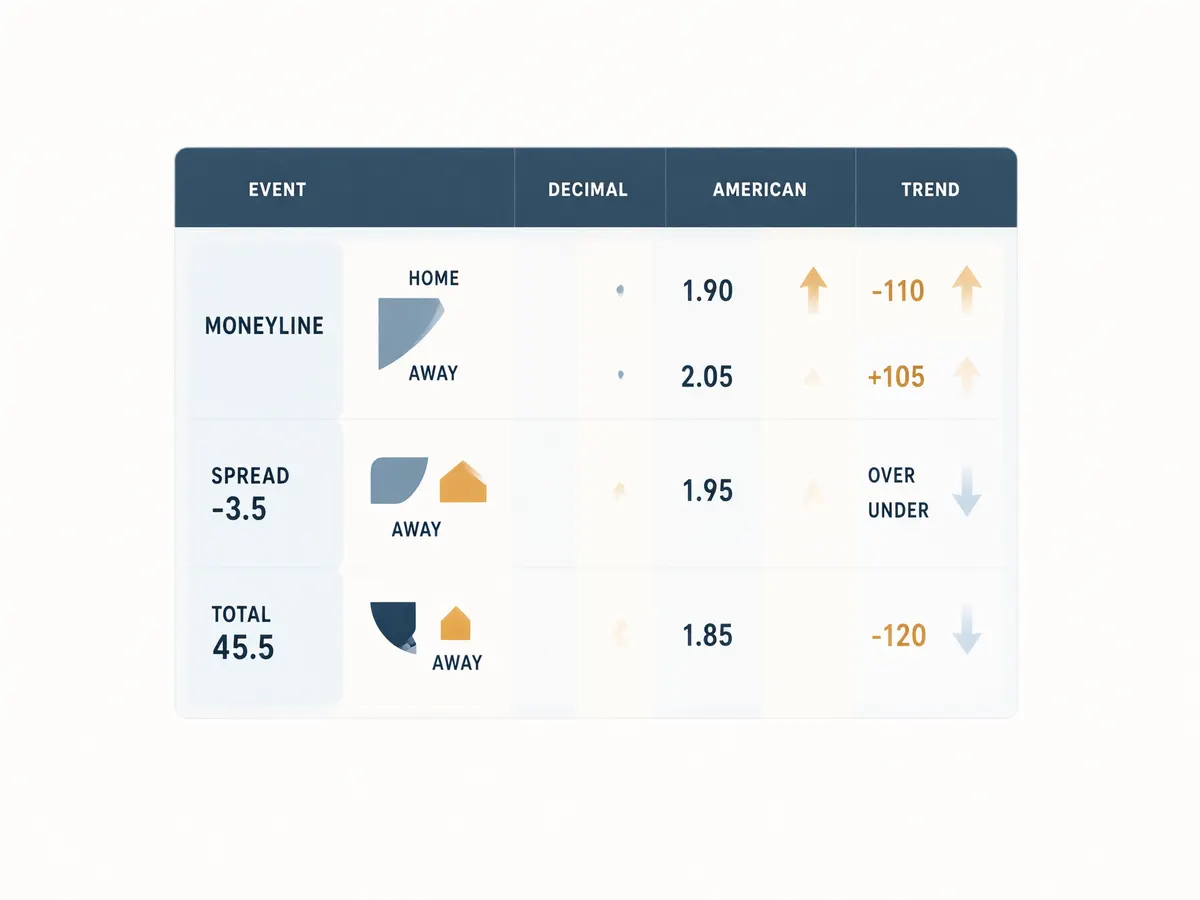
The price is the headline feature. Because a contract settles at either $1 or $0, its trading price reads directly as a market-implied probability: 60¢ implies roughly a 60% chance in the eyes of whoever is trading it. Convert that to something a bettor recognises and it is decimal odds of about 1.67, or roughly -150 in American terms, before fees. Same information, different notation.
Contracts exist on anything with a verifiable, binary resolution: an election result, an economic data release, a company announcement, a game outcome. The exchange writes the resolution criteria in advance, which is where a surprising amount of the real risk lives. Ambiguous wording about what counts as the event occurring has caused more argument on these platforms than price movement ever has.
How prediction markets work, step by step
A prediction market works in four stages: the exchange lists a contract with defined resolution rules, traders buy yes or no shares at a quoted price, the price moves as new orders and new information arrive, and the contract settles at $1 or $0 once the outcome is confirmed. You can usually sell your position back into the market at any point before settlement.
- The exchange creates the contract and publishes the exact wording that determines resolution, along with the settlement source it will use.
- You buy shares at the current ask price, or post a bid and wait for someone to sell to you. Your maximum loss is what you paid; your maximum gain is $1 per share minus what you paid.
- The price drifts as participants react to news, injuries, polling, or simply each other’s order flow. Your position is marked against that price in real time.
- At resolution, winning shares are paid out at $1 and losing shares expire worthless. Fees, where the exchange charges them, come out of the trade or the settlement.
Pricing and implied probability
On a fixed-odds sportsbook, the bookmaker builds its margin into the price. A standard two-sided market priced at -110 on both sides implies 52.38% for each outcome, so the total implied probability sums to 104.76%. The overround is that 4.76% excess above 100%, and it is the operator’s edge regardless of which side wins.
On an exchange, yes and no prices tend to sum close to $1, and the cost of trading shows up as the bid-ask spread plus whatever fee schedule the venue publishes. On paper that looks cheaper. In thin markets it often is not, because a wide spread on a lightly traded contract can cost more than a bookmaker’s vig. Check the spread before you treat “no vig” as a given.
Settlement and payout at resolution
Settlement is binary and automatic. There is no grading dispute in the sportsbook sense, no voided-bet rule for an abandoned match unless the contract’s own wording covers it. The resolution text is the contract. If you did not read it, you bought something you did not fully understand, which is a bad habit in any market.
Prediction markets vs sports betting: where they genuinely diverge
Strip away the marketing and the real differences cluster around price formation, counterparty, and which regulator is watching. Here is the comparison that matters.
| Feature | Prediction market (event contract) | Fixed-odds sportsbook |
|---|---|---|
| Who sets the price | Market participants via bids and offers | Bookmaker-set odds, adjusted by the operator |
| How the venue earns | Trading and settlement fees, spread capture | Built-in margin (overround) on the odds |
| Position structure | Continuous trading; sell back before resolution | Fixed wager to settlement, with optional cash-out |
| Your counterparty | Another trader, which may be a professional firm | The sportsbook itself |
| Primary regulator (US) | CFTC and the exchange’s own rulebook | State gaming commissions and licensing bodies |
| Legal label | Financial derivative | Gambling product |
| Typical consumer safeguards | Market-conduct and customer-funds rules written for financial markets | Licensing conditions that commonly mandate age checks, deposit limits and self-exclusion |
Notice what is missing from that list: any difference in what the activity feels like to a person risking money on a sporting result. That absence is the whole argument.
Why Nevada is picking a fight with the CFTC
The clash is a jurisdictional dispute over whether platforms listing sports event contracts need state gaming licences or whether federal derivatives regulation is sufficient on its own. Dreitzer, as chair of the Nevada Gaming Control Board, has repeatedly challenged the CFTC’s argument that prediction markets should be treated differently from sportsbooks, according to coverage of the October 14 Indian Gaming Association webinar.
His reasoning, as reported, is that the format of a wager does not change its underlying nature. The $10 bet and the $10 contract on the same game result land in the same place. He also attacked the two defences most often used to distinguish the products. First, the ability to exit a position before the final whistle is not unique to exchanges, because online sportsbooks have offered cash-out for years. Second, he questioned whether retail users are genuinely trading against their peers, noting that hedge funds and affiliated firms can take the other side.
That second point deserves more attention than it gets. The CFTC oversees derivatives markets where sophisticated liquidity providers are a feature, not a bug. A retail trader buying a yes contract on a Sunday game may well be filling the order of someone with better models and faster data. That is normal in financial markets. It is also not what “peer-to-peer” implies to a casual reader.
Are prediction markets gambling? The honest answer is contested
Both classifications have a real argument behind them, and nothing here is legal advice. The financial-instrument case: event contracts have a defined payoff, a tradeable secondary market, a legitimate hedging use for anyone with genuine exposure to the outcome, and prices that aggregate information into a public probability estimate. Those are the hallmarks of a derivative, and derivatives on uncertain future events are long-settled business.
The gambling-product case: for sports outcomes specifically, almost nobody holding the contract has exposure to hedge. The economic substance is a stake on a game, the counterparty is faceless, and the activity sits inside a licensing framework that states built deliberately, with age verification and addiction safeguards attached. Dress it in financial vocabulary and it still clears a bar that state law was written to govern.
Where I will take a side is narrower than the legal question. The claim that continuous trading makes event contracts categorically unlike betting is stated across the industry with far more confidence than the evidence supports. Cash-out already gave sportsbook customers an exit; pre-settlement liquidity is a difference of degree, not of kind. The differences I would actually stake an argument on are who sets the price and which rulebook you fall under when something goes wrong. Those are substantial. “You can sell early” is not.
What to do before you put money on an event contract
Treat the platform question first and the trade second.
- Confirm the registration or licence under which the platform operates, and in which jurisdictions it accepts users. A federal derivatives registration is not a state gaming licence, and vice versa.
- Read the contract’s resolution wording in full, including the settlement source and the cutoff time. Edge cases in that text are where disputes actually happen.
- Check the spread and the fee schedule before assuming an exchange is cheaper than a sportsbook. A wide spread on a thin market can exceed a bookmaker’s margin.
- Assume your counterparty may be a professional firm rather than another fan with a hunch.
- Find out which player-protection tools exist on the platform: deposit limits, self-exclusion, reality checks. Frameworks written for financial markets do not generally mandate them, so do not expect them by default.
And treat the price movement as a real financial risk, not just a betting risk. A contract bought at 70¢ can be worth 20¢ an hour later on news that has nothing to do with the final result, and the temptation to average down on a losing position is a mechanic sportsbooks never offered you. If you are risking money on outcomes, risk only what you can afford to lose, set limits in advance, and use the self-exclusion or cool-off tools available to you if the activity stops being entertainment. Support services exist in most jurisdictions and are free to contact.
The classification fight will land somewhere, in courts or in Congress or in a CFTC rulemaking. Until then, the practical position is uncomfortable but clear: you may be using a product that two different regulators each describe differently, and your protections depend on which one turns out to be right.