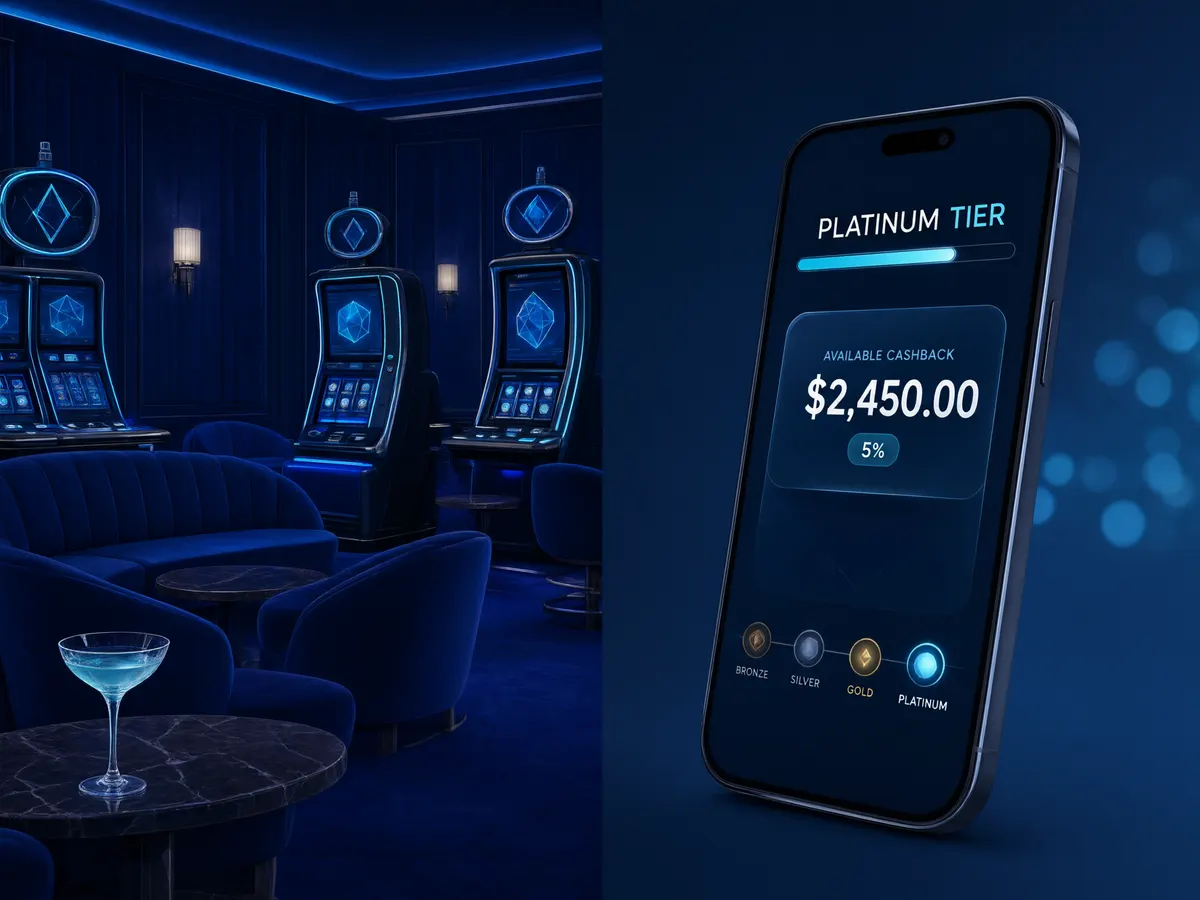

AI in online casino marketing means software selects which bonus you see, and when, by scoring your account’s behaviour against a prediction about what you will do next. Not a human picking a promo. Not one campaign mailed to everyone. A model, running continuously, deciding that this offer sent at this hour has the best chance of changing your next action.
Most players have worked this out already. The usual phrasing is “they’re tracking me”, and that part is correct. The reason people give for it is usually wrong. The common assumption is that the offer is a reward for loyalty, or a reaction to a big win, or a consolation after a losing run. It is rarely any of those. The offer arrives because a model estimated that you, specifically, were the player most likely to be shifted by it. Loyalty is not the input. Predicted responsiveness is.
What AI-driven marketing means at an online casino
Algorithmic personalisation is the practice of building each player’s promotional journey individually from their own recorded behaviour, rather than sending the same offer to a whole database. The software decides the offer, the channel, and the send time per account.
From mass bonus blasts to individual journeys
The old model was simple and dumb. An operator wrote a Friday reload promo, pushed it to everyone on the list, and measured the response rate. Players who had deposited that morning got it. Players who had not logged in for a year got it. Players who had self-excluded sometimes got it too, which is one of several reasons the practice attracted regulatory attention.
The current model treats the database as a few hundred thousand separate journeys. Your account emits events: a login, a deposit, a game opened, a session that ended after four minutes, a push notification ignored. Those events update a set of scores attached to your profile. The scores decide what you are shown. Two accounts that behaved identically last month can sit in completely different places on that map.
What a platform like Optimove actually does
Optimove is a business-to-business customer marketing platform that operators subscribe to, not something one casino brand invented. It collects player data from the operator’s systems, builds predictive models on top of it, and then triggers campaigns automatically based on what those models output. Several vendors sell broadly similar retention marketing technology; the mechanics described here are close to industry standard rather than unique to any one supplier.
The data that feeds the model
The inputs are ordinary account records, used at a level of detail most players never think about:
- Deposit size, deposit frequency and the gaps between deposits
- Session timing, including which days and hours you usually play
- Idle periods measured against your own normal rhythm, not a fixed calendar
- Game choice and bet size, including whether you move between slots and live tables
- Bonus history: which offers you redeemed, which you ignored, how you played through them
- Withdrawal behaviour and how quickly you cash out
- Channel response, such as whether you open email, push or SMS
From those inputs the platform produces probabilities. Likelihood to deposit in the next seven days. Likelihood to churn. Predicted lifetime value. Which offer from the available set is most likely to produce a response, and what time of day that response is most likely. None of this involves the system understanding you. It is pattern matching against the histories of everyone who behaved similarly before you.
Why the bonus arrives at that exact moment
Send time is itself a modelled decision. The platform does not wait for a marketing calendar; it waits for your account to cross a threshold it has been told to watch.
Three kinds of trigger do most of the work. Inactivity triggers fire when your gap between sessions exceeds your personal baseline, so a player who normally logs in twice a week gets flagged after a few days while a monthly player does not. Deposit-pattern triggers fire around your habitual funding behaviour, which is why a reload offer can land the evening before the day you usually top up. Lifecycle triggers fire on stage changes: the onboarding sequence for a new registration, a reactivation push for a lapsing account, a different track entirely once an account is classified as high value.
Real-time triggers sit alongside these. A balance hitting zero, a long session ending abruptly, a deposit that is larger than your usual one, all of these can be configured as events worth acting on within minutes. If you have ever finished a session flat and had free spins appear before you closed the tab, that is the mechanism, not coincidence.
Why your offer doesn’t match your friend’s
Two players can deposit the same amount on the same game on the same night and receive different offers, because the platform is not pricing the deposit. It is pricing the prediction.
Segmentation groups accounts by value tier, churn risk and play style, and newer models score individually rather than by bucket. A player whose history shows they redeem every free spin offer and then withdraw as soon as the wagering clears looks expensive to the model, and may be shown less. A player who consistently ignores promotions might get a larger nudge, because the predicted cost of losing them is higher than the cost of the offer. Someone flagged as likely to churn can receive a better headline figure than a reliable regular, which inverts how most people assume loyalty schemes work.
This is the part worth sitting with. The generosity of an offer tells you something about the model’s estimate of you. It does not tell you the offer is good.
What the new Optimove customer results actually claim
According to a report published by G3 Newswire, Optimove released its first customer results for Optimove AI, saying the technology is helping operators lift engagement, deposits and revenue, following the company’s Industry Innovation of the Year win at the SBC Awards 2026. The company describes itself as the creator of Positionless Marketing and positions its product as a player engagement solution for iGaming and sports betting operators.
Read that carefully. This is vendor-supplied customer data announced by the vendor, not an independent audit, and the three metrics named are engagement, deposits and revenue. Those are the operator’s success criteria. “Measurable gains” in this context means more players returning, more accounts converting, and more money staked, achieved through better targeting of the same promotional budget.
Translated to the player side, the implication is modest and specific: offers that are more relevant and better timed. Nothing in that claim suggests offers that are more generous. Sharper targeting can mean the same bonus spend reaches fewer, better-chosen players rather than more value reaching each one.
Reading a personalised offer without the flattery
The standard bonus advice is to shop around and compare. That advice breaks down here. You cannot benchmark an offer that was generated for your account alone against a public promotions page, because the version you received may not appear there. Comparison stops being available, so the only reliable benchmark left is the arithmetic.
Signs an offer was timed to your play pattern
It landed within minutes of a session ending, or of a balance reaching zero. It arrived just before the day you usually deposit. It followed a longer-than-usual break, or a single unusually large deposit. It is tied to the specific game you played most recently rather than a general slot. It came through the channel you actually respond to, after you ignored others. None of this is sinister in itself. It is simply evidence that the timing is a prediction about you, not an accident.
The check to run before you accept
Timing changes nothing about the terms. Run the same arithmetic you would on any promotion: the wagering multiplier against the bonus amount, so 30× on a 1,000 bonus means 30,000 in turnover before withdrawal; the game weighting, since table games often contribute far less than slots; the max bet cap while the bonus is active, which can void winnings if breached; the maximum cashout; and the expiry window, which is frequently the term that makes a well-timed offer unworkable. An offer that arrived at a flattering moment with a 60× requirement is still a 60× requirement.
There is a responsible-play dimension here that deserves stating plainly. Systems optimised for engagement and deposits will, by design, reach you at the moments you are most likely to act, including the moments when stopping would have been the better call. If offers seem to find you precisely when you had decided to stop for the night, treat the pattern as information about the system rather than about your luck. Deposit limits, loss limits, cool-off periods and withdrawing marketing consent all work regardless of what any model predicts, and in regulated markets operators must stop marketing to accounts that have self-excluded.
What stays unresolved is visibility. You can see the offer; you cannot see the score behind it, the segment you sit in, or whether your churn probability went up last week. Most markets give players no right to that view, and the vendor announcements that discuss these systems are written for operators, not for the people being modelled. Until that changes, the only levers genuinely in your hands are the terms on the page and the limits you set yourself.