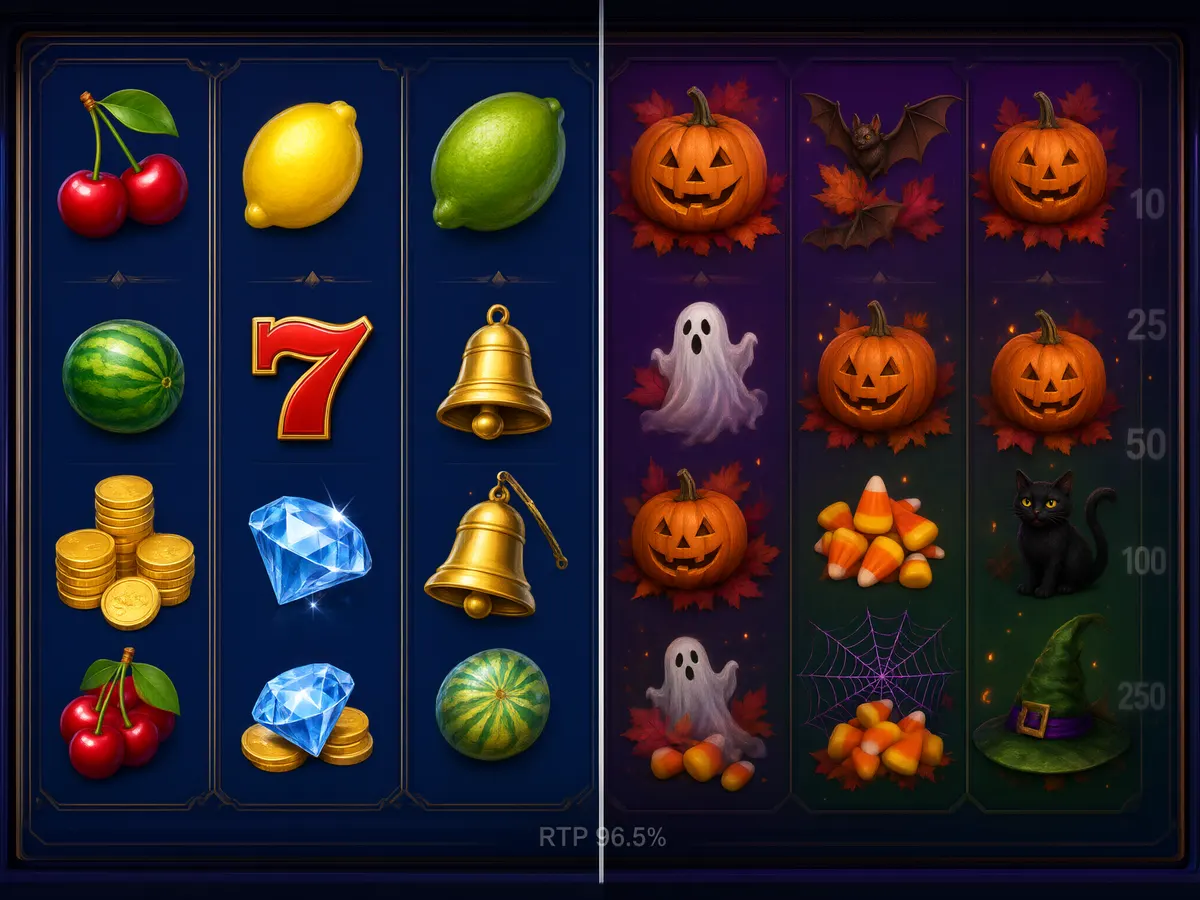
What a halloween casino promotion actually is
A Halloween casino promotion is a time-limited themed bonus campaign: a set of rewards an operator makes available only inside a fixed date window, usually October, wrapped in seasonal branding. The theme is decoration. The mechanics underneath, the opt-in deadline, the wagering requirement and the expiry clock, are identical to the offers running in March.
That is the part worth your attention, and it is why this piece uses one real campaign, BetMGM’s LegendSCARY, purely as a worked example of how these promotions are built. You will read everywhere that you should “always check the wagering requirements” before opting in. That advice is correct. The reason usually given for it is wrong, and the gap between the two is where players lose money.
LegendSCARY as a case study, not a recommendation
BetMGM is a US-licensed operator. It is not available to players in India, this article is not an endorsement, and nothing here is an offer. It is used here only because it is a clearly documented, publicly reported example of the seasonal playbook.
What the trade report confirms
According to trade coverage from G3 Newswire in October 2026, BetMGM launched LegendSCARY as what the company called its biggest seasonal casino campaign of the year, running through Sunday 1 November. The reported ingredients: a Halloween version of an existing popular casino title, themed promotions, sweepstakes, leaderboard competitions and rewards, tied to BetMGM’s “Make It Legendary” brand platform. Oliver Bartlett, the company’s Senior Vice President of Gaming, framed the month around discovering a new game, climbing a leaderboard and unlocking rewards.
Notice what that announcement does and does not contain. It names the format, the window and the reward types. It does not publish the wagering multiplier, the game weighting, the maximum bet while a bonus is active, or the expiry on any winnings. That is normal for a launch announcement, and it is the whole lesson: marketing copy describes the shape of a promotion, the terms and conditions describe its value.
The operator playbook behind seasonal casino bonuses
Seasonal casino bonuses follow a standard four-part structure: a fixed campaign window, an opt-in step, a reward layer that refreshes weekly, and a completion requirement attached to each reward. Almost every themed campaign you will encounter, Halloween, Diwali, Christmas, is some arrangement of those four pieces.
Eligibility windows and opt-in deadlines
An eligibility window is the exact period during which qualifying activity counts, and it is defined in the operator’s server time, not yours. A month-long campaign is rarely one window. More often it is four or five short windows stacked inside a month, each with its own opt-in, its own qualifying days, and its own deadline.
Time zones matter more than players expect. A US-facing operator closing a weekly leg at 23:59 Eastern is closing it roughly half past nine the following morning in India, which sounds generous until you realise the opt-in that unlocked it probably closed a day earlier. Deposits made before you opt in generally do not count retroactively. If there is one mechanical rule to remember, it is that one: opt in first, then deposit, then play.
Free spins, deposit matches and leaderboards
Three reward formats dominate, and they behave very differently.
- Free spins offers grant a set number of spins on one named game at a fixed stake value, with winnings often paid as bonus funds that still carry a playthrough requirement.
- Deposit matches add a percentage of your deposit as bonus credit, which is the format where wagering requirements bite hardest, because the multiplier is applied to a larger number.
- Leaderboard tournaments rank players by turnover, points or biggest multiplier over a period, which means they reward volume of play rather than outcome, and most entrants finish outside the paying positions.
Themed slot promotions usually combine the first and third: free spins on the seasonal title, plus a leaderboard that only that title feeds. That is a deliberate design, not a coincidence. The point of a themed release is distribution, getting players onto a new game, and the promotion is the vehicle.
Wagering requirements: the number everyone quotes, and the one that decides it
A wagering requirement, also called playthrough or rollover, is the number of times a bonus must be wagered before any of it or its winnings can be withdrawn. Take a ₹2,000 bonus at 35× wagering: 2,000 × 35 = ₹70,000 of qualifying bets before a withdrawal is possible.
Here is where the standard advice goes soft. Players read “35×” and compare it to “25×” as though the lower number is automatically better. The multiplier alone tells you almost nothing, because game weighting determines how much of each bet actually counts. If slots contribute 100% and blackjack contributes 10%, that same ₹70,000 requirement means something completely different depending on where you play it.
| Game weighting | Value counted per ₹100 bet | Actual turnover to clear ₹70,000 |
|---|---|---|
| 100% | ₹100 | ₹70,000 |
| 50% | ₹50 | ₹1,40,000 |
| 20% | ₹20 | ₹3,50,000 |
| 10% | ₹10 | ₹7,00,000 |
A 25× bonus restricted to 10%-weighted games is a far heavier obligation than a 40× bonus on 100%-weighted slots. So yes, check the wagering requirements, but check the weighting table and the expiry date in the same breath, because those two decide whether the multiplier is achievable at all. A seven-day expiry on a ₹70,000 requirement is a different product from a thirty-day one.
The checks worth making before you tick the box
Run these six checks on any seasonal promotion, in this order. Each one is a lookup in the terms, not a judgement call.
- Find the game weighting table and identify which eligible games count at 100%. If the themed slot itself is weighted below 100%, that is worth knowing before you spin it.
- Find the maximum bet permitted while a bonus is active. Exceeding it, even once, commonly voids the bonus and any winnings from it. Caps around a few hundred rupees equivalent are typical.
- Note two separate expiry dates: when the bonus itself lapses, and when winnings derived from free spins must be wagered by. They are frequently different.
- Look for a maximum cashout or win cap on free spins winnings. A cap of, say, 10× the bonus value quietly sets a ceiling on the entire offer.
- Read the excluded games list. Jackpot slots, certain live tables and specific high-RTP titles are routinely barred from bonus play.
- Confirm the minimum qualifying deposit and whether it must be made after opting in, plus whether any deposit method is excluded.
If any of those six is not findable in the published terms within a few minutes, treat the absence as the answer and skip the offer.
Are october casino deals worth it?
Sometimes, and the deciding factor is never the headline number. A promotion’s value depends on how much turnover it demands, the house edge of the games you must put that turnover through, and whether a win cap limits the upside. Push ₹70,000 of required turnover through a slot with a 4% house edge and the expected cost of clearing is substantial relative to a ₹2,000 bonus, regardless of how the offer was advertised.
Volatility complicates it further. A high volatility themed slot can clear a requirement in a handful of spins or drain the balance before you are halfway, and the RTP figure tells you nothing about which. A bonus reduces the cost of playing; it does not change the fact that the house holds a mathematical edge on every round, and no promotion, seasonal or otherwise, alters the long-run arithmetic.
Red flags that justify walking away: wagering applied to deposit plus bonus rather than bonus alone, expiry windows under seven days on large requirements, win caps that are a small multiple of the bonus, and terms that reserve the right to amend the promotion mid-campaign without notice.
Reading any seasonal bonus offer in five minutes
Weighting, max bet, expiry, win cap, exclusions, minimum deposit. Six lookups, in that order, and they work for a Halloween campaign, a Diwali campaign or a random Tuesday reload. Marketing tells you the shape of an offer; only the terms tell you its price.
What the terms will never tell you is the one variable that matters most, which is how you behave once the clock is running. A deadline is a device for compressing play into a short window, and that is exactly the condition under which deposit and loss limits stop being paperwork and start being useful. Set them before you opt in, not after. If play stops feeling optional, use the operator’s cool-off or self-exclusion tools, or speak to a free support service such as GambleAware (formerly BeGambleAware). Only gamble with money you can afford to lose, and only if you are of legal age in your jurisdiction.