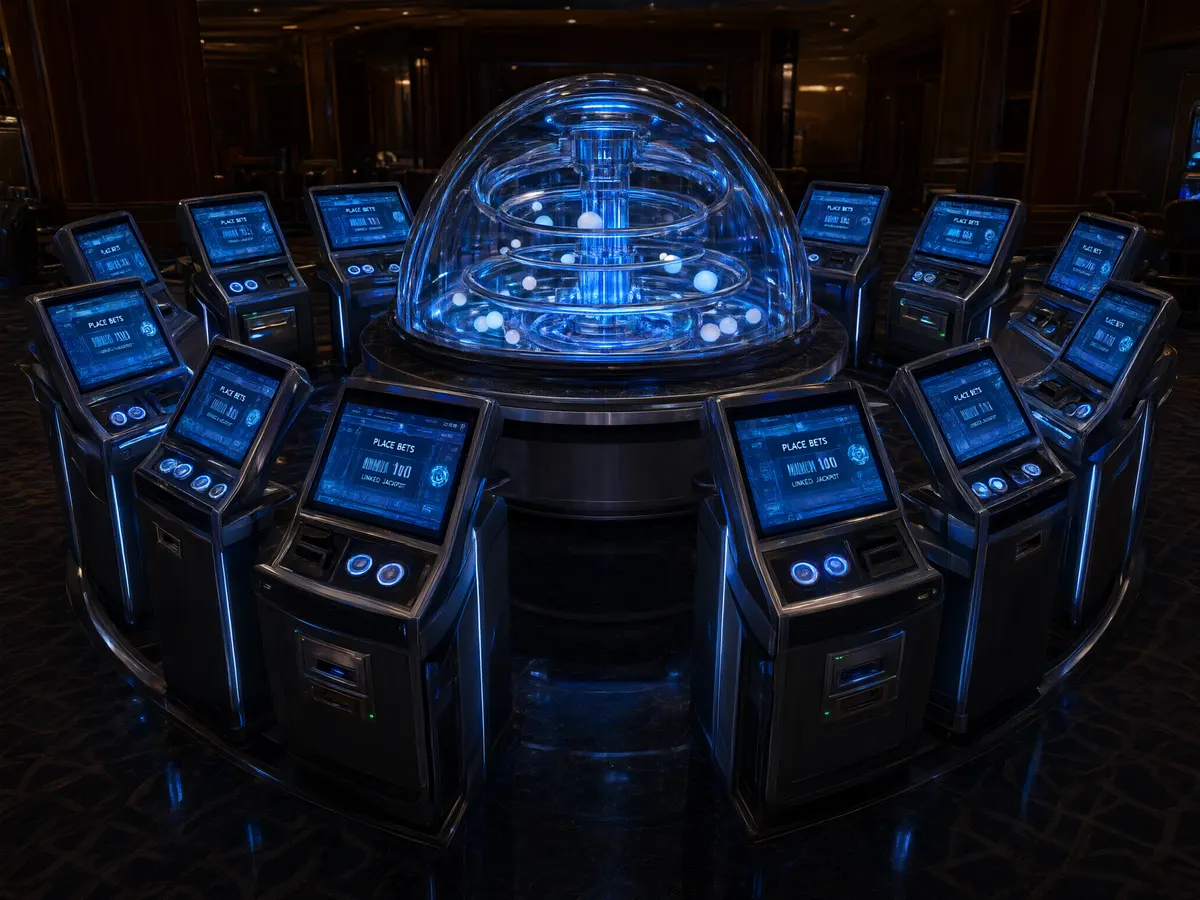
Ever stood on a casino floor in front of a semicircle of touchscreen terminals all pointed at one glass dome and wondered whether you were looking at slots, a table, or something in between? That’s an electronic table game, and it’s a genuinely separate hardware category: a set of linked betting stations where every player wagers on the same outcome, generated once per round by a shared mechanical or RNG-driven randomizer instead of a human dealer. Interblock’s Battle for Earth has just cleared Pagcor approval ahead of a Manila debut, which makes this a good moment to get the electronic table game explained properly rather than filed under “weird slot machine”.
What Pagcor actually signed off on
According to GGRAsia, Interblock’s Battle for Earth has received approval from the Philippine Amusement and Gaming Corporation (Pagcor), with a Manila launch planned for the fourth quarter of 2026. Interblock is a supplier that specialises in this category of product, so the approval is for a floor-based machine, not an app.
That is the whole of the reported news, and it is worth being clear about how little a regulatory sign-off tells a player. An approval means the game’s hardware and software passed the regulator’s technical and compliance checks for that jurisdiction. It does not publish the paytable, the bet limits, the number of stations, or the house edge. Those arrive with the installation. Anyone telling you the return figures on a game that hasn’t launched is guessing.
What an electronic table game is, mechanically
An electronic table game, usually shortened to ETG, is a multiplayer gaming machine built around one randomizer serving many terminals. The randomizer may be electromechanical, a physical roulette wheel in a dome, a dice shaker, an automated card shoe, or purely digital and RNG-driven. Each terminal is a betting interface: you place chips on a screen, the round resolves once, and every station is paid off the same result.
One result, many bets
The sequence is simple and it repeats. Betting window opens, players at every connected station place their wagers, the window closes, the randomizer produces a single outcome, each terminal settles that player’s own bets against it. You are not playing against the people beside you in the sense that their bets change your payout; you are all reacting to the same event at the same second, which is why these banks get noisy.
Why operators build them this way
Running one randomizer for a dozen or more seats is cheap per player. There is no dealer to pay across three shifts, no chip tray to count down, no table to close when the pit gets quiet. The game runs at the same speed at 4am as it does on a Saturday night, and rounds resolve faster than a human dealer can physically deal, shuffle and pay. That combination of lower overhead and higher round frequency is the entire commercial case for the category.
How it differs from a slot cabinet
A slot machine is single-player and self-contained: your spin, your result, nobody else’s outcome touches yours. An ETG shares one outcome across every connected station. That is the dividing line, and it changes the texture of play more than the graphics do.
The second difference is what you’re betting on. On a slot you commit a stake and the reels decide. On an ETG you’re usually placing positional bets on a table layout, inside and outside numbers, player or banker, side bets, which means multiple simultaneous wagers at different prices within a single round.
| Feature | Slot machine | Electronic table game | Live dealer table |
|---|---|---|---|
| Players per outcome | One | Many, shared round | Many, shared round |
| Who generates the result | RNG in the cabinet | Shared randomizer, mechanical or RNG | Human dealer |
| Round speed | Player-controlled | Fixed betting windows, fast | Limited by the dealer |
| Staffing needed | None | Attendant only | Dealer per table, per shift |
| Bet structure | Stake per spin | Multiple table-layout bets | Multiple table-layout bets |
How it differs from a live dealer table
A live dealer table, whether in a pit or streamed to your phone, has a real person producing the outcome; an ETG replaces that person with the randomizer. Everything else follows from that swap. The automated game cycles faster, needs no shift rota, and does not shut down overnight. If you want the distinction between automated and human-run formats in more depth, our explainer on live dealer vs RNG games covers it.
What you give up is the part some players go to a table for: a dealer who talks to you, hands you chips, and slows the pace when the shoe gets interesting. ETGs are not trying to replicate that. They’re built for players who would rather have more rounds per hour and a screen they control themselves.
Why a crash-game player would recognise the rhythm
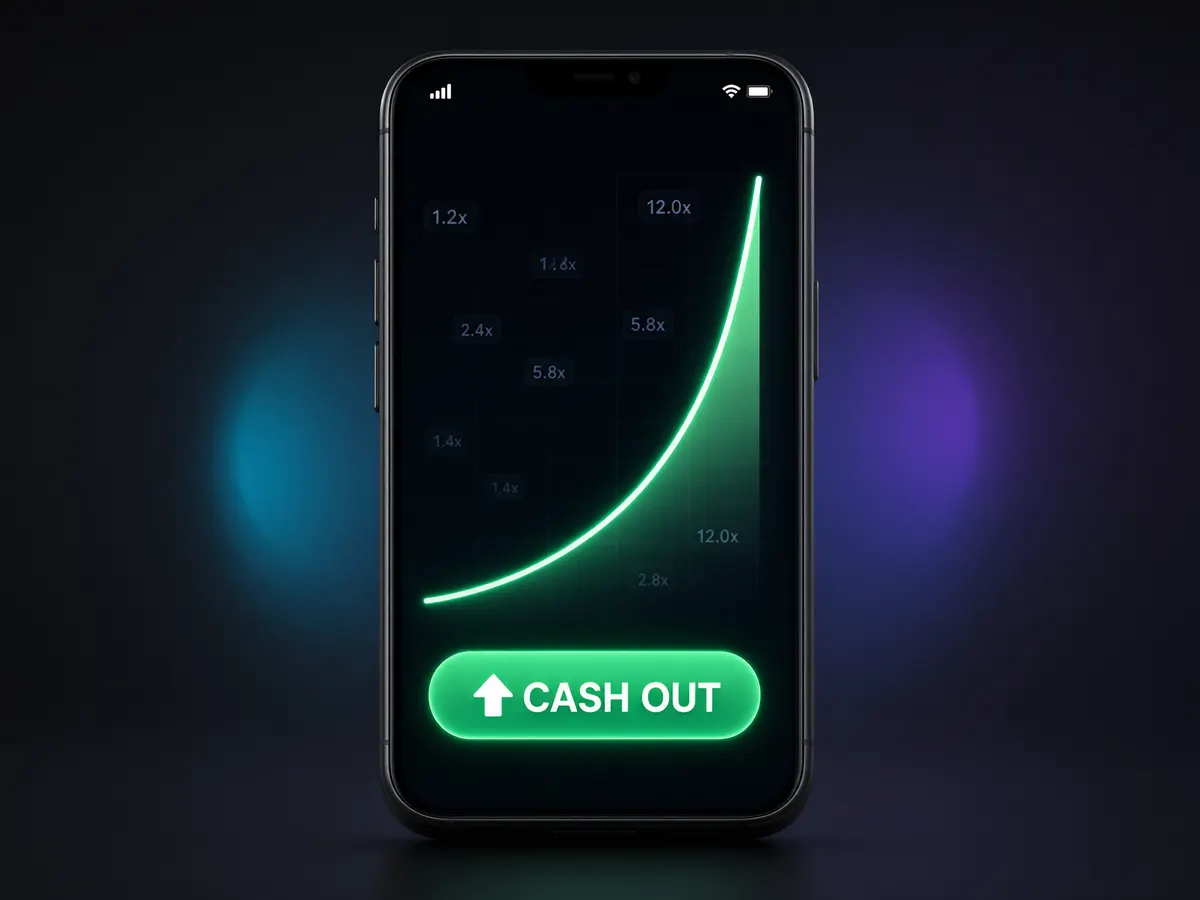
Crash games and multiplayer ETGs share the same structural hook: short repeated rounds resolving on a single public event that everybody watching reacts to at once. In a crash game, one multiplier climbs and everyone in the round sees the same number; in a linked ETG, one wheel or shoe produces one result and every station settles against it. Nobody gets a private outcome.
That shared-event quality is what keeps a bank of terminals louder than a bank of slots. It also explains the auto-play and repeat-bet buttons on both formats, since fast rounds only stay fast if placing the next wager takes one tap. If you want the underlying math of the crash format for comparison, see our breakdown of crash game mechanics.
The appeal is real, but so is the arithmetic. More rounds per hour means more total money wagered per hour, and the house edge is applied to every unit staked. A faster game is not a better-value game; it’s the same edge collected more often. That is the single most useful thing to understand about the whole category.
Where the reporting stops on Battle for Earth
We do not know how Battle for Earth plays. The approval notice establishes the regulator, the market and the quarter, and nothing about the game’s bet types, round length, station count or competitive layer. The title suggests a themed, collective framing, and Interblock’s broader product line sits squarely in the linked-station ETG category, but I’m not going to reconstruct a paytable from a product name. When the game lands in Manila, the information that actually matters to a player, the bet limits, the house edge on each wager available at the station, and the minimum per round, will be printed on the machine and in the help screens. Read those before you read any preview, including this one.
Where you can actually play these
ETGs like Battle for Earth are land-based casino floor products, and each market approves them separately. Pagcor’s clearance applies to the Philippines; it has no bearing on whether the same cabinet appears in Macau, Singapore, Goa or a Las Vegas floor, each of which runs its own technical approval process. There is no confirmation of an online version of Battle for Earth, and an online crash game is a different product with different mechanics, even where the pacing feels familiar.
So if you’re a crash-game regular curious about the format, the honest position is this: the category is worth understanding, the Manila installation is more than a year out on the reported timeline, and nothing about either format changes the fact that every bet carries a built-in edge against you. Set a deposit or session limit before you sit down at a fast-round game, because fast rounds are exactly where limits stop being theoretical. If play ever stops feeling like entertainment, the cool-off and self-exclusion tools exist for that reason.