Open the new-games tab of almost any casino lobby in the back half of October and the thumbnails turn orange. Pumpkins, fog, bats, a lot of purple. The Castle of Slotenstein is Evoplay’s entry in that queue: a Frankenstein-inspired, Halloween themed slot built around three coloured pumpkin bonus symbols that feed a Hold & Win round. The announcement describes that bonus mechanic in unusual detail. What it does not describe is almost every number a player would actually want before putting money behind it.
What The Castle of Slotenstein actually is
The Castle of Slotenstein is a Halloween-timed slot from Evoplay, themed on a mad scientist and the towering creation he has stitched together, with players sent inside the doctor’s castle. Evoplay is a game development studio that describes itself as award-winning, and this release sits in the seasonal slot releases slot that studios reserve each autumn.
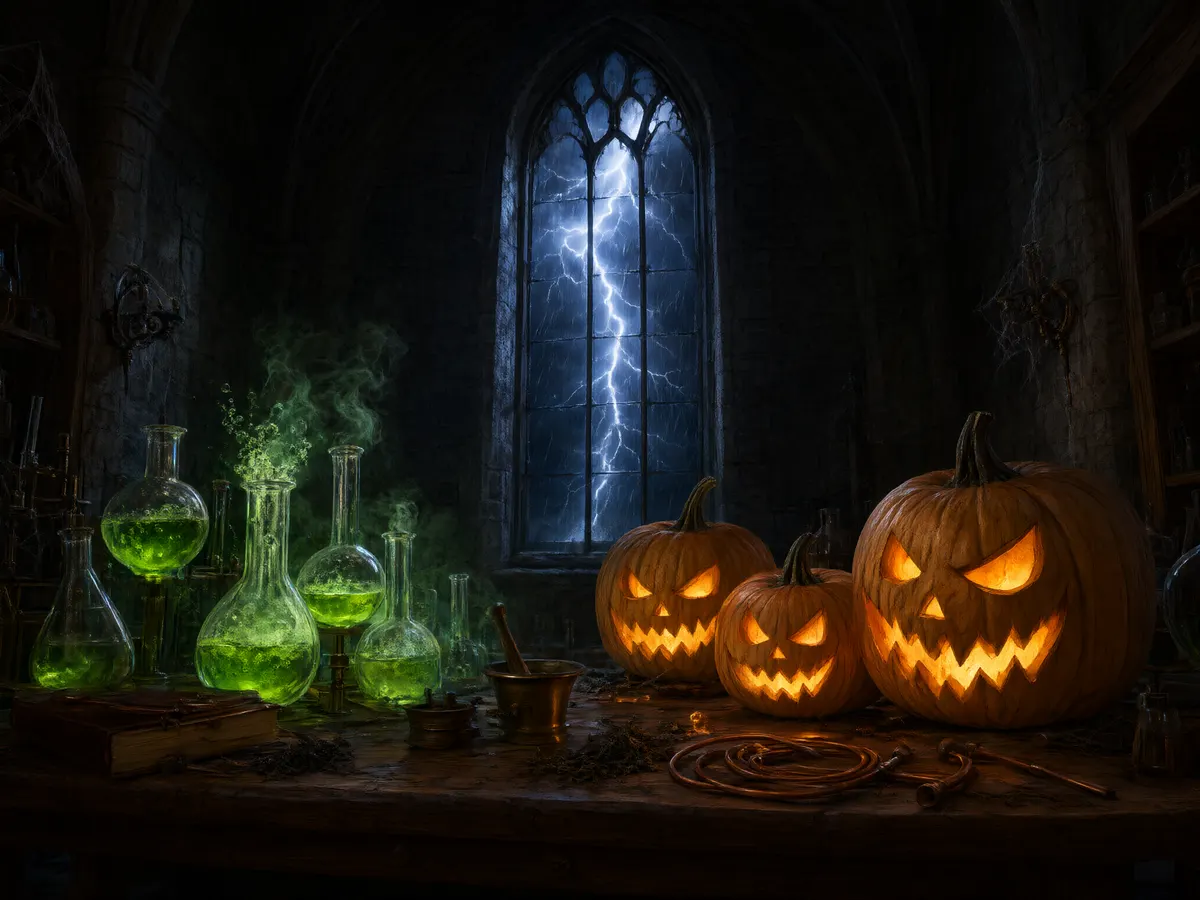
The premise is Frankenstein by way of trick-or-treat. Instead of the usual laboratory iconography doing all the work, the feature symbols are carved pumpkins in four colours, which is a slightly odd mash of two horror vocabularies and probably a deliberate one. Pumpkins read instantly in a lobby thumbnail at 200 pixels wide. A green glass flask does not.
Beyond that, the visual description in the announcement is thin: an eerie castle, the doctor, the monster. No grid size is stated. No art direction notes beyond the theme. If you want to judge whether the thing looks good, you will have to look at it.
The three boosters, and the word “up to”
Three coloured pumpkin bonus symbols each carry a different booster, and each one changes the Hold & Win round in a specific way. This is the part of the release that is genuinely specific, so it is worth taking literally, including the hedging verbs.
| Symbol | Reported effect | Qualifier in the wording |
|---|---|---|
| Green Shock | Raises the opening number of Bonus Game spins from three to four | Stated flatly |
| Purple Trick | Generates extra bonus symbols on its reel, or increases the values of existing ones up to 5x | “can” and “up to” |
| Blue Treat | Adds its value to every Orange bonus symbol already on the grid | Stated flatly |
Orange is the fourth colour, and from the description it is the plain value-carrying bonus symbol that the other three act upon. Note what Purple does and does not promise. “Can generate additional bonus symbols” is not “generates”. “Up to 5x” is a ceiling, not a typical outcome, and nobody has published the distribution underneath it. Marketing copy around horror slot games leans on these ceilings because the ceiling is the only number that sounds like a reason to click.
How the bonus round runs
The Bonus Game starts with three or four spins depending on which boosters are active, only bonus symbols land during it, and every new bonus symbol resets the spin counter. That last clause is the mechanic. Hold & Win rounds live or die on the reset, and a reader who skims “begins with three spins” and concludes the round is short has misread it: three is the gap you are allowed between successes, not the total length of the feature. A round can theoretically run a long time and can equally end on the fourth spin having added nothing.
What triggers it is not in the release
The announcement explains what happens once the Bonus Game begins and says nothing about how many bonus symbols are needed to begin it. For a Hold & Win game that is the single most important number for understanding how the game feels, because trigger frequency is what separates a slot you can sit with from one that drains a balance between features. Until the paytable is live in a real lobby, that detail is unverified, and I am not going to guess at a figure that sounds plausible.
Boosters are not better odds
Extra boosters change the shape of a bonus round, not the mathematical edge built into the game. This is the misconception worth killing before it spreads. A richer-sounding feature set usually signals higher volatility, meaning outcomes are spread into fewer, larger results rather than improved ones. Return to player is set by the paytable as a whole; volatility only redistributes it.
Put plainly: if two slots both return 96% over the long run, the one with three stacked boosters and a resetting counter will simply deliver that 96% in a lumpier pattern. The house edge, the inverse of RTP, does not care how dramatic the laboratory looks. There is no version of a Hold & Win round that tilts the long-run arithmetic toward the player, and anyone writing otherwise about this release is selling something.
Why October, every single year
Studios cluster horror launches in October because player search and casino lobby placement both spike then, and a seasonal theme gives operators a ready-made promotional hook. Casinos build October campaign pages weeks ahead and need stock to fill them; a provider with a Halloween title lands a lobby position it would have to fight for in March.
The honest part of this is that the seasonality is in the marketing, not the maths. A pumpkin slot launched in October is still in the catalogue in February, running on the same RNG, paying the same long-run percentage. The calendar affects where you see the game, how heavily it is promoted, and sometimes which bonus offers point at it. It affects nothing inside the game.
Monster theming is a wrapper, not a genre
Monster and gothic-horror theming is one of the most durable recurring categories in slot development, recycled annually across the industry because the iconography is public domain and instantly legible. Frankenstein, vampires, haunted houses: no licensing fee, no explanation needed, immediate recognition in a crowded lobby grid.
Which is why the theme tells you almost nothing about the product. The monster slot theme here sits on top of Hold & Win, a framework that has been built and rebuilt by most major studios for years. Evoplay’s differentiation is in the three boosters and the counter reset, not in the fact that there is a castle. Judge the release on the mechanic. The art is the packaging.
What to check before you load it
Confirm the RTP, volatility rating and maximum win on the operator’s own game information panel, because none of those were published with the announcement. Some providers ship games with multiple selectable RTP configurations, and the version a given casino licenses may not match whatever figure circulates in a review. The in-client paytable is the only version that applies to your spins.
Three further things sit in the unverified column. No rollout schedule or list of operators and markets has been stated, so availability will appear casino by casino. No grid size or bet range has been published. And nothing in the announcement is a statement about outcomes for any individual session, however much the phrase “monstrous wins” wants to imply otherwise.
Set a deposit limit before you open a new release rather than after, treat the stake as the cost of playing rather than money you expect back, and use the operator’s session reminders and cool-off tools if a session stops being fun. If gambling is affecting your finances or wellbeing, contact a national gambling support service.
The interesting question about The Castle of Slotenstein is not whether the castle looks suitably eerie. It is what the trigger frequency and the volatility band turn out to be once the game is live and the paytable is readable, because those two numbers decide whether the resetting counter is a real feature or a dressed-up way of ending the round early. Nobody has published them yet. Wait for the lobby, not the press release.