One integration, 20,000 games: the number behind the Rome showcase
More than 20,000 titles from over 200 providers, delivered through a single integration. That is the figure EGT Digital attached to its Gaming Aggregator going into SiGMA World 2026 at Fiera Roma, held from 2 to 5 November, and it tells you more about the company than the game trailers do. EGT Digital slots were only one part of a full-portfolio presentation that also covered sportsbook tools and a modular platform called X-Nave.
For a player, the relevance is indirect but real. Suppliers that sell platforms and aggregation alongside their own games get their titles in front of more operators, which means more lobbies carrying their slots. Whether that is good news depends entirely on what the games themselves do, and on numbers the announcement did not publish.
Where EGT Digital sits in the supply chain
EGT Digital is a business-to-business supplier, not a casino. It builds games and the software operators run them on; it does not take your deposit, hold your balance or pay your withdrawal. The company is the online arm of Euro Games Technology, the Bulgarian group long associated with land-based slot cabinets, and that heritage shows in the style of much of its online catalogue.
The distinction matters when something goes wrong. If a bonus is withheld or a payout stalls, that is the operator’s responsibility and the operator’s regulator, not the studio’s. The studio is accountable for the game logic, the random number generator behind it and the accuracy of the paytable.
On licensing, the Rome announcement listed no jurisdictions, and I am not going to supply a list it did not. If you want to know which regulators have certified a given EGT Digital title, the honest answer is to check the supplier’s own game information pages and the licence footer of the casino you are playing at. Both are public; neither needs guessing.
What was actually on the stand at the SiGMA World exhibition
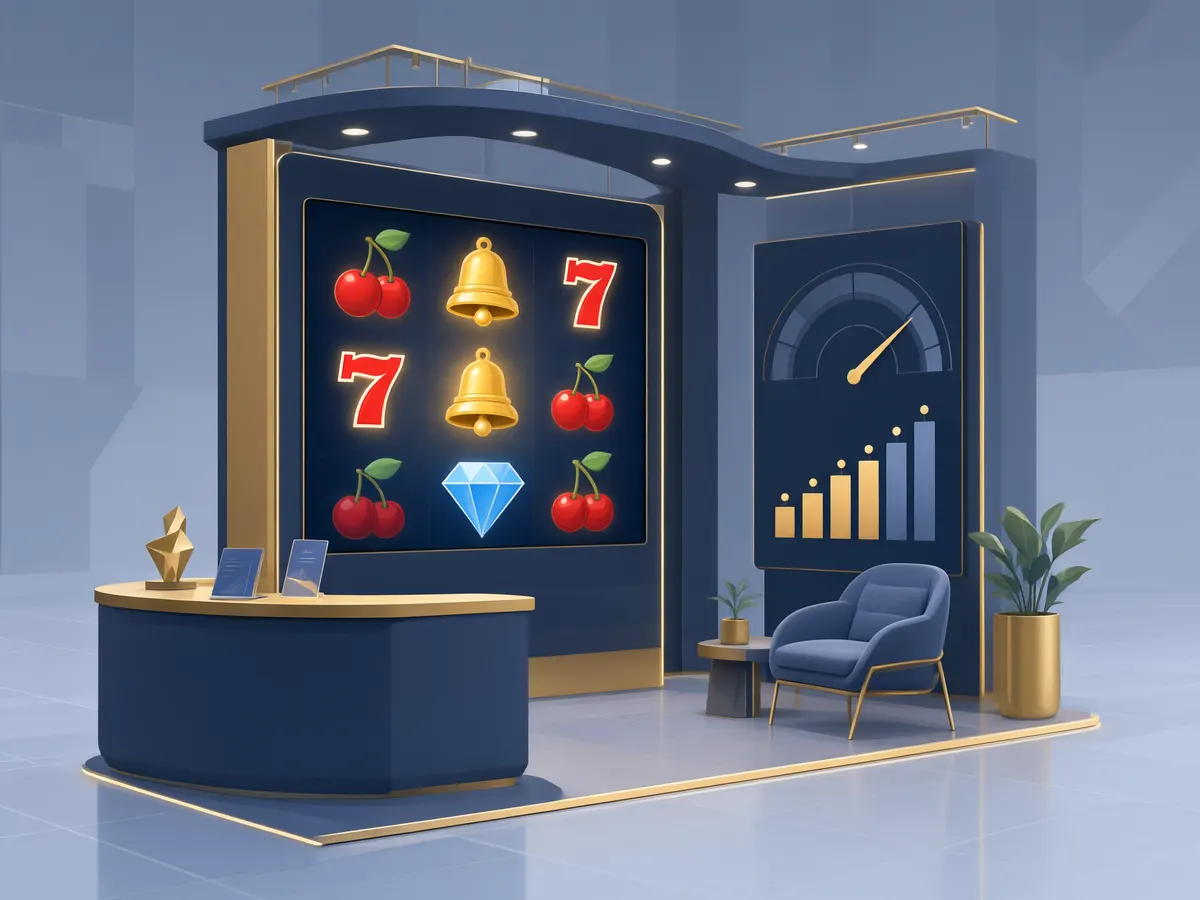
A “full portfolio showcase” at a B2B exhibition like SiGMA World means a supplier is pitching everything it sells to operators in one place, not launching a consumer product. Three casino titles were named ahead of the event: Shield Wall Set Sail, Rabbit Ventura and Ozmo’s Riches, built around expanding wilds, coin-based bonuses and transforming wilds.
The rest of the stand was operator-facing. The sportsbook presentation covered Bet Builder, Player Props, Early Payouts, Progressive Jackpot Sport and Adjustable Margins. The platform pitch centred on X-Nave, which combines sportsbook, the Gaming Aggregator, a CRM engine and a payment gateway, offered either as a turnkey package or as standalone modules.
Two of those items deserve a player’s attention. Adjustable Margins is a reminder that a bookmaker’s overround is a dial an operator sets, not a fixed property of the sport. And aggregation explains why two casinos with completely different branding can show you an almost identical game list.
Inside the slot portfolio
Themes and mechanics you can expect
A studio with land-based roots usually runs two parallel lines, and EGT Digital’s named titles fit that pattern. On one side sit simple fruit-and-sevens games with few paylines and a paytable you can read in ten seconds. On the other sit feature-driven video slots like the three shown in Rome, where the mechanic is the selling point: wilds that expand across a reel, wilds that transform into other symbols, collection features built on coin symbols.
The mechanic also tells you something about the maths. Coin-collection and hold-and-win style features tend to concentrate value into a bonus round, which usually means longer dry stretches in base play. Expanding wilds spread value more evenly. Neither is better; they produce different sessions.
Jackpot and bonus-feature variants
Progressive jackpots sit alongside the standard titles in most large catalogues, and EGT Digital’s sportsbook pitch included a Progressive Jackpot Sport feature, which shows how far the company pushes that model. A progressive pool is funded by a slice of every qualifying wager, so part of the advertised return to player is locked inside a prize most players will never trigger. The practical effect is that the headline RTP on a jackpot game describes a distribution with a very long tail, not the money coming back to a typical session.
Before treating any title named here as a specific recommendation, check it against EGT Digital’s official game list. Catalogues change, and games are sometimes licensed under different names in different markets.
RTP against volatility: which number should actually decide your game
RTP is the percentage of total wagers a game returns to players as an average across millions of rounds. Volatility describes how that return is distributed: high volatility means rarer, larger wins; low volatility means frequent, smaller ones. RTP sets the long-run cost of play. Volatility decides what the next hour feels like.
The worked example is unglamorous. At 96% RTP, ₹1,000 of total turnover carries a theoretical cost of about ₹40 over the long run, because the house edge is the inverse of RTP: 100% − 96% = 4%. If you stake ₹20 a spin, that ₹1,000 is only 50 spins, and 50 spins is nowhere near the long run. Your actual result could be zero returned or many times the stake. The 4% is not a session fee; it is the slope you are playing against, and it never switches off.
Here is the verdict most guides skip. If your bankroll is small relative to your stake, volatility is the more consequential number, not RTP. A 0.5% RTP difference between two slots is worth a few rupees per ₹1,000 wagered. Choosing a high-volatility game with a ₹500 bankroll can end the session in fifteen spins. Use RTP to filter out genuinely poor games, then use volatility to match the game to the money and time you have.
| Volatility | Typical hit pattern | What it does to a short session |
|---|---|---|
| Low | Frequent small wins, many near-stake returns | Balance drains slowly; big results unlikely either way |
| Medium | Mixed, with occasional feature triggers | Moderate swings; bonus rounds appear within a normal session |
| High | Long dry runs punctuated by rare large wins | Bankroll can empty before any feature triggers |
One clarification worth holding onto: hit frequency and volatility are not the same thing. Hit frequency counts how often any win lands; volatility describes how big those wins are when they do. A game can pay often and still be swingy if the paying combinations are mostly below stake.
And this is where the evidence runs out. The Rome announcement named mechanics, not maths. It published no RTP or volatility figures for Shield Wall Set Sail, Rabbit Ventura or Ozmo’s Riches, so anyone quoting you a percentage for those titles before the paytables are live is guessing. Studios also commonly ship the same game in more than one RTP configuration for operators to choose from, which means the only figure that applies to you is the one inside the game you have actually opened.
Finding the supplier name before you spin
The provider is almost always disclosed in three places, and checking takes under a minute.
- Open the game’s information or paytable panel, usually behind an “i” or hamburger icon. The developer name sits there alongside the RTP statement and the rules for every feature.
- Use the lobby’s provider filter. Most casinos let you sort the game list by studio, which is the fastest way to see a supplier’s whole range at that operator.
- Read the site footer for the licence number and testing-lab references. A lobby that names neither its regulator nor its providers is telling you something.
If the paytable shows no RTP figure at all, treat that as missing information rather than an acceptable default, and look for a game that discloses it. Our guide to how online slots work walks through the same panels in more detail.
What certification proves, and what it does not
RNG certification proves that outcomes are independent and match the declared probability model. It does not promise a fair price. A game can be certified and still return 94%, and a certified RNG guarantees nothing about any particular spin, because past results have no influence on the next one. There are no hot or cold machines.
A supplier’s commercial standing works the same way. Exhibiting a full portfolio in Rome, aggregating 20,000 titles and selling a platform to operators tells you EGT Digital is a serious counterparty in this market. It tells you nothing about whether a specific slot of theirs suits your bankroll. Those are separate questions and the first does not answer the second.
Which leaves one decision in your hands. Until the paytables for the newly shown titles are visible in a live lobby, the only responsible way to assess them is to open the game information panel yourself, read the RTP and the feature rules, and set a deposit limit before, not after, the first spin. The house edge is permanent; your budget is the only part of the equation you control. If play stops feeling like entertainment, use the responsible gambling tools your operator is required to provide.