A rule written into legislation is not the same thing as a rule that operates. That gap is the whole story behind the pokies shutdown hours compliance operation that Liquor & Gaming New South Wales (L&GNSW) publicised in October 2026: the six-hour daily shutdown window for gaming machines already existed, but more than 670 NSW venues (reported as 672 to 673) held exemptions that cut the required shutdown, commonly to three hours instead of six. The NSW Government revoked 659 of those exemptions in March 2026. What followed is an enforcement campaign, not a new law, and that distinction is the most useful thing in it for anyone judging a gambling regulator anywhere.
What Liquor & Gaming NSW announced, and what set it off
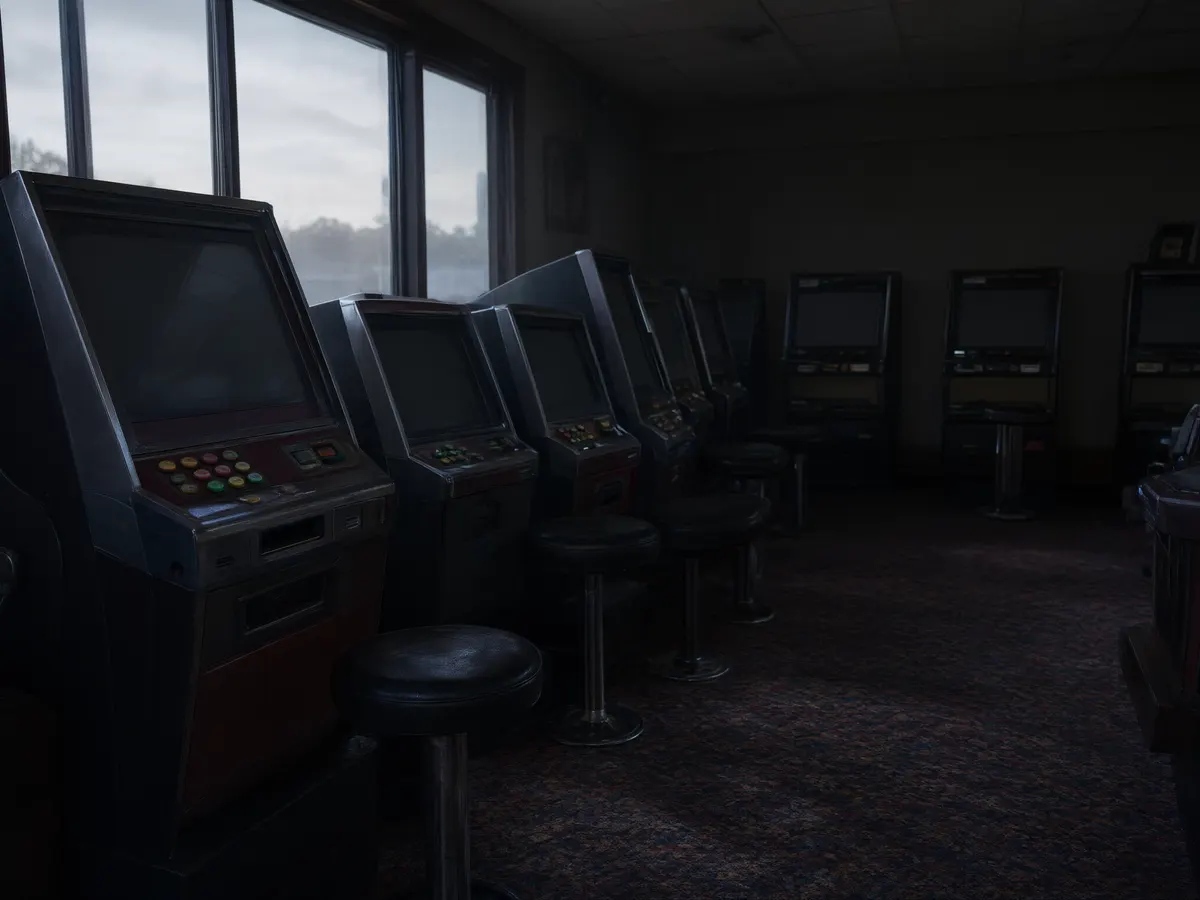
L&GNSW described an intelligence-led operation targeting venue compliance with the mandatory gaming machine shutdown requirements, under which machines in NSW venues must be switched off between 4am and 10am every day. The trigger was structural rather than scandal-driven: the NSW Government’s revocation in March 2026 of 659 of what the regulator called outdated exemptions, held among more than 670 pubs and clubs that had been allowed a varied shutdown period, commonly three hours instead of six, and so could keep machines running through part of the standard shutdown hours. The revocations were in place as of 24 March 2026, with standard shutdown hours applying from 31 March 2026.
Take the exemption away and you create several hundred venues whose morning routine has to change. Some will have changed it. The operation exists to find the ones that did not.
The compliance operation so far
The figures L&GNSW has put on record are modest and specific, which is worth noting in itself.
| Element | Detail reported by L&GNSW |
|---|---|
| Shutdown window | Gaming machines off between 4am and 10am daily |
| Venues with a varied shutdown period | More than 670 (reported as 672 to 673), usually three hours instead of six |
| Exemptions revoked | 659, in March 2026 (as of 24 March 2026; standard hours from 31 March 2026) |
| Venues reviewed | 51, across Sydney, the Hunter and the North Coast |
| Venues under assessment | A further 70, with inspections continuing |
| Outcomes to date | Fines to the Crown Hotel in Camden and East Cessnock Bowling Club, plus an official caution |
Fifty-one reviews against 659 revoked exemptions is an early-stage sample, not a sweep. Anyone reading the two named fines as evidence of either widespread breach or broad compliance is reading more into them than the regulator has said.
What are pokies shutdown hours?
Shutdown hours are mandatory closure periods during which licensed venues must switch off their gaming machines entirely. In New South Wales the window runs from 4am to 10am daily. The machines are unavailable to everyone, regardless of how long a given player has been seated or how much they have staked.
The design logic is blunt. Poker machines reward continuous play: rounds resolve in seconds, there is no natural stopping point, and the machine never tires. A mandatory closure period removes the venue’s discretion and the player’s. Nobody has to decide to stop, which matters most at the end of a long night, when the people still playing are the people least likely to stop voluntarily.
It is a crude instrument compared with account-based tools like deposit limits or self-exclusion, and it is crude on purpose. A shutdown window does not need to identify who is at risk. It applies to the whole floor.
How enforcement actually works
Enforcement runs through venue inspections and the licensing system, not through the machines themselves. L&GNSW described its approach as intelligence-led, meaning venues are selected for review using information held by the regulator rather than visited at random. Inspectors assess whether machines were available during the prohibited window, and the outcomes sit on a ladder: an official caution at the lower end, monetary fines above it.
The underlying leverage is the gaming machine licence. In NSW, as in most mature land-based markets, the ability to operate machines is a conditional privilege attached to the venue’s authorisation, and repeated breaches put that authorisation in play. A fine is a cost; a licence condition or suspension is an existential problem for a venue whose gaming room subsidises the rest of the business.
What L&GNSW has not published, at least not in this announcement, is a breach rate. We know 51 venues were reviewed and that two were fined and one cautioned. We do not know how many of the remaining reviews closed clean, and the regulator has not said. Inferring a compliance percentage from those numbers would be guesswork, so I am not going to put one here.
Why regulators treat forced breaks as harm minimisation
Mandatory downtime targets session length and loss-chasing, the two behaviours most closely associated with heavy gambling losses on machines. L&GNSW itself frames the 4am to 10am shutdown as a harm-minimisation measure that reduces opportunities for extended play, which is an honest way to put it: the mechanism is opportunity reduction, not persuasion.
Loss-chasing is the specific problem. A player who is down and keeps playing to recover is making decisions under conditions that get worse the longer the session runs, and the machine’s mathematics do not soften. Every spin carries the same house edge regardless of what preceded it, so additional time on the device increases expected loss rather than offsetting it. A closure period interrupts that loop mechanically.
Here is where I would resist overclaiming. Australian gambling research and public health reviews broadly support interrupting continuous play as a protective measure, and the principle sits behind session reminders and forced breaks in several regulated markets. But attributing a particular reduction in gambling harm to a particular six-hour window is a different claim, and I have seen no published NSW evaluation that establishes it. Displacement is the obvious open question: whether a player locked out at 4am simply returns at 10am, moves to an online account, or stops. Until someone measures it, that is unresolved, and a plausible-sounding percentage would be invented.
How NSW’s standard sits alongside other regulators
Comparing harm-minimisation regimes is harder than it looks, because land-based and online sectors use structurally different tools for the same objective.
Floor-wide closures versus account-level limits
A land-based shutdown is a property-level control: the venue closes the machines, and the rule applies identically to every person who walks in. Online regulation generally works at the account level instead, through deposit limits, loss limits, session timers, reality checks and self-exclusion registers. Some jurisdictions apply time-based or session-based limits to remote gambling, and a number of land-based markets impose venue trading hours that function as de facto shutdown periods.
The trade-off is real. Account-level tools can be targeted at the individual and travel with the player across sessions, but they depend on the operator implementing and honouring them. A floor-wide closure cannot be personalised and cannot be opted out of, which makes it weaker as protection for an identified at-risk player and stronger as a baseline for everyone else. Neither replaces the other.
What rigorous enforcement looks like
Judge a regulator on four things rather than on the text of its rules: whether inspections actually happen, whether selection is risk-based rather than token, whether outcomes are published with venues named, and whether exemptions have been allowed to erode the written standard. The NSW case is instructive precisely because it failed the last test for years. The written standard was six hours; for more than 670 venues the actual requirement was shorter, commonly three hours, and some of those exemptions had been in place for more than 20 years before 659 of them were revoked in March 2026.
What players and operators should take from this
Treat enforcement activity, not statutory text, as the signal. Any market can legislate shutdown windows, session limits and player protection obligations; far fewer publish inspection counts, name fined venues and keep an audit programme running when the news cycle has moved on. If you are assessing how seriously a jurisdiction takes gambling harm, look for the regulator that reports what it found, including the unglamorous finding that most venues complied.
For operators, the practical lesson from the revoked exemptions is that historical permissions are not permanent entitlements, and compliance processes built around a reduced shutdown period need rebuilding the day it goes. For players, the honest framing is narrower than the headlines suggest: a shutdown window interrupts availability, it does not change the mathematics of a poker machine or anybody’s chance of winning on it. If stopping is the part you find hard, deposit limits and self-exclusion schemes exist for that reason, and they work on your account rather than the clock on the wall.