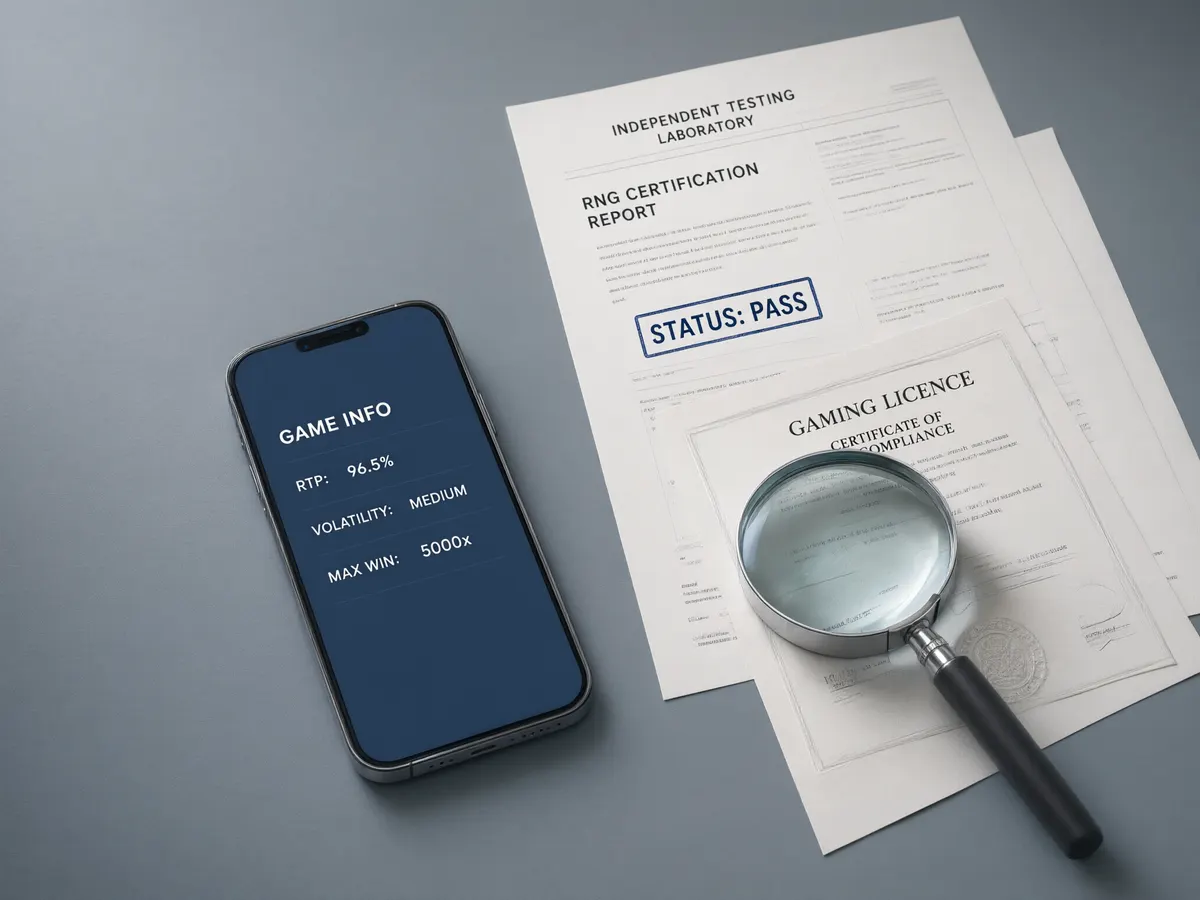

It is the part of the page nobody reads. Grey eight-point text at the bottom of a casino site: a company name you have never heard of, a jurisdiction, a long number, sometimes a clickable seal that goes nowhere. Most players scroll past it on the way to the deposit button. Meanwhile, in Pennsylvania, a regulator spent part of 2025 and 2026 deciding whether one casino deserved to keep the equivalent of that line of text at all.
What a casino licence renewal actually means
Casino licence renewal, explained plainly, is a periodic re-examination of whether an operator still deserves the permission it was granted years earlier. The regulator re-checks finances, ownership, compliance history and the suitability of the people in charge, then votes. It is not a filing fee and a rubber stamp.
The Pennsylvania Gaming Control Board’s renewal of Live! Casino Pittsburgh’s licence is a useful example precisely because it was reported as routine. Nothing dramatic happened. And yet the record shows a public hearing, submitted exhibits, sworn testimony and a board vote before the operator got another five years.
The Pennsylvania case: what the gaming control board actually voted on
According to G3 Newswire, the Pennsylvania Gaming Control Board voted unanimously to renew the Category 4 casino licence held by Stadium Casino Westmoreland RE, LLC, the operator of Live! Casino Pittsburgh in Westmoreland County. The board found the company had fulfilled the obligations attached to its previously approved operator’s licence, and renewed it for a further five-year period.
The decision followed a process designed to let both the operator and the public put information in front of the board. A public input hearing was held in June 2025, at which Live! Casino Pittsburgh personnel submitted exhibits and gave testimony covering the facility’s operation since its last renewal. Members of the public were also permitted to testify about the casino.
Context for the scale involved: the venue has generated $647m in gross revenue since opening in November 2020. That is the kind of money that makes a regulator read the file carefully, and the kind of money an operator does not want to lose over an unresolved compliance problem.
Myth one: renewal is a formality
Renewal is an evidence-based review with a vote at the end, and the operator carries the burden of showing it still qualifies. The Pennsylvania file is the template: documents in, testimony heard, public allowed to object, board decides.
Who reviews the application
A state or national licensing authority does the reviewing: a gaming control board, gaming commission or equivalent regulatory body. Its staff handle the groundwork, then the board members vote in a public meeting. The review usually covers four things.
- Suitability of the licensee and its key individuals, including directors, major shareholders and senior managers.
- Financial standing, which can mean audited accounts, proof of reserves and evidence that player funds and tax obligations are being met.
- Compliance history since the last approval, including any fines, breaches, anti-money-laundering findings or responsible-gambling failures.
- Operational commitments made at the previous licensing, such as investment, employment or facility undertakings.
How often licences come up for renewal
Renewal cycles vary by jurisdiction and by licence type. Pennsylvania’s Category 4 renewal runs five years, which is a fairly common fixed term. Other regimes work differently: some issue long fixed terms, and the UK Gambling Commission’s operating licences have no fixed expiry date but depend on annual fees and continuous compliance, with the regulator free to review, condition or revoke at any time. The practical takeaway is that “when does it expire” is the wrong first question. “Is it current, and who is watching it” is the right one.
Myth two: once granted, a licence stays granted
A regulator can deny a renewal, delay it, or grant it with conditions attached. That power is the whole point of the renewal cycle; without it, a licence issued in 2015 would say nothing about how the operator behaves in 2026.
In practice, outright denial is rare. Conditions, undertakings and settlements are far more common, and a licence that was renewed with restrictions attached is a different animal from one renewed clean. When renewal does fail, the consequences are not subtle: the operator loses the legal right to offer gambling in that jurisdiction, has to wind down play, and is expected to return player balances under the regulator’s supervision. Sites that go dark overnight with balances stuck inside are almost always sites that never had a serious licence to lose.
Why this matters even if you only play offshore
A regulated online casino that faces periodic re-vetting has something at stake that an unlicensed site does not: a licence worth protecting. That is the entire trust mechanism, and it works the same way in Valletta or Gibraltar as it does in Harrisburg.
There are two defensible readings of how much weight to give this, and both deserve a hearing. The sceptical one says licence shopping has made the badge close to meaningless, because an operator can buy a permission from a jurisdiction that will not audit it, will not answer complaints, and will not pull the licence over a player dispute. That is a real description of part of this market.
The other reading, and the one I would act on, is that the licence is not a verdict but a filter. It tells you an identifiable legal entity exists, that a body with the power to withdraw its permission is nominally supervising it, and that somebody somewhere has a file on it. That is a low bar. It still eliminates a large number of sites, and no serious operator fails it. The thing that separates a strong licence from a decorative one is not the document but the regulator’s record of actually enforcing against licensees.
How to check a casino licence yourself
Verification takes about three minutes and does not require a legal background. The advertised claim and the verifiable fact are two different things, and the gap between them is where the problem usually sits.
| What the site shows | What it actually proves | How to verify |
|---|---|---|
| A regulator’s logo or seal | Nothing on its own; images are trivial to copy | Ignore it and look for the licence number instead |
| A licence number in the footer | A claim that needs checking | Search that number in the regulator’s public register |
| “Licensed and regulated” with no jurisdiction named | Usually a red flag | Check terms and conditions for the licensing authority and company name |
| A company name you don’t recognise | Often legitimate; brands trade under holding companies | Confirm the register lists that company as operating your brand’s domain |
Where the licence details live
Look at the bottom of the home page first. A compliant site states the licensing authority, the licence number and the registered company name holding it. If that information only appears as a picture, or only in a help-centre article written in marketing language, treat the omission as information.
Cross-checking against the official register
Go to the regulator’s own website, not a link from the casino, and find its public licensee register. Pennsylvania’s board, for instance, publishes at gamingcontrolboard.pa.gov, and most established authorities maintain a similar searchable list. Check four things: the licence number matches, the company name matches, the status reads active or current rather than suspended, surrendered or expired, and your actual domain is listed among the approved URLs. That last check catches the most common trick, where a real licence is used to shelter a clone site that was never covered by it.
Red flags worth walking away from
- No licence number or issuing authority anywhere on the site.
- A licence number that returns no result in the regulator’s public register.
- Register status showing expired, suspended, surrendered or pending with no explanation.
- A company name on the licence that does not match the operator named in the terms and conditions.
- Your domain missing from the list of URLs attached to the licence.
- A licensing authority with no published enforcement actions and no visible complaints procedure.
- Support that cannot or will not tell you which entity holds the licence.
Before you deposit
Treat a current, verifiable licence as the floor you refuse to go below, not as a guarantee of fair treatment. It tells you who the operator is and who can be escalated to; it does not tell you how fast withdrawals clear, how bonus terms are enforced, or whether the house edge on the games you like is 1% or 12%. Those still need separate checking, and they are where most player complaints actually originate.
Indian players evaluating offshore sites carry an extra complication the Pennsylvania case does not resolve: the regulator you verify with has jurisdiction over the operator, not over your deposit, and a complaints route that works in Malta may be slow and remote from Mumbai. That gap is real and I would not pretend otherwise. It is an argument for depositing modestly, keeping records, and testing a withdrawal early rather than for assuming the badge in the footer has your back.
Whatever you play, set a deposit limit before you start and stick to the amount you can lose without it mattering. Every casino game carries a built-in house edge, so the long-run expectation is a loss; a licence changes who answers your complaint, not the maths. If the spending stops feeling optional, use the self-exclusion and cool-off tools the operator is obliged to provide, or contact a support service in your region.