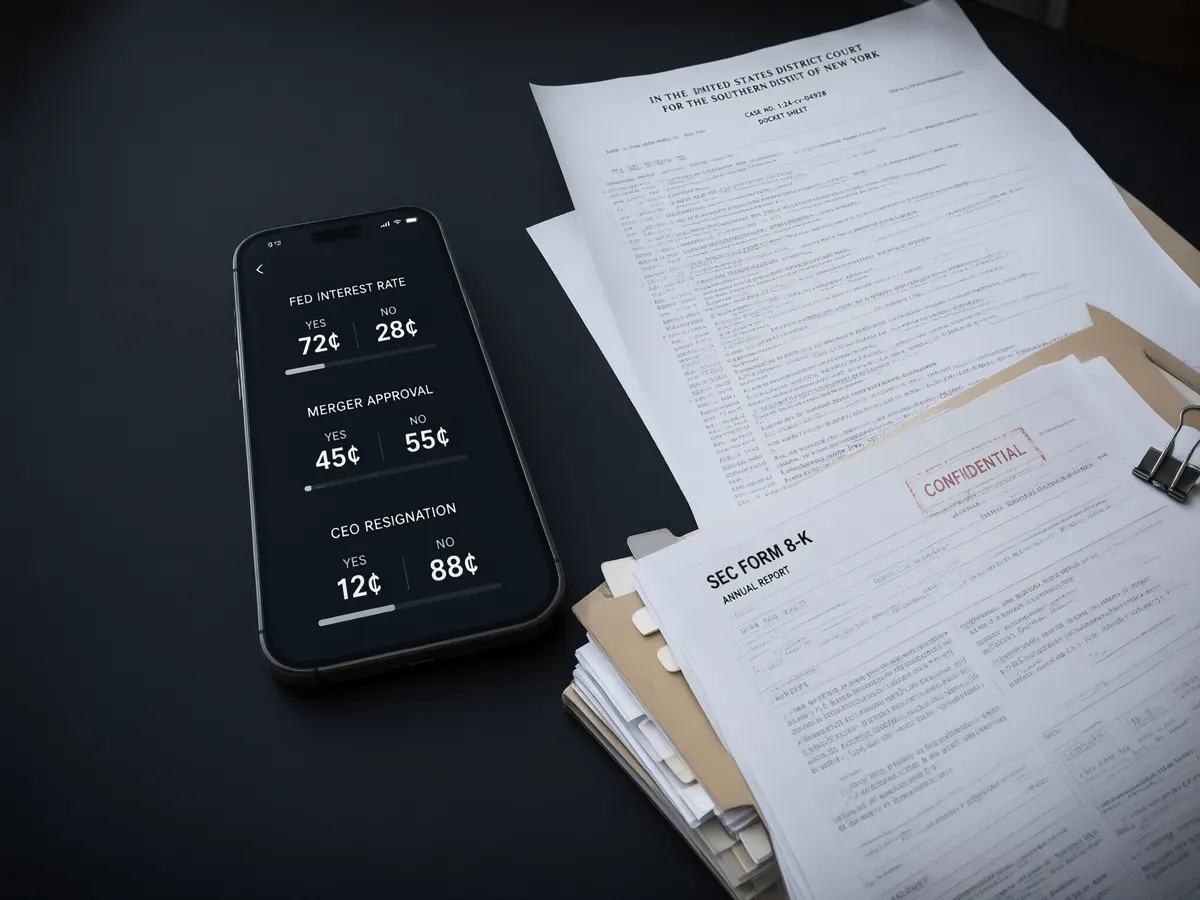
A bloc-wide gambling tax would be a levy the European Union collects for itself, directly, on licensed online gambling revenue across all member states. It does not exist, and according to reporting on Ireland’s negotiating draft of the 2028-2034 EU budget, it is not being created either. Which is where most readers stop, and where the useful part starts.
Because “the EU dropped its gambling tax” is being read as a verdict on whether gambling should be taxed. It is nothing of the sort. Gambling in Europe is already taxed, heavily, in 27 different ways. What was dropped was a proposal to add one more layer on top, collected by Brussels rather than by national treasuries. Miss that distinction and you will misjudge every number you read next, including the ones that affect operators serving Indian players.
What the draft 2028-2034 EU budget actually says about gambling tax policy in Europe
Ireland’s first draft negotiating document for the EU’s 2028-2034 budget contains no proposal for a 1% EU-wide tax on licensed online gambling revenue. That omission is the story, as reported, and it came despite backing for the measure from some members of the European Parliament.
The draft does include other EU-level revenue measures: levies tied to emissions trading, electronic waste, tobacco and carbon offsetting. Together, per the reported figures, those could raise up to €55bn a year. Gambling simply is not among them.
Two caveats worth holding onto. First, this is a negotiating draft produced under Ireland’s turn steering Council business, not an adopted budget. Second, an omission at this stage is a negotiating position, not a legal decision. Treat the detail as attributable to the reporting rather than as a settled fact of EU law.
Why anyone proposed an EU gambling levy in the first place
The EU’s long-term budget is funded largely by contributions from member states, and every seven-year cycle brings a search for “own resources”, revenue streams the Union raises itself so it depends less on national transfers. The 2028-2034 round is no exception, which is why emissions, e-waste and tobacco all appear as candidate bases.
Online gambling was floated into that queue by Romanian MEP Victor Negrescu and the Socialists and Democrats group. The pitch, as reported, was a 1% charge on licensed online gambling revenue projected to raise between €2bn and €4bn annually, earmarked for education, mental health, addiction prevention and youth programmes.
Note what that design does and does not do. A 1% charge on licensed revenue is small against what operators already pay nationally. It would have sat on top of existing national gambling duties, not replaced them. And by hypothecating the money to harm-related spending, it borrowed the logic of tobacco duty: tax the activity, fund the consequences. Reasonable people disagree about whether that works. What is not arguable is that 1% was never going to reshape the economics of European betting on its own.
How is gambling taxed across the EU when nobody harmonises it?
Each member state sets its own gambling tax rules: its own licence conditions, its own rates, and its own choice of what to tax. There is no EU-wide gambling tax rate, no common base, and no central collection. Gambling also sits outside most VAT, since the EU VAT Directive lets member states exempt betting, lotteries and gambling, with the conditions and limits left to national law.
The variation runs deeper than rates. Some states tax gross gaming revenue, meaning stakes minus winnings paid out, which is roughly the operator’s margin. Others tax turnover, meaning the total amount staked, a base that can be many times larger for high-payout products like sports betting. A headline percentage therefore tells you almost nothing until you know which of the two it is attached to. Add licensing fees, annual levies and contributions to problem-gambling funds, and the effective burden on the same operator can differ sharply between two neighbouring markets.
Most European regimes now tax on a point of consumption basis, charging on bets placed by players located in that country regardless of where the operator holds its licence. That was the structural fix for cross-border betting, and it is also why a bloc-wide levy would have been awkward: the national point-of-consumption claim already covers the ground.
Patchwork or harmonisation: the tension that never resolves
Taxation in the EU generally requires unanimity among member states, and gambling policy has long been treated as a national competence shaped by case law on the free movement of services rather than by a single directive. Member states guard gambling revenue closely because it funds national budgets, sports bodies and good causes.
So the patchwork is not an accident awaiting cleanup. It is the equilibrium. Every harmonisation proposal, including this one, has to explain why a government should hand over a revenue stream it currently controls. That is the question the 1% levy did not answer loudly enough to survive the first draft.
How India taxes betting and gaming winnings
India applies a flat 30% tax deducted at source on net winnings from online games under Section 194BA of the Income Tax Act, with no basic exemption threshold and no set-off of losses or expenses against those winnings. The deduction is made by the platform, computed on net winnings at withdrawal and again at the end of the financial year, and it applies whether the amount won is large or trivial.
Separately, GST applies to online money gaming. The base here is the one most summaries get wrong: the 28% charge on full face value introduced by the 2023 amendments was raised to 40% with effect from 22 September 2025, and it still falls on the full face value of the amount paid or deposited by the player, not on the operator’s gross gaming revenue. Compared with a GGR-based tax, that is a fundamentally different and far larger base, and it is the single biggest reason Indian tax commentary and European tax commentary rarely talk past each other politely.
One further condition readers should check before drawing conclusions about their own position: the Promotion and Regulation of Online Gaming Act, 2025 prohibits online money gaming in India, and its scope and application have been contested. The income tax and GST provisions remain on the statute book, but how they apply in practice is a live question. For anything with money attached, confirm the current position with the Income Tax Department or a qualified tax professional rather than with an article.
Reading the two systems side by side
The comparison is less about who taxes harder and more about where the tax lands and who gets to set it.
| Feature | European Union | India |
|---|---|---|
| Who sets the rate | Each member state individually | Central government, nationally uniform |
| Bloc or federal-level gambling tax | None; a 1% levy was proposed and omitted from the draft budget | Not applicable; central rules already apply |
| Structure | Variable by country, 27 regimes | Flat and uniform |
| What is taxed | Operator revenue or turnover, depending on the state; player winnings usually untaxed | Player net winnings (30% TDS) and player deposits (40% GST from 22 September 2025) |
| Who remits | Licensed operator | Platform deducts and remits; player bears the income tax |
| Basis for cross-border play | Point of consumption in most markets | Central law applies to the player and platform |
The practical consequence for an individual player is stark. Across most of Europe, the tax is collected from the licensed operator and the winning punter typically receives the full amount. In India, the player’s winnings are visibly reduced at withdrawal, and the deposit itself has already carried GST. Same activity, opposite point of collection.
Could a bloc-wide levy resurface before 2034?
It can. The draft is the opening position in a negotiation that runs through the European Parliament and the Council before anything takes effect in 2028, and proposals dropped from a first draft have reappeared in later ones. Parliamentary support for the gambling levy exists, which is precisely why the omission was newsworthy.
What will not change in that window is the thing that actually determines what operators and players pay: national rates, national bases, and national licence conditions. Anyone tracking European gambling tax policy because they care about cost should be reading Warsaw, Rome and Stockholm, not only Brussels. The 1% was always the rounding error in that calculation.
If you bet, treat tax as part of the cost of play rather than an afterthought, keep your own record of deposits and withdrawals, and use deposit and session limits where your platform offers them. Gambling carries a built-in house edge in every market, taxed or untaxed; no tax regime anywhere changes that arithmetic.