
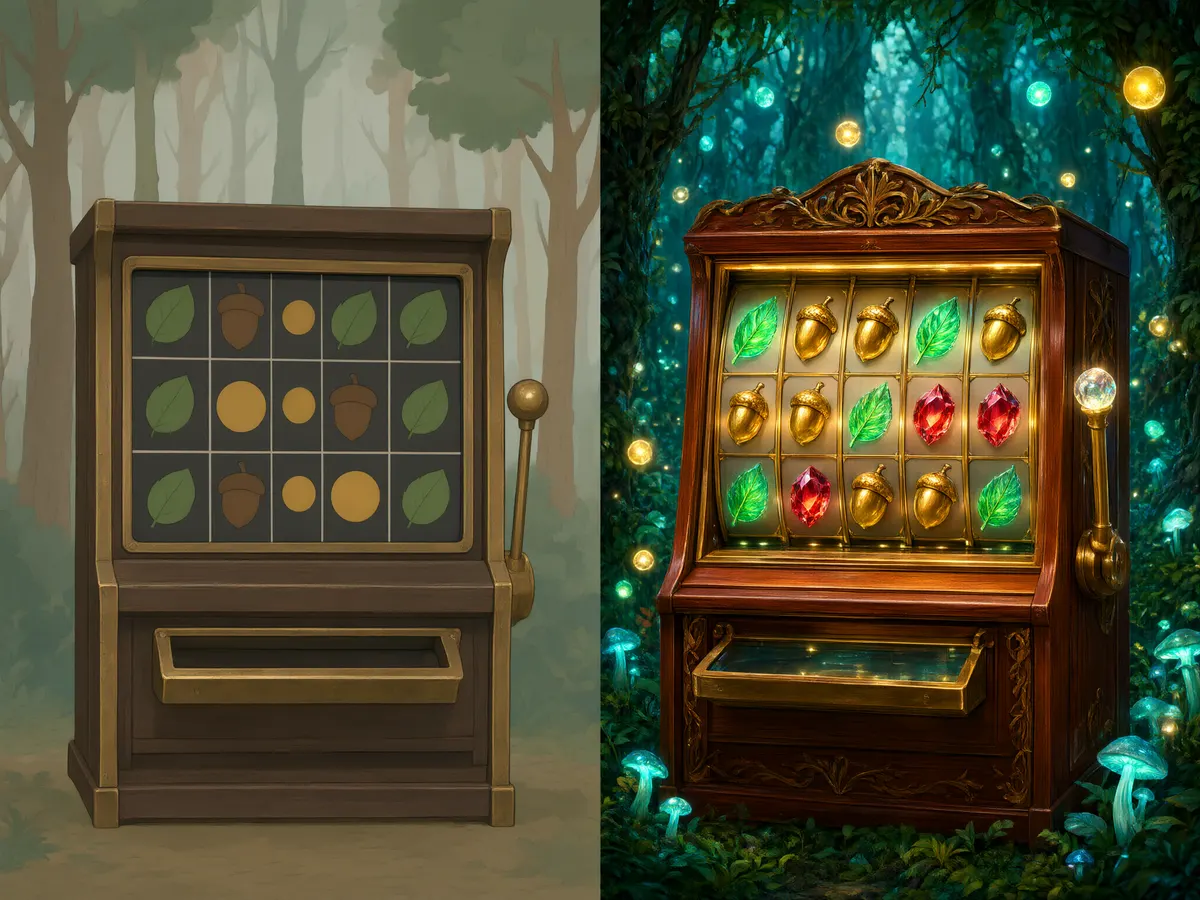
What a deluxe slot edition actually is
Does the word “deluxe” on a slot title mean the game pays better than the original? No. A deluxe edition is a provider’s updated release of a game it already owns, usually rebuilt for modern platforms with new art, a reworked interface and sometimes adjusted features. It is a marketing label, not a regulated one, and nothing in it guarantees a higher return.
That matters right now because CT Interactive has just released The Shining Globe Deluxe, a mystical forest slot on a 5×3 grid with 20 lines, free games, scatter + collect and wild features. It is a textbook example of a pattern every major studio runs, so it works well as the case to examine while we sort the real changes from the cosmetic ones. Slot deluxe editions explained properly means knowing which parts of a game the “deluxe” tag can legally touch, and which parts it usually leaves alone.
The widespread misreading is simple: players see “deluxe” and assume upgraded maths. What that belief costs is small but repeated. You move off a game whose paytable you already understand, onto one you have not read, on the assumption it must be an improvement. Sometimes it is. Sometimes the only thing that improved is the resolution of the background art.
Deluxe, sequel and reskin are three different products
A deluxe edition keeps the original’s identity and rebuilds around it. A sequel keeps the brand but builds a different game. A reskin keeps the game and changes only the artwork. Slot sequels are the ones with numbers or new subtitles in the name, and they typically run new mechanics; a reskin can be the same engine with a different theme dropped over it.
Deluxe sits between the two. The theme, the symbol set and the core feature loop usually survive. What changes is the shell around them, plus whatever the studio decided was underperforming in the original. Because no standards body defines the word, the gap between a genuine rebuild and a light polish can be enormous, and both ship with the same label. CT Interactive is not doing anything unusual here. Novomatic has done it for years, so have Amatic, EGT and most of the land-based-to-online suppliers whose back catalogues are full of titles worth refreshing.
Why providers keep making them
Because a known title is cheaper to relaunch than an unknown one is to launch. A studio with a game that performed well in cabinets or in an older online lobby already has the theme, the symbol art direction, the maths model and, most valuably, players who recognise the name in a lobby of two thousand games. Rebuilding that asset costs a fraction of originating new intellectual property and carries far less risk of the release landing flat.
There are practical reasons too. Older online slots were built in engines that no longer run well on phones, and Flash-era titles simply stopped working. Operators also want portfolios that look current, so a supplier under pressure from competitors shipping flashier releases can refresh six old games faster than it can invent six new ones. When a mechanic becomes fashionable, scatter collection, cascading wins, multiplier trails, the cheapest way to offer it is to bolt it onto a game that already works.
What genuinely changes in a deluxe remake
Graphics, animation and the interface
This is the one change you can count on. Higher resolution assets, redrawn symbols, new animations on wins, a rebuilt bet panel that works on a touchscreen, portrait mode support, faster load times. It is the most visible change and the least consequential one for your bankroll.
Jackpot structure
Some deluxe builds add a jackpot layer the original never had, either fixed tiers paid from the paytable or a progressive jackpot pooled across operators. This is a real change and it cuts both ways. A progressive jackpot has to be funded, and it is funded out of the base game return. The headline RTP may look similar while a slice of it now sits in a prize most players will never hit. Jackpot slot games are not inherently worse value, but the distribution of that value shifts hard toward the tail.
Bonus features
Trigger conditions get rewritten more often than people expect. The number of scatters needed, how many free spins they award, whether the round can retrigger, whether multipliers stack or reset. Some deluxe editions add a bonus buy option where regulations permit it, which is a genuine mechanical change with its own cost structure rather than a cosmetic one.
RTP and volatility
Both can move, and this is the condition almost nobody checks. A remake can carry a different return to player than the original and a different volatility profile, and the only authoritative source is the game’s own info screen inside the casino you are playing at. Several suppliers ship titles in more than one RTP configuration for operators to select, so a figure quoted in a press release is a starting point for verification, not a guarantee of what is running in your lobby. At 96.00% RTP the house edge is 4%, meaning roughly ₹4 of every ₹100 staked is retained over the long run across millions of spins. That average says nothing about any single session.
What carries over unchanged
More than the branding suggests. The theme and story stay. The symbol hierarchy usually stays. The reel layout, the line count and the fundamental way wins are formed usually stay, because changing them means rebuilding the maths model from scratch, which defeats the point of a deluxe release. Hit frequency often lands close to the original’s.
So the honest expectation for most deluxe remakes is this: the game you knew, looking better, running properly on your phone, with one or two features adjusted. Treat it as a maintenance release with a marketing name. Anything more than that is a bonus you should confirm rather than assume.
Inside CT Interactive’s The Shining Globe Deluxe
Here is what CT Interactive has confirmed in its launch announcement. Everything below comes from the provider’s own release, and the RTP and volatility rating in particular should be checked against the game info screen at whichever casino you play it on.
| Specification | Confirmed detail |
|---|---|
| Theme | Mystical forest with magical creatures |
| Layout | 5×3 reels, 20 lines |
| RTP | 96.00% (provider-stated) |
| Volatility | Four-star rating on CT Interactive’s own scale |
| Features | Free games, scatter + collect, wilds |
| Free games trigger | At least six scatters in the base game awards 10 free games |
| Retrigger | A further 10 free games if at least six scatters land during the feature |
| Maximum win potential | Up to 3,250× the total bet |
A six-scatter trigger is a demanding one, and it tells you more about the game than the star rating does. Rare triggers concentrate return into the free games round, which is consistent with the elevated volatility CT Interactive assigns it. The 3,250× figure is a ceiling on what the maths permits, not a target and not an expectation; maximum win outcomes on slots of this type occur in a vanishingly small share of spins.
How it compares to the original Shining Globe
The launch announcement does not publish a side-by-side comparison with the original Shining Globe, and I am not going to estimate one. What is confirmed is the deluxe version’s configuration: the 5×3, 20-line layout, the 96.00% RTP, the scatter + collect mechanic alongside wilds and free games, and the 3,250× cap. If you played the original, those are the four numbers to hold up against your memory of it, and the game info screen on both versions is where you settle the question properly. The scatter + collect mechanic is the kind of addition that typically arrives with a deluxe build rather than carrying over from an older title, but treat that as a pattern, not a confirmed fact about this release.
How to tell if a deluxe version is worth your money
Five minutes of checking answers it. None of this requires insider knowledge, just a willingness to open the info panel before the first spin.
- Open the in-game info screen and read the RTP there, not in a review or a press release. That figure is the one your operator is actually running.
- Compare the paytable against the original side by side if both are still in the lobby. Look for new symbols, changed symbol values, added jackpot tiers and any shift in line count.
- Read the free spins trigger and retrigger conditions. A change from five scatters to six, or a cut in the number of spins awarded, changes the game’s character more than any graphical update.
- Check the volatility rating and, more usefully, the shape of the paytable. Top-heavy paytables with rare triggers mean longer dry stretches, whatever the star count says.
- Play the demo. Free play mode shows you how often the feature lands and how the base game behaves across a few hundred spins, at zero cost.
- If a bonus buy exists, price it against the paytable before using it. The buy cost is set so the house edge still applies, usually at a similar or slightly worse rate than the base game.
There is one thing this checklist cannot fix. Operators frequently replace the original with the deluxe build rather than running both, which removes your ability to compare them at all. When that happens, you are judging the remake on its own published numbers with no baseline, and the only honest position is to treat it as a new game you have never played, because functionally that is what it is.
Deluxe editions are worth trying when the information checks out and the feature set genuinely suits how you like to play. They are not worth switching to on the strength of the word alone. Whatever the version number, the house edge is built into the maths and no update removes it, so set a deposit limit you are comfortable losing, treat any session as entertainment spend rather than a way to make money, and use the deposit, loss and time limit tools your casino offers. If gambling stops feeling like a choice, the self-exclusion and cool-off options exist for exactly that reason.