A market entry says more than a welcome bonus ever will
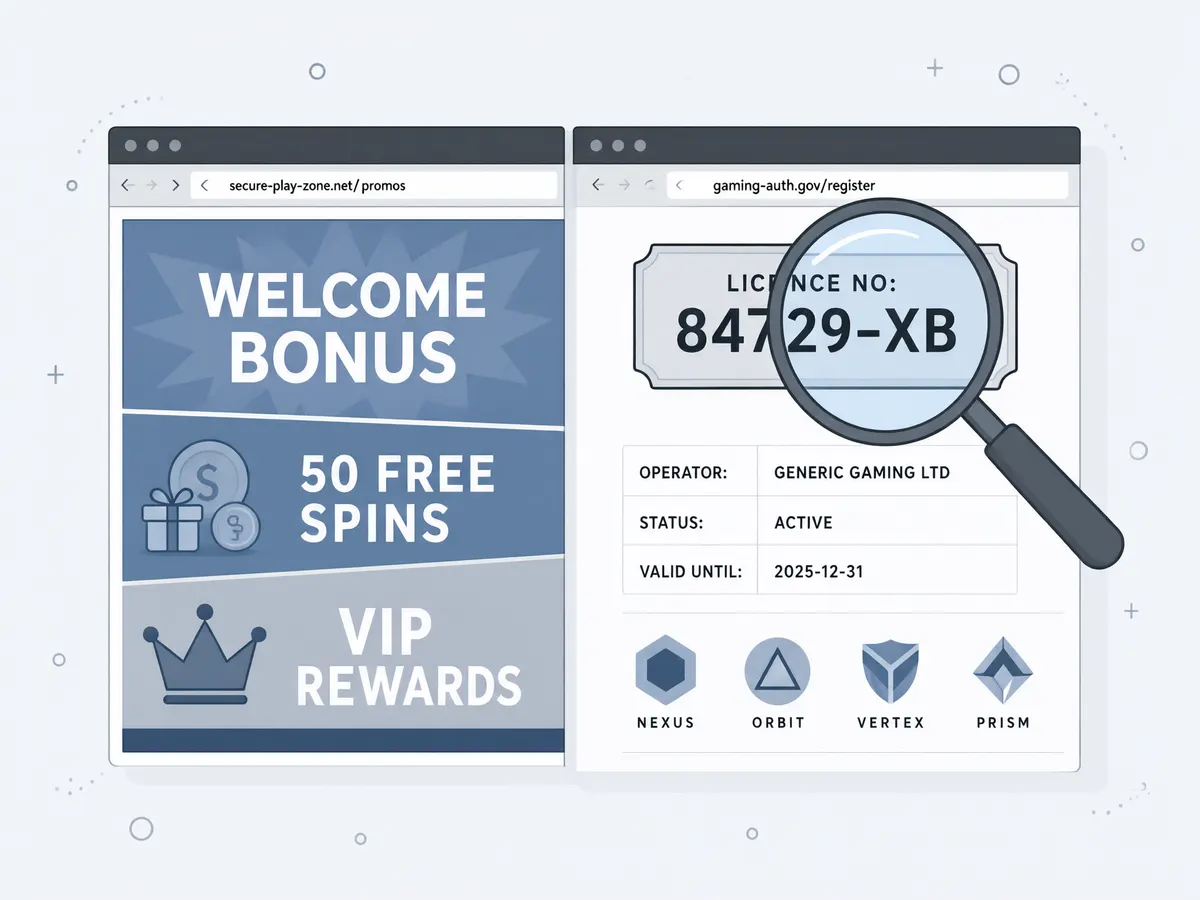
Two tabs, side by side. One site screams a triple-figure match bonus above the fold; the other is quieter, with a licence number in the footer and a list of game studios whose names you half recognise. Most players click the first one.
That is the wrong instinct, and regulated casino partnerships are the reason why. When a game studio launches its portfolio with a licensed operator inside a regulated market, both companies have already passed checks that no amount of marketing budget can fake. Kendoo’s launch on Starcasino in Belgium, reported by G3 Newswire, is a useful worked example of what that looks like from the outside, and of how to read these announcements rather than skim past them.
Here is the part most write-ups get right for the wrong reason. Yes, licensed operators are safer than unlicensed ones. But it is rarely because a regulator is standing by to refund you personally when something goes wrong. The real mechanism is duller and more reliable: a licence is an asset with ongoing cost, and the people who hold one have more to lose from treating you badly than they stand to gain.
What the Kendoo–Starcasino launch actually says
Concretely, it says a slot studio cleared whatever bar Belgium sets for suppliers and found an operator already inside that market willing to carry its games. According to G3 Newswire, Kendoo, a slot studio, has launched its portfolio on Starcasino, described in the report as the leading and largest online casino in Belgium, offering both slots and live casino content. It is the first time Kendoo titles have been available to Belgian players, and the games include the studio’s established mechanics such as Hold and Win, Pots and jackpot-driven features.
Kendoo’s Commercial Director, Olga Mugliett, framed it in the same report as a milestone and called Belgium a market where quality and reliability matter particularly. Read that as supplier language for “the compliance bar here is high enough to be worth mentioning in a press release.”
What the announcement does not say, and what you should not read into it: nothing about payout speed, nothing about bonus terms, nothing about whether those slots suit your bankroll. This is a slot studio expansion story. It tells you about process, not outcomes.
What a regulated-market licence actually requires
A regulated market is one where a national authority licenses gambling operators, sets binding conditions and can remove the licence. Entering one is not a form submission. Operators and suppliers typically have to clear several gates before a single spin is sold:
- Corporate and ownership disclosure, so the regulator knows who ultimately controls the business
- Fit-and-proper checks on directors and major shareholders, including criminal and financial history
- Proof of financial standing, including the ability to cover player balances
- Technical certification of games and RNG behaviour by an approved independent testing laboratory
- Responsible gambling obligations: deposit and loss limits, self-exclusion, reality checks, and in many jurisdictions a connection to a national exclusion register
- Anti-money-laundering procedures and KYC before withdrawals
- Ongoing audits, reporting and advertising rules, with fines or suspension for breaches
That last line is the one that matters. A licence is not a certificate on a wall, it is a subscription to supervision. The cost of losing it is the reason licensed operators behave differently from unlicensed ones, more than any promise in their terms and conditions.
Who issues these licences
Each regulated market has its own national authority, and the name differs by country. Belgium has a national gambling regulator that licenses operators and publishes a public list of permitted sites; before you quote a regulator’s name or licence number anywhere, confirm it on that authority’s own website rather than on the casino’s. The same applies in Malta, the UK, Ontario, Denmark and every other licensed jurisdiction. Operator pages have been known to display regulator logos they are not entitled to, and a logo is not a register entry.
Why studios only partner with licensed operators
Because in most regulated markets the studio needs its own licence too. A B2B gambling supplier licence is a separate permission covering companies that build and host the games rather than take the bets, and it carries comparable scrutiny: corporate checks, certified RNG, and technical integration that the regulator can audit. A studio that supplies an unlicensed operator in a market where it holds a B2B licence risks the licence itself.
That is what turns these game provider deals into something more informative than a logo swap. When a studio commits engineering time and regulatory exposure to an operator, it has done due diligence you cannot do from a review site: who owns the operator, whether invoices get paid, whether the platform can handle market-specific reporting. The vetting is self-interested rather than altruistic, which is precisely why it is worth something.
The honest limit: a studio partnership is evidence of the operator’s standing with suppliers, not a guarantee of how it treats individual players. Big names appear on sites with stingy terms and slow support. Treat the roster as a filter, not a verdict.
Substance signals versus surface signals
The fastest way to improve how you judge a casino is to sort what you see into things that cost money to fake and things that do not. A banner is cheap. A register entry is not.
| Signal | What it proves | What it doesn’t |
|---|---|---|
| Large welcome bonus | A marketing budget | Anything about payouts or fairness |
| Polished site design | A design budget | Who owns or supervises the operator |
| Licence number listed and matching the regulator’s public register | Legal permission to operate, plus ongoing supervision | That you will enjoy the terms or the games |
| Named studio partners in a regulated market | Suppliers accepted commercial and regulatory risk on this operator | How the operator handles complaints |
| Published RNG and game certification | Outcomes were tested by an independent lab | That the house edge is small — it is still there |
| Working limits and self-exclusion tools | Compliance with real player-protection rules | That the tools are easy to find, which you should test |
Five checks before you trust a new casino
- Find the licence number and the regulator’s name, usually in the site footer, and copy them out.
- Search the regulator’s own public register for that number and confirm the company name matches the brand you are on.
- Scan the game lobby for named studios and check a couple of them against the studios’ own websites or press announcements.
- Look for RNG or game testing certification and the name of the testing laboratory, not just a generic “fair play” badge.
- Open the responsible gambling page and set a deposit limit before depositing. If the tool does not work, you have learned everything you need.
Five minutes, and it tells you more than every review aggregator put together.
Red flags that outweigh any bonus
Certain signals should end your evaluation regardless of the offer attached. A licence claim with no number, a regulator named only in vague terms such as “international gaming authority”, or a number that does not appear on the register. No named game suppliers, or a lobby full of clones of well-known titles with the branding filed off. Terms and conditions that read as if copied from another site, sometimes with a different company name still in them. No responsible gambling page, or one with no working tools behind it. Withdrawal rules that appear only after you win.
Set that against the Kendoo announcement, where two named companies attached their reputations to a specific, verifiable market entry and said so publicly. An operator that cannot produce an equivalent trail is not necessarily a fraud, but it is asking for trust it has not shown any way to earn.
Players in India sit in an awkward spot here, because most sites available to them are licensed offshore rather than by an Indian authority, and standards vary widely between offshore jurisdictions. That makes the register check more valuable, not less. An offshore licence is not automatically worthless, but an unverifiable one is.
The habit, and what it will not do for you
Build the check into your routine before the bonus comparison, not after: licence number, register, studio roster, limits. It costs you five minutes once per operator and it filters out the categories of problem that cause the worst outcomes, the frozen accounts and the withdrawals that never arrive.
What it cannot do is change the arithmetic. A fully licensed casino running certified games still holds a mathematical edge on every bet, and no amount of regulatory paperwork makes a 96% RTP slot a way to make money. The licence tells you the game is honest, not that it is winnable. Set a deposit limit, treat the spend as entertainment, and use the self-exclusion tools without hesitation if play stops feeling like a choice.