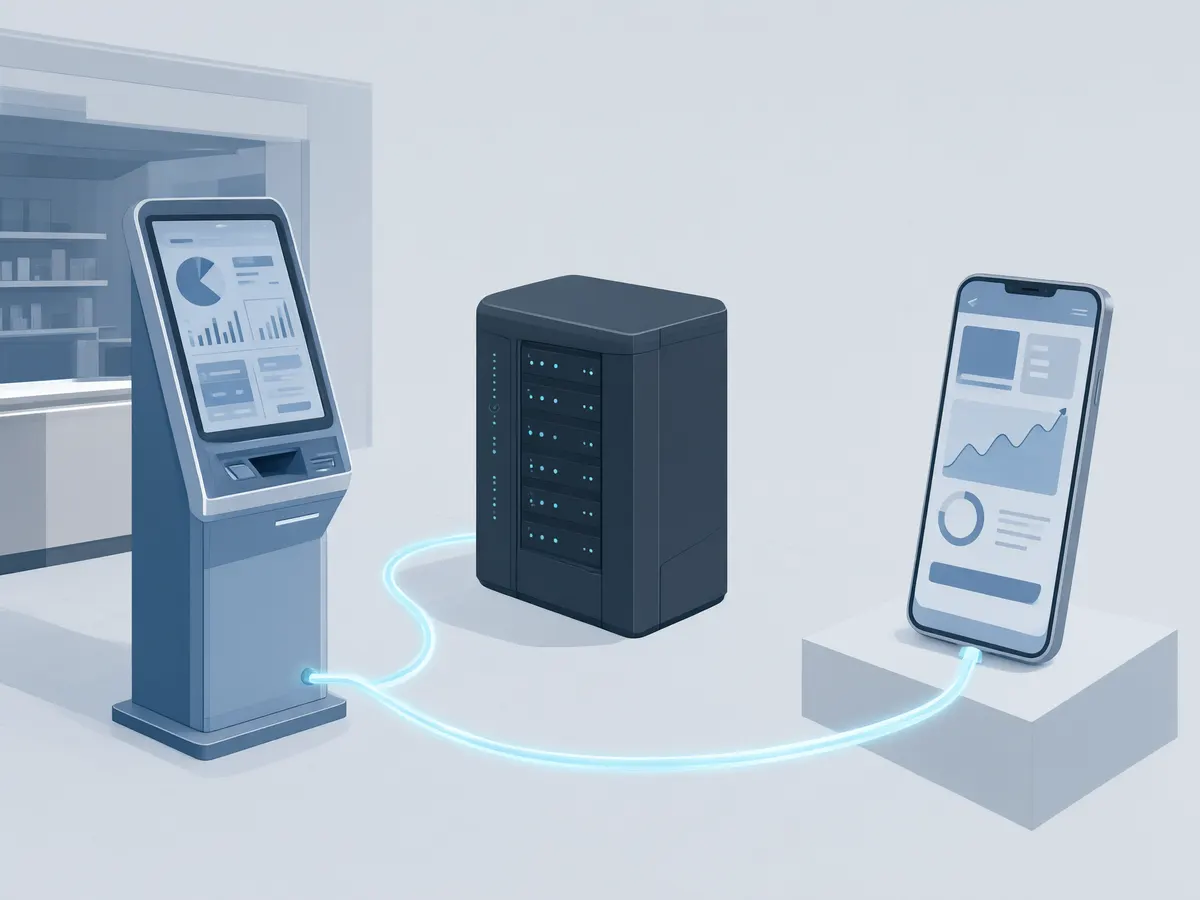
You put CHF 20 on a Sunday fixture at a kiosk counter, fold the slip into your wallet, then open the operator’s app on the train home to check the score. The app has no idea the bet exists. Your online balance and your paper slip belong to two different systems that happen to share a brand name. That gap is the thing platform providers have spent years trying to close, and it is the real story behind the launch below.
What OpenBet switched on with Loterie Romande
OpenBet has gone live with its next gen sportsbook technology for Loterie Romande, the exclusive regulated sports betting operator for Switzerland’s six French-speaking cantons and a member of the World Lottery Association. As reported by trade outlet G3 Newswire, the launch moves Loterie Romande’s JouezSport omnichannel sportsbook onto the OpenBet platform across online, self-service betting terminals and 2,350 point-of-sale retail locations. OpenBet states its technology powers more than 20 lotteries worldwide.
Strip away the vendor vocabulary and “next-generation” here does not describe a flashier app. It describes where the sportsbook runs: one platform sitting behind the website, the app, the self-service terminals and the counter, instead of separate systems stitched together. That is the whole claim. “Next-generation” is a marketing label, not a specification, so the useful question is what the architecture underneath it does.
What a unified sportsbook platform actually is
A unified platform means one back-end holds the odds, the bet records, the settlement logic and the customer accounts, and every channel is just a different window onto it. Place a bet at a terminal and the same system processes it as when you tap the app. There is one price feed, one bet history, one risk engine.
The alternative, which is still common, is a retail system and a digital system running in parallel. They each have their own odds feed, their own bet store, their own reporting. Keeping them roughly in sync is a daily operational job rather than a property of the software.
Why shops and apps grew up on separate systems
Retail betting software is older than mobile betting by decades. Shops, kiosks and terminals were built for printed slips, cash handling and hardware that had to work offline when the line dropped. Digital sportsbooks arrived later, built for live streaming, in-play betting and cash-out, with latency measured in milliseconds.
So most operators ended up with two tech stacks built for two eras. Migrating retail onto the digital platform is expensive and risky, because a bad migration means terminals that do not print and counters that cannot pay out. A sportsbook platform upgrade of this kind is a replatforming project, not a redesign, which is why these announcements land as news in the trade press rather than as a product update.
Why operators are paying to merge the two stacks
The business logic is well established across the industry, and it is worth separating from anything specific to this deal. Four drivers come up repeatedly in digital betting technology projects:
- Lower cost of running one system instead of maintaining, patching and staffing two.
- Consistent experience, so the odds and markets a customer sees on a terminal match what the app shows.
- A single customer view, meaning one record of a person’s activity across channels rather than two partial ones. That matters for reporting, for regulatory obligations and for player protection monitoring.
- Faster feature rollout, because a new bet type or settlement improvement ships once and appears everywhere.
For a lottery operator with a large physical footprint, that fourth point is the one that bites. If retail sits on a separate legacy system, every digital improvement either stops at the shop door or has to be built twice.
What changes for you, and what the announcement stops short of promising
Here is where the popular take needs correcting. People read “next-generation sportsbook” and assume it means better odds or more markets. It usually does not. What a unified platform changes is continuity between channels, and even that is not automatic.
The announcement confirms the channels are now powered by one platform. It does not state that a bettor gets a single wallet, a shared bet history, or identical promotions across the counter and the app. Those are things a unified back-end makes possible, not things the architecture guarantees, because product and regulatory decisions sit on top of it.
| Element | Status |
|---|---|
| Online, self-service and 2,350 retail locations on the OpenBet platform | Reported in the launch |
| Loterie Romande as exclusive operator for the six French-speaking cantons, WLA member | Reported in the launch |
| Single login or shared wallet across app and retail | Not stated; a general direction of travel in omnichannel betting |
| Identical odds and promotions in every channel | Not stated; a common goal of unified platforms |
| Faster bet settlement and unified bet history | Not stated; typical benefit cited for single-platform architecture |
There is also a limit nobody in a press release mentions. A shared back-end cannot link an anonymous cash bet at a counter to your online account unless you identify yourself at the point of sale, usually with a player card or by placing the bet through an account-linked terminal. Where retail betting is anonymous by design or by regulation, the unified customer view simply does not extend to those slips. The technology is ready for retail to online betting continuity; whether you get it depends on how you bet and what the local rules allow.
Is this just OpenBet, or the direction of travel?
Unifying retail and digital is a direction many sportsbook platform providers have been moving in, not an OpenBet invention. State lotteries and former monopoly operators across Europe carry large physical networks and are the natural buyers, because they are the ones who genuinely cannot abandon retail. OpenBet technology happens to be the example in front of us, supported by its stated footprint of 20-plus lotteries.
What I would not do is read a single launch as proof the whole market has converged. Plenty of operators still run split stacks and will for years, either because migration risk is too high or because retail is a small enough slice of revenue that nobody wants to touch it. Sports betting innovation gets announced far faster than it gets deployed.
Signals worth checking when you compare betting platforms
You can spot how far an operator has actually gone without reading a single press release. Check these:
- Whether one account works on the website, the app and in-shop terminals, or whether retail needs a separate card.
- Whether the price on a market matches between the app and a terminal at the same moment. Persistent differences suggest separate odds feeds.
- Whether retail bets appear in your online bet history, and whether a slip can be scanned into the app.
- Whether cash-out is available on bets placed in a shop, which is one of the hardest features to extend to retail.
- Whether promotions and loyalty points apply in both channels or quietly exclude one.
None of this changes the maths of the bets themselves. A unified platform does not move the bookmaker’s margin, and the overround baked into a price is identical whether it reaches you through a terminal or a phone. Set your deposit and loss limits, use the operator’s cool-off tools if a session stops being fun, and treat better plumbing as convenience rather than an edge.
The genuinely open question is what operators do with the single customer view once they have it. The same joined-up data that lets a sportsbook spot risky play patterns across channels also lets it target a bettor far more precisely in both. Which of those two uses dominates is a choice about policy and regulation, not about architecture, and the launch announcements will not tell you the answer.