The pitch, and the shift underneath it
Resorts World’s argument that it is the best-positioned Strip property for a Las Vegas NBA arena is Resorts World’s own competitive claim, not a settled fact, and it is also a clean window into the casino resort entertainment trends now steering where operators put capital. The short version: resorts are competing on anchors, not on gaming floors.
That is the easy sentence. The harder one is that nobody in this story has yet proved how much of an arena’s economic value a neighbouring resort actually captures, and Resorts World does not get to decide whether it finds out.
What Resorts World said, and who actually picks the site
Carlos Castro, Resorts World’s president and chief financial officer, told the Las Vegas Review-Journal that “the North Strip is where the next chapter of Las Vegas is being written, and we believe strongly that an NBA arena belongs here,” according to casino.org’s write-up of the statement. The property is pitching 42 acres of undeveloped land it controls as the most turnkey option on the Strip.
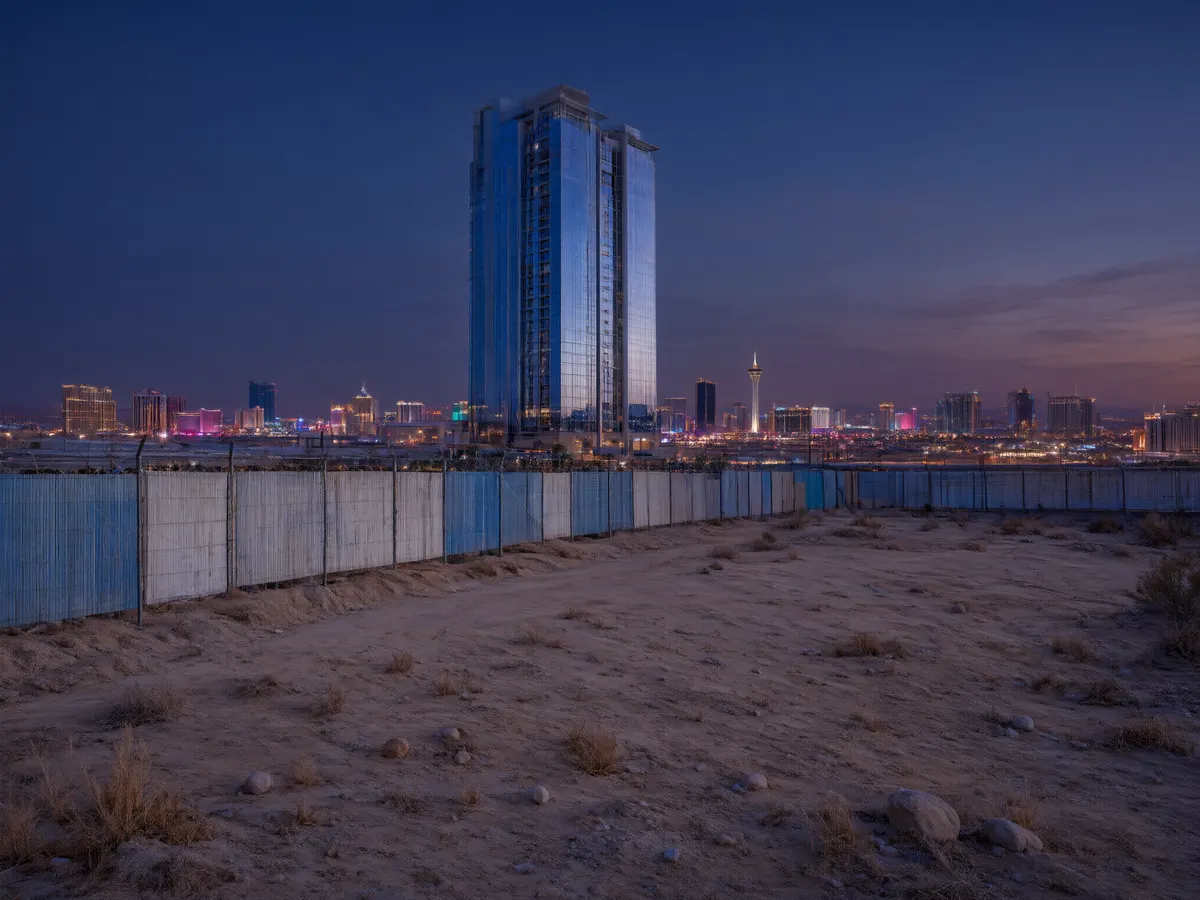
The supporting case is infrastructural rather than sentimental. Resorts World already runs a $4.3 billion integrated resort on the site, with parking, utilities and access roads in place, plus a rare combination of Strip frontage and rear access via Sammy Davis Jr. Drive. That, the company argues, means less new support construction and no multi-year land assembly of the kind other proposals face. It frames the corridor it shares with Wynn and Fontainebleau as a high-end entertainment district with room to grow, and points to 41-plus regular-season home dates plus concerts, combat sports and other marquee events as the kind of calendar that could reanimate the stretch between Spring Mountain Road and Sahara Avenue.
Here is where you should hold the claim loosely. More than a dozen arena concepts have surfaced in recent years, and the venue decision rests with whoever wins the franchise. The NBA shortlisted three ownership groups in September: one led by Nancy Walton Laurie and Bill Laurie, one by Bill Foley and Jerry Colangelo, and one by Marc Lasry and Steve Apostolopoulos. Foley’s original instinct was to house a team at T-Mobile Arena, home of his Golden Knights; after joining forces with Colangelo’s Las Vegas Jacks group, which had been working with Manica Architecture on designs, that group is now reported to favour a new build. The league has signalled it wants expansion resolved by year end, with Las Vegas and Seattle targeting a launch as early as 2028-29 and a 2029-30 start still in play for Vegas. So Resorts World is bidding into a process it does not control, with a public pitch aimed partly at three sets of billionaires who have not said what they want.
Three ways to stand next to an anchor, and what each one buys
Operators have three distinct plays available, and they are not interchangeable. The distinction that matters is how much of the event calendar and the spend the resort controls, not how close the building is.
| Approach | What the operator controls | Capital exposure | Las Vegas example |
|---|---|---|---|
| Host a third-party arena on owned land | Site, access, parking, adjacency and hospitality deals; not the booking calendar | Land and support infrastructure; the arena itself usually funded by the team or a venue partner | T-Mobile Arena, a joint venture involving MGM Resorts and AEG |
| Build a proprietary venue | Calendar, booking, ticketing, in-house food and beverage, sponsorship | Highest, and sits on the operator’s own balance sheet | Dolby Live at Park MGM; Resorts World Theatre |
| Sit adjacent to someone else’s anchor | Only its own doors, room rates and marketing | Low; largely promotional spend | Resorts clustered around Allegiant Stadium and the F1 street circuit |
Resorts World is pitching for the first row while describing benefits that mostly belong to it. That is a reasonable thing for a CFO to do. It is also the row with the least control: a tenant sets the schedule, the pricing and the sponsorship inventory, and the resort monetises whatever walks out of the doors afterwards.
Where the spillover money actually sits
Arena adjacency pays through occupancy, food and beverage, and retail, in roughly that order of reliability. An event calendar with 41 home dates plus concerts and fight nights puts recurring demand into midweek room blocks, which is the hardest inventory on the Strip to fill. Pre-event dining and post-event bars capture spend with no acquisition cost. Brand visibility arrives free with every national broadcast that names the district.
What adjacency does not reliably deliver is the gate, the suites or the naming rights, which belong to the venue owner. If you are modelling this, the honest frame is incremental occupancy and incremental covers, not a share of the arena’s own revenue.
The sportsbook tie-in, and where the standard argument breaks
This is the point where the usual pitch stops holding up. Retail sportsbooks are a thin-margin business built on a bookmaker’s overround, and mobile betting is geography-free: a fan watching a game three miles away bets from the same app as a fan in the building. Proximity does not route handle to the nearest book on its own.
The one real mechanism is regulatory rather than physical. Nevada still requires bettors to register in person at a licensed sportsbook before they can use a mobile account, so foot traffic is how an operator acquires app customers in the state. That makes event-driven visitation genuinely useful for a book, but the value is customer acquisition, not walk-up wagering, and it is a Nevada-specific quirk that does not transfer to markets with remote sign-up. Treat any pitch that leans on “sportsbook synergy” without naming that mechanism as decoration.
The pattern this claim belongs to
Resorts World is not improvising. T-Mobile Arena gave MGM a hockey tenant and a concert calendar next to its own properties. Allegiant Stadium put an NFL franchise and a stadium-scale event slate a short ride from the Strip. The F1 Las Vegas Grand Prix runs past resort frontage and turns rooms with a view into premium inventory for a weekend, though whether the rate premiums hold year on year is still an open argument among operators rather than a settled result.
Sphere complicates the tidy version of the story, and it is worth sitting with. It is not a casino, it is not operated by a gaming company, and it still reset expectations for what a Strip-adjacent venue can pull. The competitive threat to a resort’s entertainment business can now come from a company that has no interest in running a gaming floor at all.
The non-gaming revenue question
Non-gaming revenue has grown into the larger share of Strip resort income, but treat the exact split as something to verify rather than assume. The figure to cite is in the Nevada Gaming Control Board’s published gaming abstract and monthly revenue reporting, which separates gaming win from rooms, food and beverage, and other revenue by property class. Any specific percentage you see quoted in a deck should be checked back to that series, including the reporting period it covers, because the ratio moves with event calendars and room rates.
What it means for the integrated-resort model elsewhere
The integrated resort was always gaming plus hotel, retail, dining, convention space and entertainment under one licence. What has changed is which component the operator leads with when it competes for capital, political support or a licence renewal. In Macau, non-gaming investment commitments were written directly into the current concession terms, which turns experiential development from a competitive choice into a compliance obligation. Operators bidding for licences in newer regulated resort markets are pitching venues, convention capacity and event programming as much as gaming floors.
The lesson travelling out of Vegas is narrower than the hype suggests. It is not “build near a stadium.” It is that an anchor you control, or at least host, gives you demand you do not have to buy, and that regulators increasingly reward operators who can show visitation that is not contingent on gambling.
Signals worth tracking
- Which of the three shortlisted NBA ownership groups prevails, since the owner, not the resort, selects the venue
- Whether any arena proposal arrives with a casino component attached, as at least one competing site concept has
- New joint ventures between operators and venue or sports companies rather than wholly owned builds
- Event-driven travel packages priced as bundles of room, ticket and dining instead of room-only promotions
- Non-gaming investment clauses appearing in licence conditions in markets outside Macau
- Whether F1 and stadium weekends sustain room-rate premiums across repeat years
The verdict, and what it leaves open
On the comparison itself, the proprietary venue and the hosted arena beat pure adjacency, because both convert an event calendar into inventory the resort can price. Adjacency is cheap and real, but it is a rounding effect on occupancy, and operators consistently oversell it. Resorts World’s 42 acres and installed infrastructure make its site a credible contender on logistics. That is a different claim from being the best commercial outcome for Resorts World, and a very different claim from being the arena’s eventual home.
What nobody can tell you yet is how much of an arena’s economics a neighbour actually keeps once the tenant takes its cut. Vegas is about to run that experiment in public, with a franchise, a site and an ownership group that are all still undecided. Watch who wins the team first. The real estate argument only starts mattering after that.