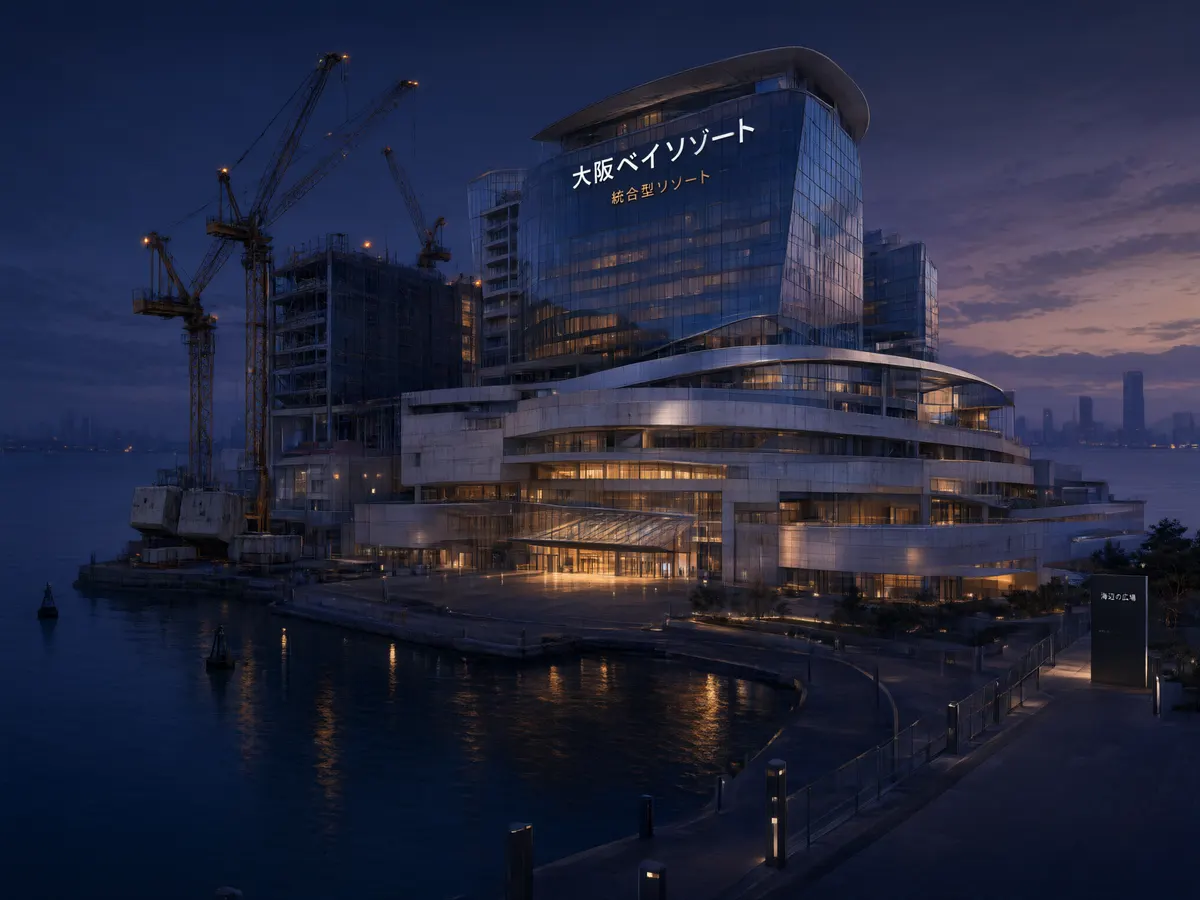
A dealer training course is the least glamorous milestone a casino project can hit, and right now it is the most informative one. MGM Osaka has put its name behind a casino dealer training programme as the resort moves toward launch, according to GGRAsia’s reporting, and that endorsement is the clearest public sign yet that the MGM Osaka casino opening has moved out of the permitting phase and into operations. Nobody signs off on a croupier pipeline for a building they are not confident will take bets.
Complicating it immediately: an endorsement is not an opening date, and a training course is not a staffed casino floor. What it does tell you is where the project’s critical path now sits, and that path runs through people, not concrete.
What MGM Osaka endorsed, and why a dealer course is the real tell
MGM Osaka has endorsed a third-party casino dealer training course aimed at building a local pool of table game staff ahead of the integrated resort’s opening, as reported by GGRAsia. The specifics of the provider and the curriculum sit with that reporting, and anyone quoting course length, intake size or fees should check the original article rather than any secondhand summary, including this one.
The substance is not the syllabus. It is the sequencing. Operators endorse external training when internal recruitment alone cannot produce enough qualified dealers in the time available, and when they want candidates arriving with baseline game knowledge instead of starting from zero on company time.
Why workforce readiness matters this close to opening
Japan has no existing commercial casino labour market, which makes dealer supply the single hardest input in the whole project. Macau could staff its 2000s expansion from an established local trade. Singapore’s two resorts drew on regional croupiers and a government-backed training push. Osaka starts with a workforce whose only gambling-adjacent experience is pachinko parlours, public sports betting and the lottery, none of which teach baccarat procedure, chip handling, game protection or dispute resolution at a live table.
Get this wrong and the cost is not reputational, it is structural. A table game needs a trained dealer per position, plus pit supervision, plus relief rotation. Short-staff that and you open with fewer live tables than the floor plan allows, lean harder on electronic table games, and hand your first-year table revenue to competitors who have had dealers for twenty years. That is the practical reason a training endorsement is worth a headline.
Reading MGM Osaka’s road to opening in order
MGM Osaka is the integrated resort being developed on Yumeshima, a reclaimed island in Osaka Bay, by a joint venture in which MGM Resorts International and Japanese financial group ORIX are the lead partners alongside local corporate investors. Japan’s national government certified the Osaka area development plan in 2023, the first and so far only such certification issued under the country’s IR framework.
Here is how I would track the project, in the order the milestones actually fall:
- Area development plan certification by the national government. Done for Osaka.
- Land preparation and construction on Yumeshima, including ground remediation work on reclaimed land.
- Casino licence issuance by the Japan Casino Regulatory Commission, which is separate from the development plan approval.
- Workforce recruitment and training, which is where the current news sits.
- Systems, surveillance and compliance testing, then a confirmed opening date.
Reported figures put the total investment well above ¥1 trillion, with an opening targeted around the end of the decade after an earlier slippage. Treat both the number and the year as reported rather than fixed, and verify the current target before publishing or trading on it. Large IR projects move their dates, and this one already has.
Why Japan’s first legal casino is a genuine break with precedent
Casino gambling was illegal in Japan without exception until the 2010s, and it remains illegal everywhere outside a licensed integrated resort. The country’s Criminal Code bans gambling outright, with carve-outs built over decades for public sports betting such as horse, bicycle and boat racing, plus the lottery. Pachinko survived in a legal grey zone by paying out in prizes exchanged for cash off-premises, which is why Japan has a huge gambling-adjacent industry and no casinos.
Two pieces of legislation changed that. The 2016 IR Promotion Act established the policy direction, and the 2018 Integrated Resorts Implementation Act built the actual licensing regime: a maximum of three IR licences nationwide, a dedicated regulator in the Japan Casino Regulatory Commission, and a long list of conditions on how a casino may operate. Osaka cleared that process. Nagasaki’s bid did not. That is the context for why a dealer course merits attention at all, because for most of a decade Japan casino gaming has been a story about applications, withdrawals and rejections rather than operations.
Japan’s entry rules are the strictest in any major IR market
Japanese residents will face an entry fee and hard caps on how often they can visit the casino floor, enforced through identity verification. As reported under the IR Implementation Act, the admission fee is ¥6,000 per 24-hour entry, with visits limited to three in any seven-day period and ten in any 28-day period, tracked via the My Number identity card. The casino floor itself is capped at 3% of the IR’s total floor area. Confirm these figures against current regulations before relying on them, as implementing rules can be amended.
How that compares with the rest of the region is the useful part:
| Market | Local resident access | Levy or fee | Visit caps |
|---|---|---|---|
| Japan (Osaka IR) | Permitted, ID-verified | ¥6,000 per 24 hours (reported) | 3 per 7 days, 10 per 28 days (reported) |
| Singapore | Permitted, ID-verified | Daily or annual citizen/PR levy | No statutory cap; exclusion orders available |
| South Korea | Barred from foreigner-only casinos; one domestic-access venue | None at foreigner venues | Visit limits applied at the domestic-access casino |
| Macau | Permitted; casino employees restricted | None | None |
Add restricted credit for resident players, advertising limits, and a 30% tax on gross gaming revenue split between national and local government, and the design intent is obvious. Japan built a tourism asset with a casino inside it, not a casino with hotels attached. For players, the practical read is that this is a controlled environment with self-exclusion and visit tracking built into the entry system rather than bolted on, and anyone who finds the caps uncomfortable rather than reassuring should treat that reaction as information.
What this actually does to Asia’s competitive balance
Less than the headlines will claim, and in a narrower lane. I would not model Osaka as a Macau substitute. Macau’s business is built on proximity to mainland China, no entry fee, no visit caps and a mass-market grind that depends on repeat local and cross-border traffic. A resort that charges residents to walk in and limits them to ten visits a month is structurally incapable of competing for that volume.
Singapore is the honest comparison. Marina Bay Sands and Resorts World Sentosa run high-margin, tourism-led operations under a resident levy, and both are mid-expansion. Osaka will chase the same inbound leisure and MICE spend, with the advantage of a domestic market of 120 million people and a tourism boom already underway, and the disadvantage of starting from nothing on gaming operations and talent.
The Philippines and South Korea face the sharper squeeze. Entertainment City in Manila and the foreigner-only properties at Incheon both court Japanese, Korean and Chinese visitors who currently fly out of Japan to gamble. Keeping even part of that spend at home is the clearest first-order effect of a legal Osaka casino, and it lands on the regional operators with the thinnest pricing power.
What to watch next
Three signals matter more than any ribbon-cutting render. First, a confirmed opening date from the operator or the Osaka prefectural government, which should be checked at the time of reading rather than assumed from earlier reporting. Second, further recruitment and training announcements, including intake volumes and whether MGM Osaka begins hiring supervisory pit staff from outside Japan. Third, the fine detail of entry enforcement once rules are finalised, because the ¥6,000 fee and the visit caps determine how much of that 120 million-person domestic market ever reaches a table.
The thing nobody can answer yet is demand. Japan has demonstrated appetite for pachinko and public sports betting, neither of which proves a taste for baccarat at a monitored table with a fee at the door. Whether Osaka’s dealers end up busy is a question the training course cannot settle.
If gambling stops being entertainment and starts being a way to chase money back, use the deposit, loss and self-exclusion tools your operator provides, and seek support locally.