The deal in one line, and why that line is misleading
A multi vertical iGaming partnership is a single distribution contract that moves a studio’s whole catalogue, rather than one game or one category, onto another company’s platform and out to every brand that platform serves. That is the clean definition. It is also where most readings of the ICONIC21–Advabet deal go sideways.
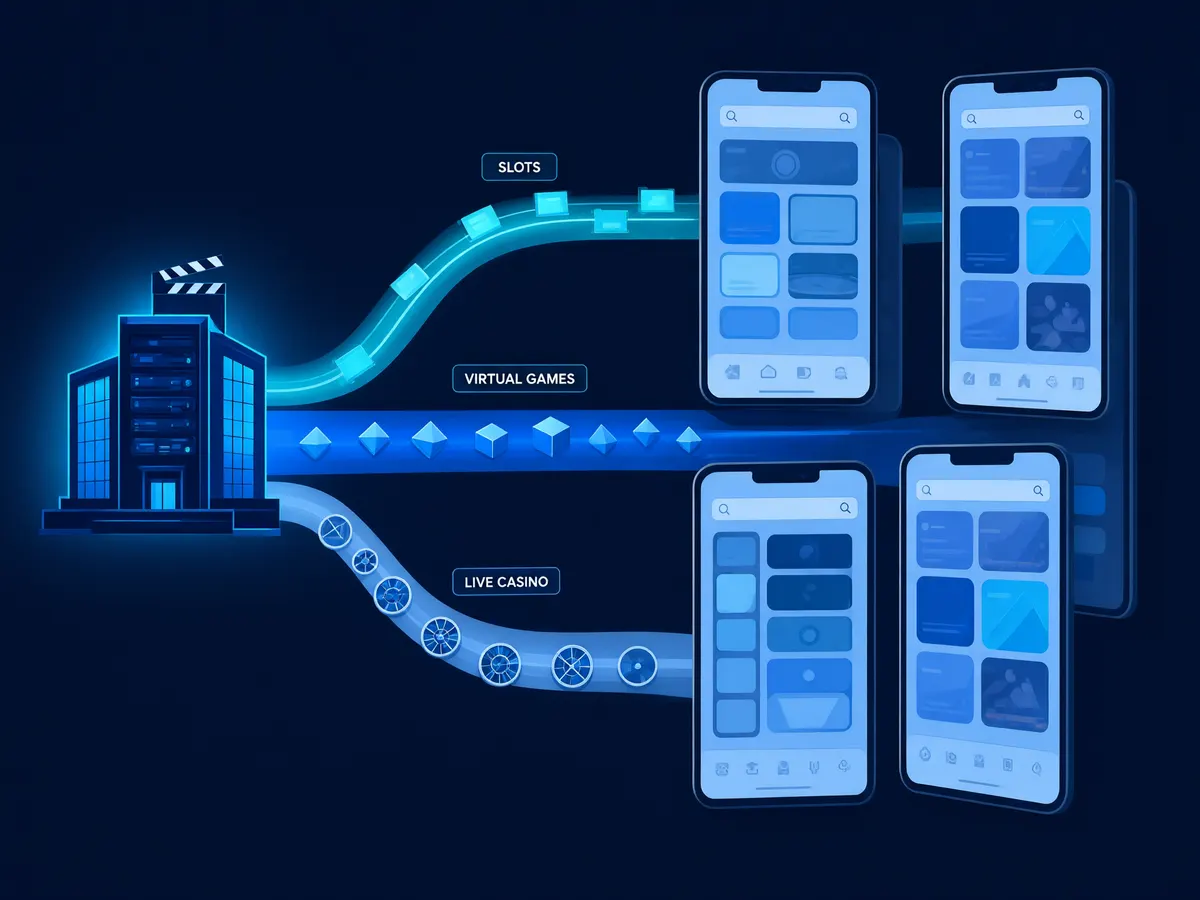
The facts first. ICONIC21 has signed a partnership agreement with Advabet, the bespoke iGaming platform provider also trading as Adwa, to distribute its gaming portfolio across Adwa’s operator network and managed brands. The agreement covers all major gaming verticals in the ICONIC21 portfolio. The rollout starts with Adwa’s own B2C brands, then extends to its wider B2B ecosystem. The content on the table includes slots, virtual games and live casino products, with titles from Gravity Games, ICONIC21’s flagship live and virtual range, plus the virtual game iDealer Blackjack.
Adwa’s own specialism is tailored online casino solutions, platform technology, gamification tools and integrations. Alina Mihaela Popa, ICONIC21’s Chief Commercial Officer, framed Adwa’s flexibility and tailored casino solutions as the reason for the tie-up and described the goal as bringing the studio’s slots, virtual games and live casino content to more operators.
So here is the first complication. “Multi-vertical” in this announcement does not mean sportsbook plus casino. It means slots plus virtuals plus live dealer. Anyone reading the headline and expecting new betting markets to appear alongside the games has read the wrong word in the wrong industry dialect.
Following iDealer Blackjack from studio to lobby
The clearest way to understand what a deal like this does is to trace one named title through it. Take iDealer Blackjack, specifically called out in the agreement.
Stage one: it exists as a certified game inside ICONIC21’s studio, already built, already tested, already live somewhere. Nothing about this deal creates a new game.
Stage two: Adwa integrates it. This is the part that actually takes work and the part nobody writes press releases about. The game has to be wired into the platform’s wallet, session handling, reporting, bonus engine and responsible gambling controls. A platform provider that has done this a hundred times does it faster than an operator doing it once.
Stage three: it appears in Adwa’s own B2C lobbies. This is the initial rollout, and it is the narrow phase.
Stage four, the one that matters commercially, is the extension into Adwa’s wider B2B ecosystem. One integration, then potentially dozens of operator lobbies downstream. That is the whole economic logic of platform-level distribution: the studio signs once and reaches many, instead of negotiating and integrating brand by brand.
By the time a player opens the lobby, none of those four stages are visible. A new blackjack tile shows up in the live casino tab. That is the entire player-facing event.
Why the popular answer is right for the wrong reason
The popular answer is that partnership news like this widens what players can access. True. But the usual explanation, that the catalogue gets bigger, is not really the mechanism, and it is a weak reason to care.
Catalogue size stopped being a differentiator years ago. Plenty of operators already list thousands of titles, and no human being plays a thousand slots. Adding a studio’s portfolio to a lobby that already has 3,000 games changes the count and almost nothing else.
What actually changes is the plumbing. A platform that holds a direct integration with a studio can offer that studio’s live tables, virtual games and slots to every brand it powers, including small operators who would never get a direct deal on their own. The breadth arrives at the bottom of the market, not the top. Smaller and newer brands get access to live dealer and virtual content they previously could not justify integrating. That is the meaningful redistribution here, and it is why these announcements matter more for a regional brand you have never heard of than for a tier-one operator.
Three content categories, three different effects on what you see in the lobby:
| Vertical in the deal | What it is | What changes in the lobby |
|---|---|---|
| Slots | RNG reel games with fixed or variable ways to win | New tiles in an already crowded slots tab; lowest practical impact |
| Virtual games | RNG games that imitate table or event formats, such as iDealer Blackjack | Table-style play with no dealer and no table minimums, available 24/7 |
| Live casino | Streamed games with human dealers, including the Gravity Games range | More tables and formats, the costliest category for a small operator to add alone |
The trade-off the announcement does not mention
Every distribution deal of this shape buys breadth and pays for it in sameness. When one platform pushes the same studio portfolio out across its whole operator network, those lobbies converge. Switching from one brand to another stops producing a different library and starts producing a different logo over the same library. The industry calls this reach. From a player’s seat it looks a lot like homogenisation.
There is a second cost, and it is the one worth being properly cynical about. Supplier content that travels through platform-level distribution is often configurable at the operator’s end. It is common across the industry for slot titles to ship with more than one RTP setting, with the operator choosing which build to deploy. The game’s name, art and mechanics stay identical. The house edge does not. Two brands can both carry the same title with meaningfully different long-run returns, and the only place that difference is disclosed is the game’s own info panel.
So the honest version of the trade-off: wider availability of live and virtual content, especially at smaller operators, against less variety between operators and more responsibility on the player to check the numbers themselves. I do not think there is a clean answer to that. I do think the player who checks the paytable is the one who comes out ahead of the player who trusts the brand.
What to actually do when a new studio lands in your lobby
- Open the game’s info panel and read the stated RTP before the first spin or hand, not after.
- Treat virtual table games as RNG products, not as live dealer games with faster rounds. The maths is fixed, the pace is faster, and faster pace means more decisions per hour.
- Check who holds the licence for the brand you are playing on, not just who built the game.
- Set a deposit or session limit before exploring anything new, because novelty is precisely when spend drifts.
Every one of these games carries a built-in house edge, and a wider catalogue does not change that arithmetic by a single percentage point. It only changes how many ways there are to meet it. If play stops feeling like entertainment, use the deposit, loss and session limits the operator is required to provide, or the self-exclusion tools, and treat the stakes as money you have already spent.
ICONIC21 has been steadily building out its table content, including a face-down double down variant for its online blackjack range, and Adwa gives that work a far wider set of front doors. Whether that breadth reaches players as real choice or as the same shelf restocked in more shops depends entirely on what the downstream operators do with it, and that part has not been announced yet.